GBP/USD with no momentum, more sellers
GBP/USD fell to 1.3228 on Wednesday, with the pound remaining at three-month lows. Investors continue to favour the dollar amid growing expectations of a Federal Reserve rate hike as early as October, while the Bank of England is not expected to change policy until November.
High oil prices are also supporting the US dollar. Negotiations to resume full operations at the Strait of Hormuz have stalled, heightening inflation risks, strengthening expectations of further Fed tightening, and increasing demand for the US currency as a safe-haven asset.
In the UK, markets estimate the likelihood of a 25 basis point Bank of England rate hike in November at over 80%. By mid-2027, approximately four increases are already priced in. However, weak growth in the British economy during 2026 and early 2027 may limit the regulator's ability to tighten aggressively.
Bank of England Deputy Governor Dave Ramsden stated that he would support further rate hikes if inflationary pressures persist. His stance aligns with recent warnings from Andrew Bailey.
Earlier this month, the MPC voted 6 to 3 to keep rates at 3.75%, while warning that inflation could climb to around 4%.
Technical analysis
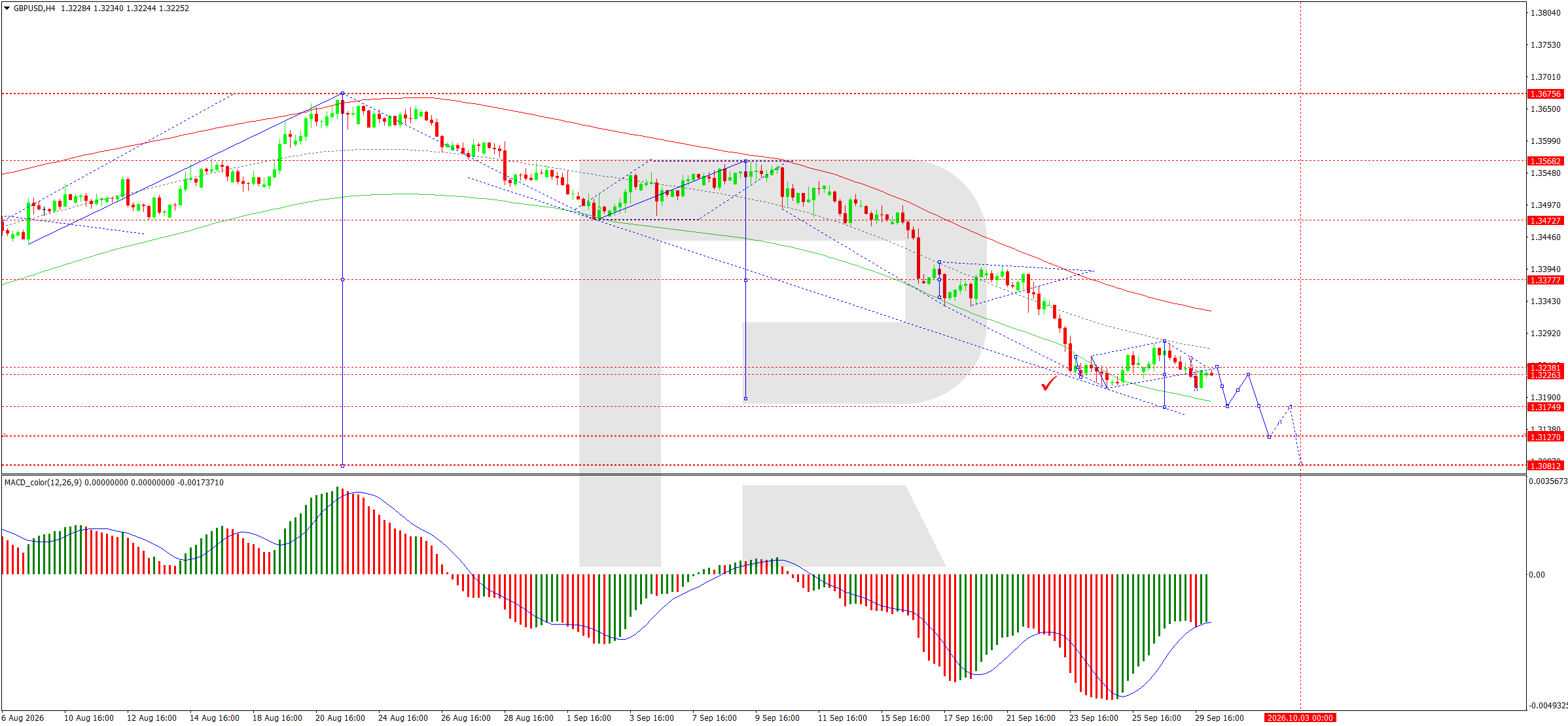
On the H4 chart, GBP/USD maintains a steady downward structure. Following the completion of the previous correction, the market formed another downward impulse and reached the 1.3202 area. The subsequent recovery was capped at 1.3232, which remains a local corrective leg within the broader bearish trend. The price remains below the downward dynamic resistance, and the sequence of lower highs confirms continued selling pressure. The nearest resistance is the 1.3232–1.3238 range. As long as the market holds below this zone, the baseline scenario remains a continuation of the decline towards 1.3175. After a possible interim correction, the next target is 1.3127, and if momentum strengthens, 1.3081. The MACD is positioned in negative territory. Despite the local shrinking of the negative histogram, the indicator's position below zero supports the medium-term downward scenario.
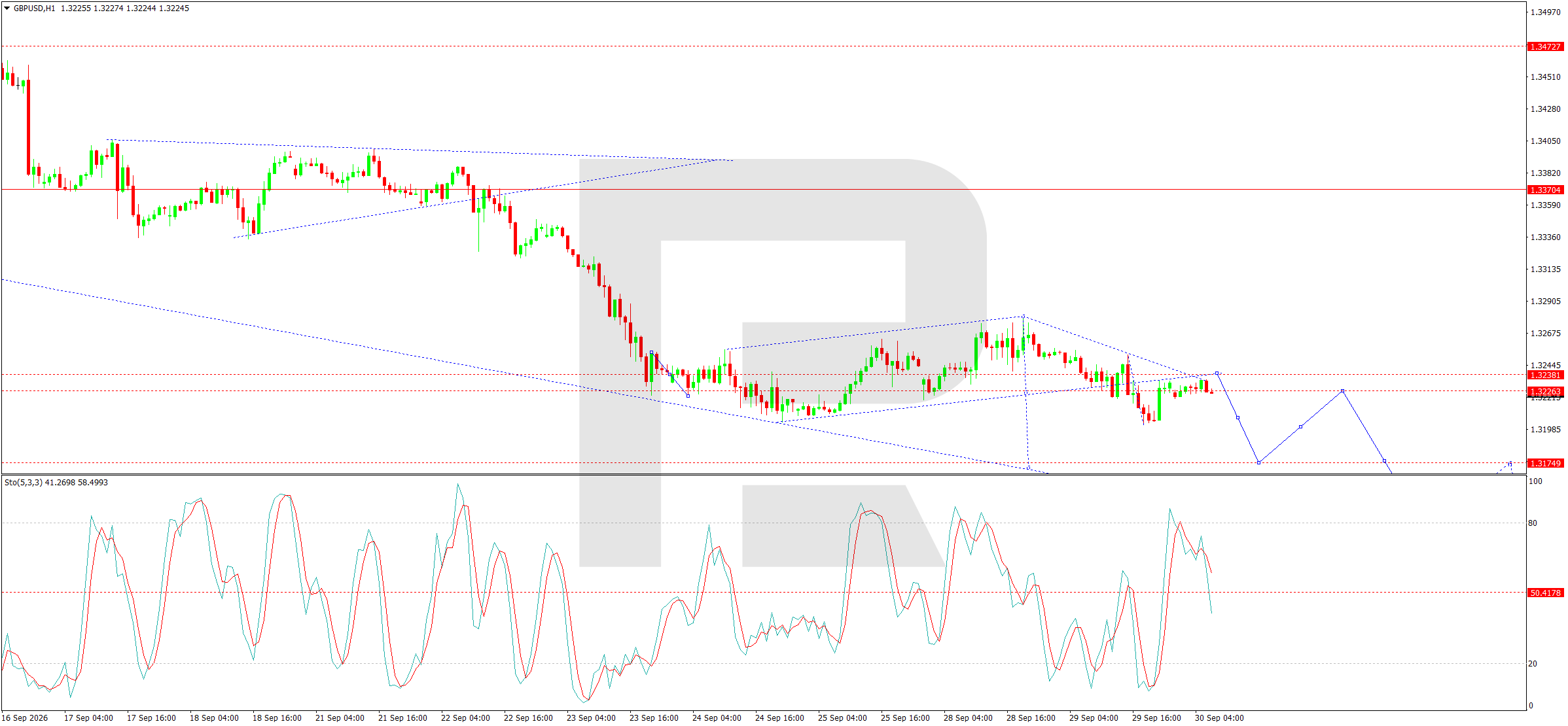
On H1, the correction also remains limited. Following the decline, the market formed a recovery to 1.3236, but there was no consolidation above resistance. The current structure allows for the formation of another downward wave, initially towards 1.3202 and then to the key intraday support of 1.3175. The Stochastic oscillator has turned down from the upper part of its working range: the signal lines are below the 80 level and pointing towards the central 50 mark. This indicates a weakening of the local corrective impulse. Should selling pressure persist, the oscillator's move towards the 20 region would correspond with the development of the main downward wave. Cancellation of the priority scenario would require a sustained consolidation of GBP/USD above 1.3238, followed by a move towards 1.3270.
Conclusion
GBP/USD remains under pressure at three-month lows, with sellers firmly in control as the dollar benefits from October Fed rate hike expectations, elevated oil prices, and stalled Strait of Hormuz negotiations. While markets price in over an 80% chance of a November BoE hike, the UK's weak growth outlook may limit the central bank's ability to tighten aggressively. Deputy Governor Ramsden's hawkish comments align with Bailey's recent warnings, but the pound has yet to find meaningful support. Technically, the pair remains bearish below the 1.3232–1.3238 resistance zone, with a continuation of the decline towards 1.3175, 1.3127, and potentially 1.3081 likely in the near term. A sustained break above 1.3238 would be required to shift the short-term outlook.
Author

RoboForex Analysis Department
RoboForex
RoboForex Analysis Department provides timely market insights, expert technical analysis, and actionable forecasts across forex, commodities, indices, and equities.