|

Daily technical and trading outlook - EUR/USD

fxsoriginal
  
DAILY EUR/USD TECHNICAL OUTLOOK

Last Update At 15 Dec 2020 02:20GMT

Trend Daily Chart

Up

Daily Indicators

Bearish divergences

21 HR EMA

1.2146

55 HR EMA

1.2137

Trend Hourly Chart

Sideways

Hourly Indicators

Neutral

13 HR RSI

54

14 HR DMI

+ve

Daily Analysis

Choppy consolidation to continue

Resistance

1.2257 - 1.618 times ext. of 1.1603-1.1919 fm 1.1746
1.2216 - 61.8% proj. of 1.1925-1.2177 fm 1.2060
1.2177 - Mon's n Dec 04 2-1/2 year high

Support

1.2106 - Last Fri's low
1.2082 - Last Thur's European low
1.2060 - Last week's low (Wed)

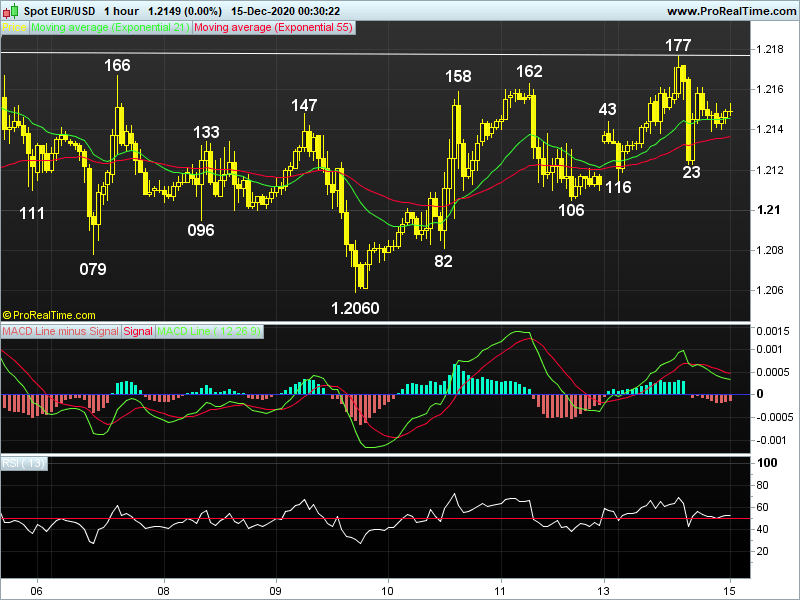
EUR/USD - 1.2150.. Euro opened higher to 1.2143 Mon n quickly retreated to 1.2116 in Asia but renewed buying emerged at European open n later pushed euro to 1.2177 in NY morning b4 retreating to 1.2123 on rebound in usd.

On the bigger picture, despite euro's LT upmove fm 2017 near 14-year low of 1.0341 to a fresh 3-year peak of 1.2555 in mid-Feb 2018, price tumbled to a near 3-year 1.0637 low in Mar 2020 on broad-based usd's strength. Euro's subsequent rally to a 2-year peak of 1.2011 in Sep due to risk-on trade suggests said fall has ended. Having said that, euro's rally to 1.1919 in early Nov signals correction is over n the break of 1.2011 to 1.2177 in early Dec would head to 1.2204, 'bearish divergences' on daily indicators would cap price at 1.2300. On the downside, only below 1.1919 (prev. res, now sup) signals top is made, then risk is seen for correction to 1.1800, then later, 1.1746 in late Dec/Jan.

Today, although euro's re-test of prev. Dec's 2-1/2 year peak of 1.2177 n then a brief but strg retreat to 1.2123 signals choppy trading below 1.2177 may continue, rising daily indicators suggest upside bias remains n 1.2082 sup should hold, yield another rise. Abv 1.2177 would head to 1.2216, 1.2257.
EURUSD

Author

AceTrader Team

Led by world-renowned technical analyst Wilson Leung, we have a team of 7 analysts monitoring the market and updating our recommendations and commentaries 24 hours a day.


More from AceTrader Team
Share:

Editor's Picks

AUD/USD sticks to positive bias above 0.7100; lacks bullish conviction

AUD/USD trades with a positive bias for the second straight day, holding above 0.7100 in the Asian session on Friday as softer US bond yields keep US Dollar bulls on the back foot. Furthermore, hawkish RBA Governor Bullock's comments boost rate hike bets and support the Aussie. However, the Fed's hawkish outlook, along with geopolitical uncertainties, limits USD losses and caps the pair.

USD/JPY approaches 158.00 as Japanese Yen resumes decline

USD/JPY is resuming its upside in the European session on Friday, refreshing two-week highs and nearing 158.00. The Japanese Yen extends losses, despite the Bank of Japan's (BoJ) expected rate hike to 1.25% and hawkish Governor Ueda's comments, as two surprise dissents against the rate hike weigh on it.

Gold keeps the bid tone in place; still below $4,400

Gold adds to the optimism seen in the second half of the week, trading with decent gains just below the $4,400 mark per troy ounce on Friday. The precious metal’s advance finds traction in declining crude oil prices and fresh selling pressure on the US Dollar.

Why altcoin season isn't coming back — and what stole its capital
If, after two years of being frozen in ice, Katara and Sokka woke you up to the crypto market, it would seem like 100 years have passed. With Bitcoin soaring to record highs just over a year ago, everyone expected a routine altcoin season, where investors take profits from the top crypto to chase higher returns in altcoins.
BoJ Recap: Not as hawkish as expected

The BoJ raised its short-term interest-rate target to 1.25% from 1.00% in a 7-2 vote, marking another step in the normalisation of monetary policy and widely matching what everyone has been expecting for weeks. Governor Kazuo Ueda said the policy phase had changed.

BoJ Recap: Not as hawkish as expected

The Bank of Japan (BoJ) raised its short-term interest-rate target to 1.25% from 1.00% in a 7-2 vote, marking another step in the normalisation of monetary policy and widely matching what everyone has been expecting for weeks.












