Could US CPI be a game-changer for the Fed?
Market players gear up for the release of the United States March inflation data, which will very likely bring bad news for the Fed. Higher inflation due to the Oil shock, coupled with a rapidly slowing economy, could put the central bank in a tough spot. Fasten your seatbelts.
The Consumer Price Index (CPI) is expected to have risen at an annual pace of 3.3%, much higher than the 2.4% posted in February. The worrisome expectation could even fall short of reality, given the chaotic state of the US economy.
What inflation over 3% means to the Fed
The Federal Reserve bases its decision on the Personal Consumption Expenditures (PCE) Price Index, and not the CPI. But with two government shutdowns in the last few months, data is delayed. Half a loaf is better than none.
The Federal Open Market Committee recently released the Minutes of the March monetary policy meeting, showing policymakers acknowledged risks are now two-sided. Many officials still expect that rates can be lowered, of course, conditioned to inflation easing as projected. The 3.3% expected is clearly not among such projections. But despite pushing back the timing of potential rate cuts, FOMC officials made it clear that the path forward could go either way.
Policymakers also warned about slowing growth being a cause for a shift in monetary policy. And figures, the Q4 Gross Domestic Product, recently published due to the October–November 2025 government shutdown, showed the economy expanded at an annualized rate of only 0.5% in the three months to December, sharply down from the 4.4% posted in Q3.
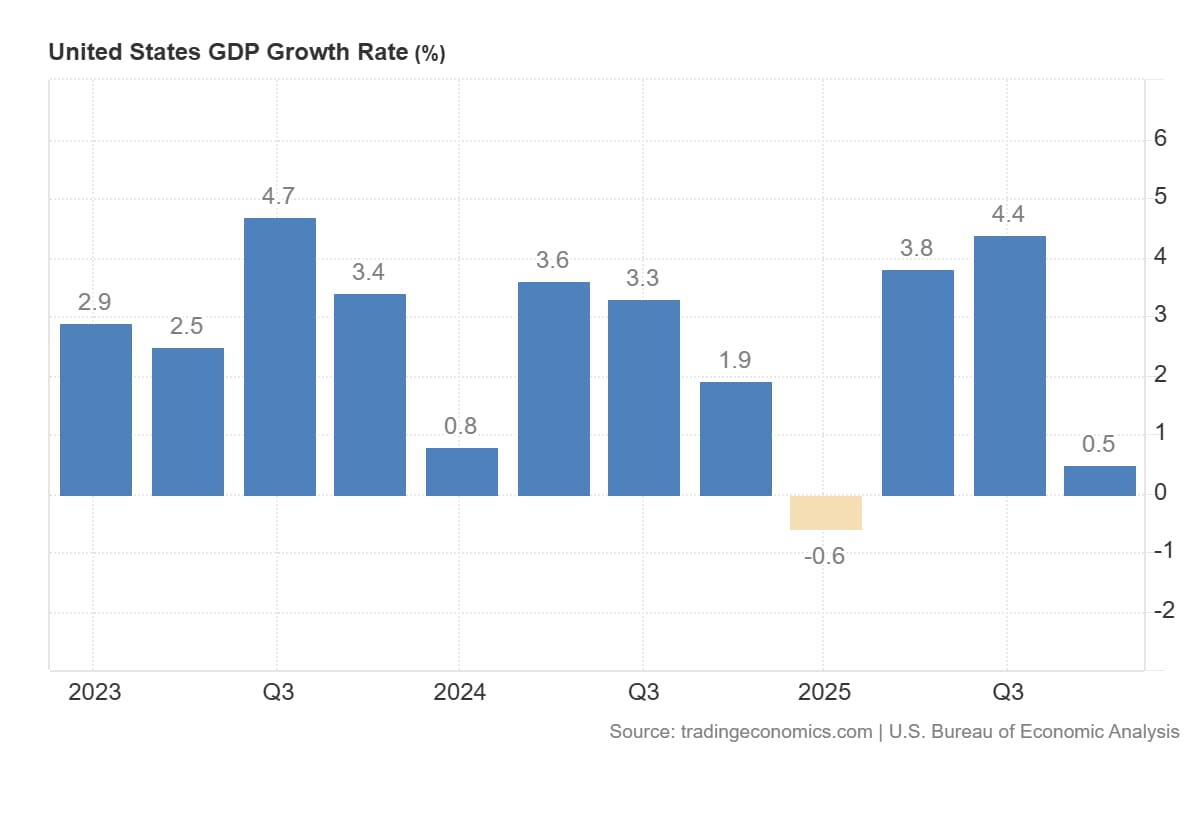
Source: US Bureau of Economic Analysis
So, growth slowed at the end of 2025, and upcoming inflation data is expected to show a massive increase in price pressures. If something, the expected figure will lean the scale towards rate hikes. In turn, the US Dollar should appreciate.
A stronger USD, also benefiting from a risk-averse environment, translates into reduced corporate earnings amid higher borrowing costs. A strong currency is usually considered deflationary, which is a good thing, but it also reduces export competitiveness, weighing on economic growth.
It’s all a mess
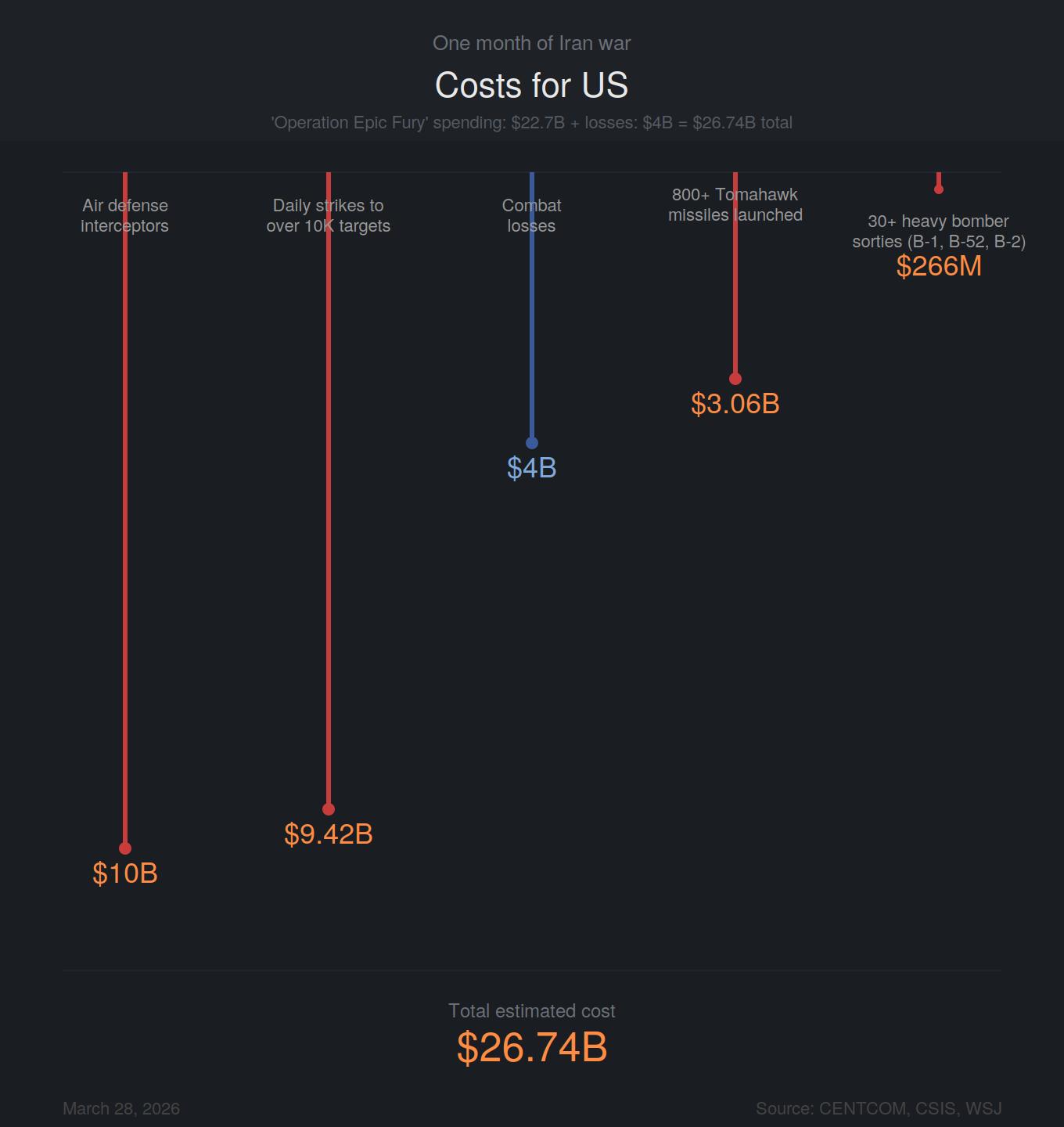
And a big one. Not only has the US suffered two shutdowns due to running out of budget, but the country has also engaged in a Middle East war that led to soaring Oil prices and unbearable price pressures. According to the US Department of Defense (DOD), just the first six days of the Iran war cost $11.3 billion. The war is costing about $891.4 million per day, according to the Center for Strategic and International Studies, which analyzed the information the Pentagon has shared.
Source: Anadolu Agency
But things are not ending there. Is not just about the war, spending, and energy prices, which are pressuring inflation upward. US President Donald Trump’s first war weapon, tariffs, is also a big chunk of the mess.
And of course, his personal battle with Fed’s head, Chairman Jerome Powell, due to Trump’s desire for much lower rates, alongside the nomination of Kevin Warsh as Powell’s successor.
As said, a big, big mess.
Institutions are meant to work together for the good of the people. But when the White House clashes with the Federal Reserve on multiple fronts at a time, there’s no way out without pain. A pain none of them will suffer, but “we, the people” will surely do.
Author

Valeria Bednarik
FXStreet
Valeria Bednarik was born and lives in Buenos Aires, Argentina. Her passion for math and numbers pushed her into studying economics in her younger years.

















