Cooling UK jobs market questions need for multiple rate hikes
Today’s jobs report is yet another reminder that the UK economy is far less susceptible to another long-lasting inflation wave. Though a rate hike can't be ruled out if energy prices stay high, our base case is for the Bank of England to keep policy on hold into next year.
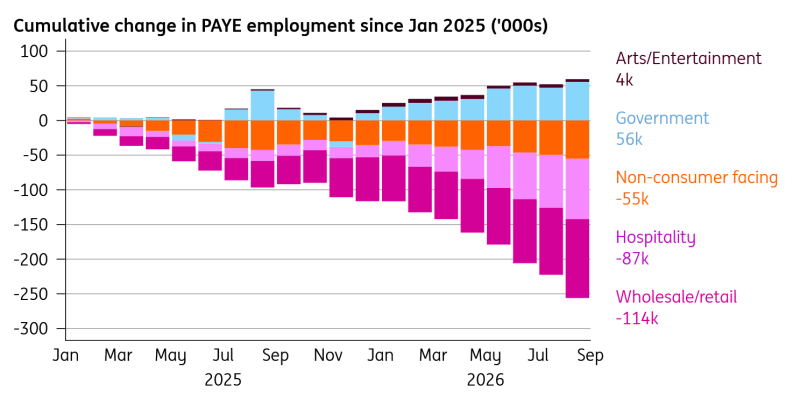
It’s a familiar tale. Private sector payrolls fell another 34k in August, down 0.8% year-on-year. The situation remains particularly acute in consumer services – retail and hospitality – where, in annualised terms, job numbers are falling in excess of 3%. If anything, this rate of decline appears to be getting worse. Employment growth across the rest of the private sector is still slightly negative, consistent with major hiring surveys which suggest the wider jobs market is effectively flatlining.
All of this goes hand in hand with the weak wage growth we’re seeing. Admittedly, private sector wage growth looks like it has reached a floor of 2.9% – or around 3.3% when so-called compositional effects are stripped out. The latest two month-on-month readings have been a tad hotter and point to the annual rate moving a little higher over the next few months.
Retail and hospitality hiring keeps on falling
Still, the basic story is unchanged. Wage growth across the private sector is consistent with a medium-term inflation target of 2%, judging by the Bank of England’s own analysis earlier this year. And there’s little indication in the surveys that this is about to change. A lot will depend on the government’s decision on next April’s National Living Wage rise, due with the October budget, though it’s unlikely that it will materially outstrip this year’s 4.1% increase for over 21s. It’s a similar story for annual pay settlements, which should start to come through over the next few months, to the extent that the UK has collective bargaining and wage setting.
In short, the fact that the UK jobs market is far, far cooler than it was when the Ukraine shock hit four years ago, means we’re much less likely to see severe second-round effects on inflation from higher energy prices. This is a point that the Bank of England’s doves appear to be becoming increasingly confident about.
So while a rate hike can’t be ruled out later this year if energy prices stay high, we expect another 6-3 vote to keep rates on hold this week, and we’re not convinced we’ll see a wholesale hawkish pivot on the committee this time around.
Author

ING Global Economics Team
ING Economic and Financial Analysis
From Trump to trade, FX to Brexit, ING’s global economists have it covered. Go to ING.com/THINK to stay a step ahead.