Cool UK jobs market questions need for rate hikes
Ongoing weakness in private-sector hiring and wage growth suggests the bar is still relatively high for a rate hike in 2026, barring a severe and prolonged spike in energy prices. We expect the Bank of England to remain on hold this year and resume rate cuts from spring 2027.
If the UK economy really is picking up speed – as last week’s GDP data tentatively hints – then there’s little sign of it in the jobs market.
Admittedly, just like the growth figures, it really depends on where you look. Government is still actively hiring, a trend we've seen throughout this year. Payroll growth is running at 1.1% on a three-month annualised basis, though we have our doubts over how long this can continue given the more austere plans for public spending coming down the track.
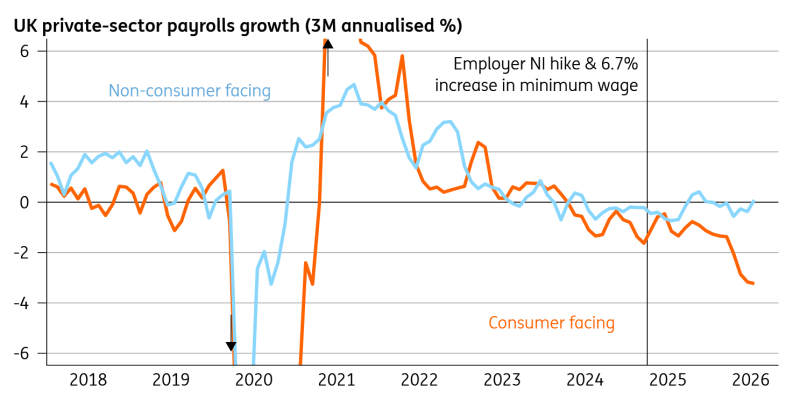
In sharp contrast, consumer-facing industries (hospitality and retail) have been consistently shedding jobs, and if anything, the pace of decline is getting worse. That follows ongoing pressure since last year’s tax and minimum wage hikes. The remainder of the private sector is flatlining – and apart from last week’s more optimistic KPMG/REC hiring survey, most other surveys don’t point to any sign of an imminent upturn.
Consumer-facing industries are seeing the sharpest falls in payroll employment
That disconnect is clearly visible in wage growth. Pay is rising by 6.1% across government, compared to just 2.8% in the private sector. Admittedly, that latter figure is being slightly depressed by “compositional” effects, something the BoE is keen to point out. This is a slightly weird quirk that’s emerged in the survey underpinning those wage figures, which show a rise in low-paid employment relative to higher-paid jobs (the opposite of what the more reliable payroll data described above), and which is skewing the average level of pay growth lower. Strip that out, and private-sector pay would be 0.4ppt higher.
Still, the basic story here is that the jobs market is cool. We can see that in the vacancy numbers, which are still gradually falling and are well down on pre-Covid levels. We can see that in the unemployment rate, notwithstanding the latest reliability issues. And crucially for the Bank of England, there is little sign that wage growth is about to turn higher.
Barring a severe and persistent spike in energy prices, we think the Bank will keep rates on hold until next spring, before cutting rates at least twice in 2027.
Author

James Smith
ING Economic and Financial Analysis
James is a Developed Market economist, with primary responsibility for coverage of the UK economy and the Bank of England. As part of the wider team in London, he also spends time looking at the US economy, the Fed, Brexit and Trump's policies.