Clash in the capital as Fed and Treasury contradict

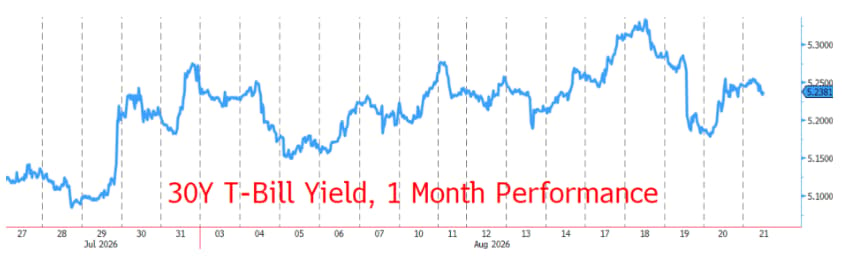
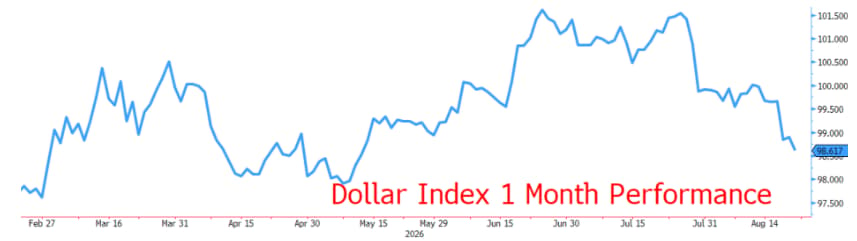
Treasury Secretary Scott Bessent’s sudden announcement on Wednesday that the Treasury would double the cost of its debt buyback scheme has sent the DXY to its lowest since May. This news came only the day after US-30 year Treasury yields hit their highest rate since 2002, 5.33% was the highest yield recorded on the 18th, only for the same bonds yield to slip to 5.18% on the 20th, a day after Bessent’s statement and the day where he doubled down in a follow-up statement to say that the Treasury may raise its buyback scheme from $2bln a quarter now to as high as $32bln going forward.
This statement, whilst a surprise initially, on a more macro level should have been perceived well ahead of time. Bessent made it clear when he got the job back in 2025 that one aim of his was to lower financing costs at the Federal level and One big Beautiful Bill’s $3.4bln cost over 10 years meant he would be getting no support from a more conservative fiscal policy. Moreover, Trump’s Iran escapade has only added more
This means that Bessent has to turn to more unorthodox methods of keeping yields even somewhat contained, hence the joint US-Japanese intervention in the Yen market last month, with the Treasury Department moving Heaven and Earth to avoid the Japanese selling billions worth of T-bills.
We cannot imagine how vexing this rhetoric must be for Fed Chairman Kevin Warsh, just a few blocks away from the Treasury. Warsh had already become somewhat of a busted flush with his harsh talk with little action over his first handful of FOMC meetings. It was clear that he was hoping that hawkish tones would be sufficient and that, as he said in his last press conference, high yields are doing the job for us.
Now the Fed and Treasury and in direct juxtaposition, although in such a situation I suspect the Fed will triumph. If yields do remain subdued and inflation rises at a faster rate, Warsh and the FOMC will have no other option but to actually raise the base rate. This will achieve the exact opposite of what Bessent was hoping for, making what could have been a quickly reversible situation with temporarily high yields a more long term issue of high coupon rates on Trillions worth of upcoming debt.
The Treasury is jamming on the breaks whilst the Treasury eases down on the accelerator, with the Dollar likely to be the biggest casualty in the on rushing collision.
Author

David Stritch
Caxton
Working as an FX Analyst at London-based payments provider Caxton since 2022, David has deftly guided clients through the immediate post-Liz Truss volatility, the 2020 and 2024 US elections and innumerable other crises and events.

















