Central bank rate decisions take centre stage this week

In focus today
Today, the ECB releases its survey on the access to finance of enterprises (SAFE) which among other things will give insight into firms' selling price expectations, wage costs, and inflation expectations.
We expect Bank of Japan to maintain rates unchanged overnight. We believe most conditions for a rate hike are in place, and expect the next hike likely in June, which markets currently price at close to 50-50. The situation in the Middle East will play a significant role in shaping the timing of any policy changes.
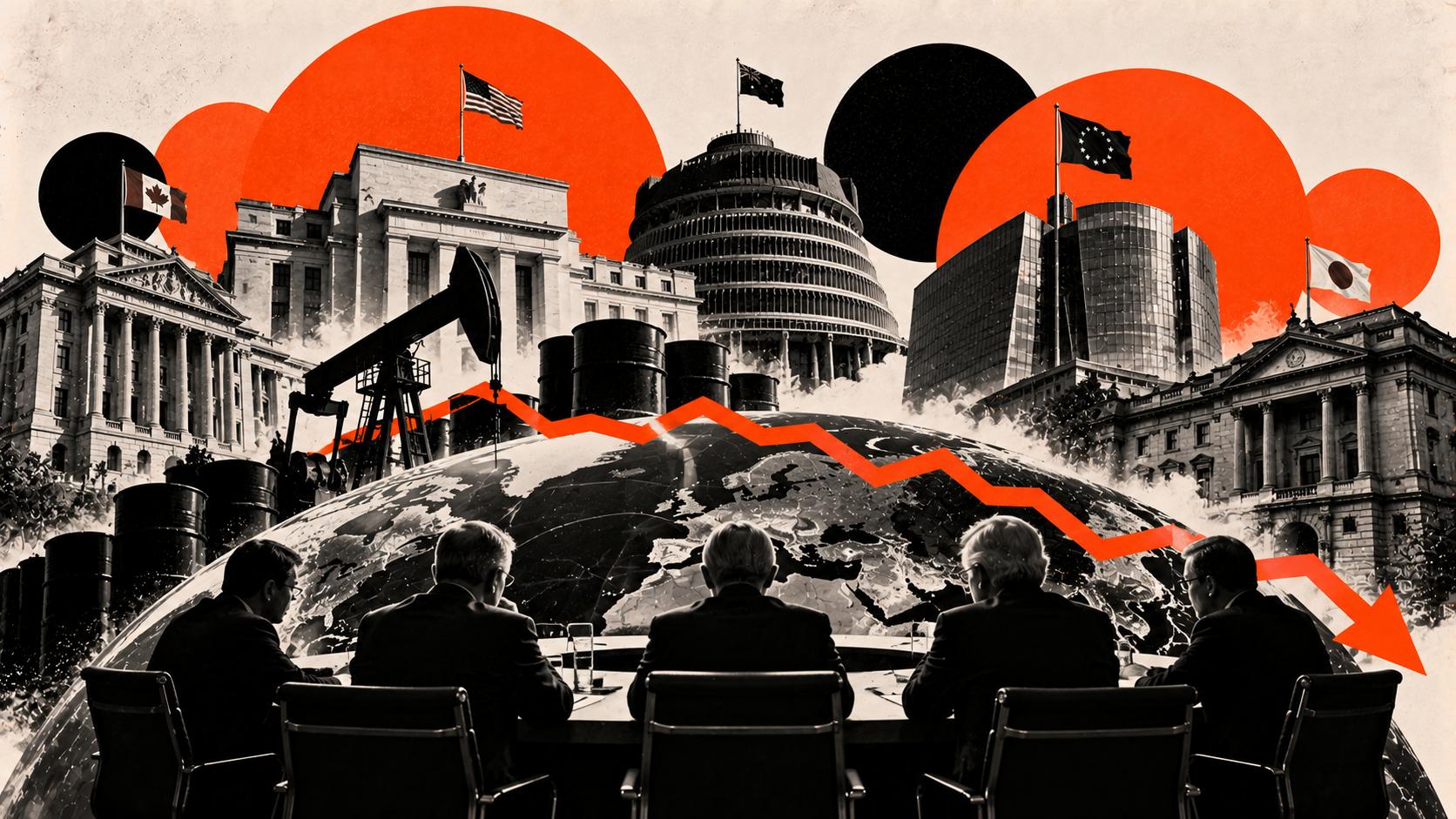
This week, monetary policy decisions will be the primary market movers. The key rate announcements include the Fed's decision late Wednesday and the ECB's on Thursday, where we expect both central banks to hold rates steady. Additionally, rate decisions from the Bank of England and the Bank of Canada are scheduled, and we expect all to keep their policy rates unchanged. On the data front, we look out for euro area flash April inflation and Q1 GDP from both the euro area and the US, all on Thursday.
Economic and market news
What happened since Friday
In the Middle East, hopes for peace faded as President Trump cancelled planned US-Iran talks in Islamabad, keeping US envoys in the US and stating Iran's offer was inadequate. Tehran has demanded the removal of the US maritime blockade before entering negotiations, while Iranian Foreign Minister Abbas Araqchi continues diplomatic efforts with mediators in Pakistan and Oman. Oil prices continued their upward trajectory as markets opened, with Brent crude rising 1.2% to USD 106.6/bbl at the time of writing. According to Reuters, only one oil products tanker entered the Gulf on Sunday, sustaining worries of prolonged constraints.
In the US, a shooting incident at the White House Correspondents' dinner likely targeted President Trump and his administration, with the suspect apprehended after firing at a Secret Service agent. The attack, the third assassination attempt on Trump since 2024, has reignited concerns over the security of top officials in light of heightened political tensions in the US.
Also in the US, Republican Senator Thom Tillis announced that he would allow Kevin Warsh's nomination as the next Federal Reserve Chair to advance, following the Justice Department's decision to close its investigation into current Chair Jerome Powell. Tillis had previously blocked the confirmation process, citing concerns over the central bank's political independence. Warsh's confirmation is now expected to proceed before Powell's term ends on 15 May, which means this week's meeting will be Powell's last as the Fed chair.
In China, industrial profit growth accelerated in March, rising 15.8% y/y, the fastest pace since September, underscoring the uneven nature of the economic recovery. While AI-related industries such as semiconductors remain strong, consumer-facing sectors continue to struggle due to weak domestic demand. The impact of the Middle East war is likely yet to be reflected in the data, with rising energy prices expected to increase input costs for manufacturers. This could either erode margins or result in higher prices for consumers.
In Germany, the Ifo indicator declined more than expected in April, with the assessment of current conditions falling to 85.4 and expectations dropping to 83.3, the lowest level since late 2023. The rise in energy prices has significantly worsened the outlook for the German economy, which remains highly exposed due to its large industrial sector. On Wednesday, the German government cut its 2026 GDP growth forecast to 0.5% y/y from 1.0%, highlighting fiscal policy as the sole expected growth driver this year.
In Sweden, producer prices rebounded in March, rising 2% y/y after five months of declines, driven by a sharp 15.8% surge in energy prices. Excluding energy-related products, producer prices fell 0.5% y/y. On a monthly basis, producer prices rose 0.6%, with domestic and import prices both up 3.7%, led by higher costs for crude oil and refined petroleum products.
Equities: Equity markets rose on Friday and over the course of last week, but we are now moving into a much more divergent market environment than the one we have seen over the past several weeks. Until recently, markets have largely traded in a broad risk-on or risk-off fashion, depending on developments around the war in Iran. Last week was different.
We saw both a strong earnings impulse, with technology performing particularly well, and at the same time an energy sector that outperformed on the back of higher oil prices. When technology and energy lead, the US benefits the most. Europe, in contrast, continued to lag and traded roughly sideways. This is also consistent with the recent macro data, which increasingly suggest that Europe is suffering materially more from the war in Iran than the US.
It is worth noting that both the S&P 500 and Nasdaq reached new all-time highs on Friday, while the Nikkei 225 is making a new all-time high this morning. On rotations, the divergence continues to increase. Even though energy performed well last week, the technology sector has outperformed energy by around 20% over the past month.
With the US close on Friday, semiconductors had risen for 18 consecutive trading days in the US(!). That illustrates very clearly the powerful underlying technology story that continues to unfold despite the war.
This morning, Asian markets are higher once again, led by South Korea and Taiwan, which are up roughly 60% and 35% year-to-date, respectively. We have said this many times before, and you know one of our key fundamental allocation points: sector allocation is crucial for how to think about regional allocation. If that was not obvious before, it certainly is this year.
European futures are also higher this morning. Tech-heavy Nasdaq futures are trading higher, while Dow Jones futures are slightly lower.
FI and FX: An important central bank week awaits with meetings (in order) from the BoJ, BoC, FOMC, BoE and the ECB. With the conflict in the Middle East entering its 9th week, the central bankers are forced to give their assessment on the experienced impact and their expectations going forward. The week starts light on macro releases but later this week we will get EA HICP and US Q1 flash GDP as wells as important data from Norway and Sweden. Markets in Asia open the week with a constructive risk-on sentiment despite oil prices remaining at the elevated levels from last Friday (June Brent Oil contract at USD106.6 this morning).
Author

Danske Research Team
Danske Bank A/S
Research is part of Danske Bank Markets and operate as Danske Bank's research department. The department monitors financial markets and economic trends of relevance to Danske Bank Markets and its clients.