BoJ just hiked and US-Iran deal is on the table: Why Japanese Yen is still around 160.00

The Bank of Japan lifted interest rates from 0.75% to 1.00%, its highest level in more than three decades. The landmark move aims to stabilize a sharply weakening Japanese Yen, but by looking at the immediate market reaction, it doesn’t look like it’s going to work.
The Japanese Yen’s 160.00 battle
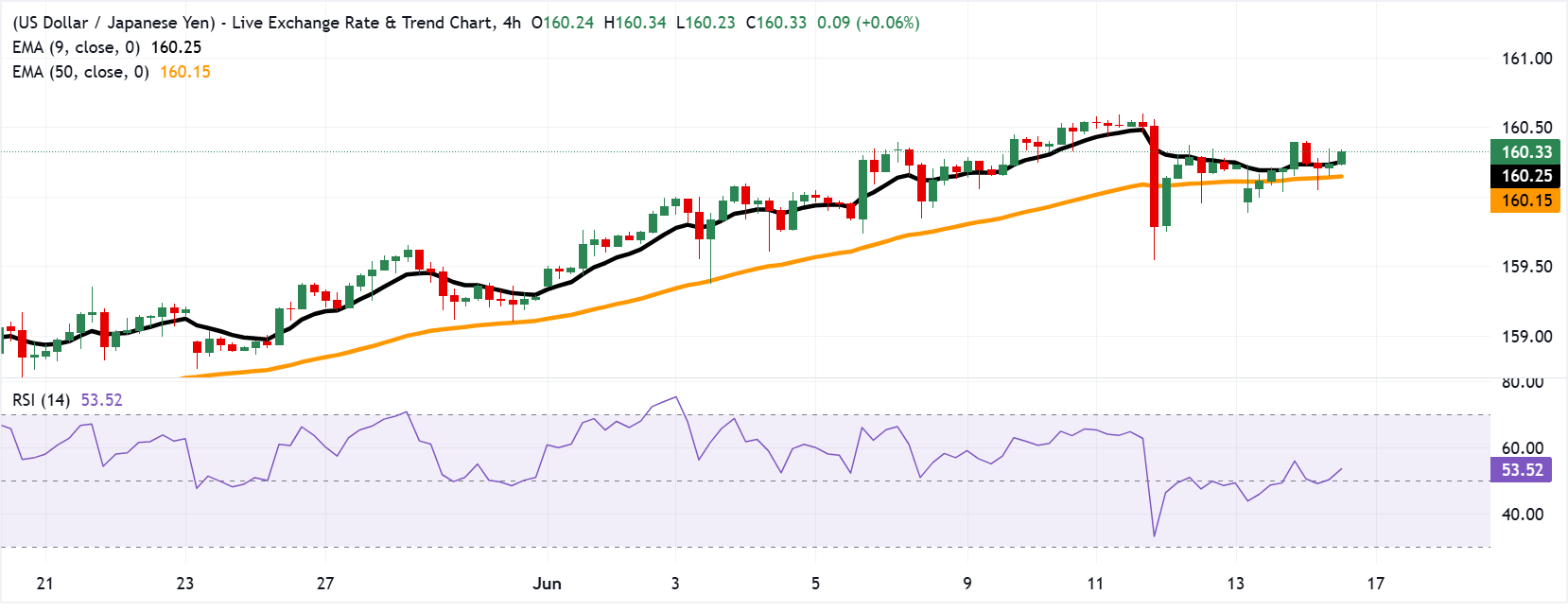
The BoJ rate hike alone seems to be failing to bring the USD/JPY pair below 160.00. This is because the rate increase had been largely priced in by markets.
The Japanese Yen (JPY) may have gained some more ground if the BoJ had delivered an aggressively hawkish surprise, but that didn’t really happen. In the short-term, it looks like the only way to propel the Yen would be another round of currency intervention by Japanese authorities.
Is Hormuz already open to business?
Bank of Japan Deputy Governor Shinichi Uchida was in charge of handling the press, as Governor Kazuo Ueda remains hospitalized with a liver cyst infection.
Uchida celebrated the framework agreement between the US and Iran, which should eventually bring down energy prices. “That is a welcome move," Uchida said. "Having said that, there is uncertainty on the pace of improvement in Oil distribution."
In plain words: we’re happy with the news, but we’ll believe them when we see normalcy in the Strait of Hormuz. BoJ Uchida also noted that the domestic economy continues to align with the central bank’s baseline forecasts, while warning that underlying inflation could risk overshooting its target.
He reaffirmed the BoJ's commitment to incremental rate hikes as economic data permits, adding that future policy pacing will closely monitor shifting geopolitical risks, particularly in the Middle East. But again, nothing really surprised markets on the hawkish side.
The "priced in" effect
The market had already fully anticipated a 25-basis-point hike. Because this move was largely baked into current market pricing, a simple 25 bps hike is seen as a defensive baseline rather than an aggressive tightening push.
With the 1.00% rate now firmly in the rearview mirror, markets have already begun pricing whether looming domestic stagflation pressures will allow the BoJ to reach a projected 1.25% by late 2026.
The massive US-Japan interest rate differential weighs
Following the Bank of Japan's recent rate hike, the 10-year Japanese Government Bond (JGB) yield climbed above 2.60%.
Despite this increase, the yield gap between the United States and Japan remains staggeringly wide. With the US 10-year Treasury currently yielding above 4.40%, the massive spread continues to heavily favor Dollar-denominated assets.
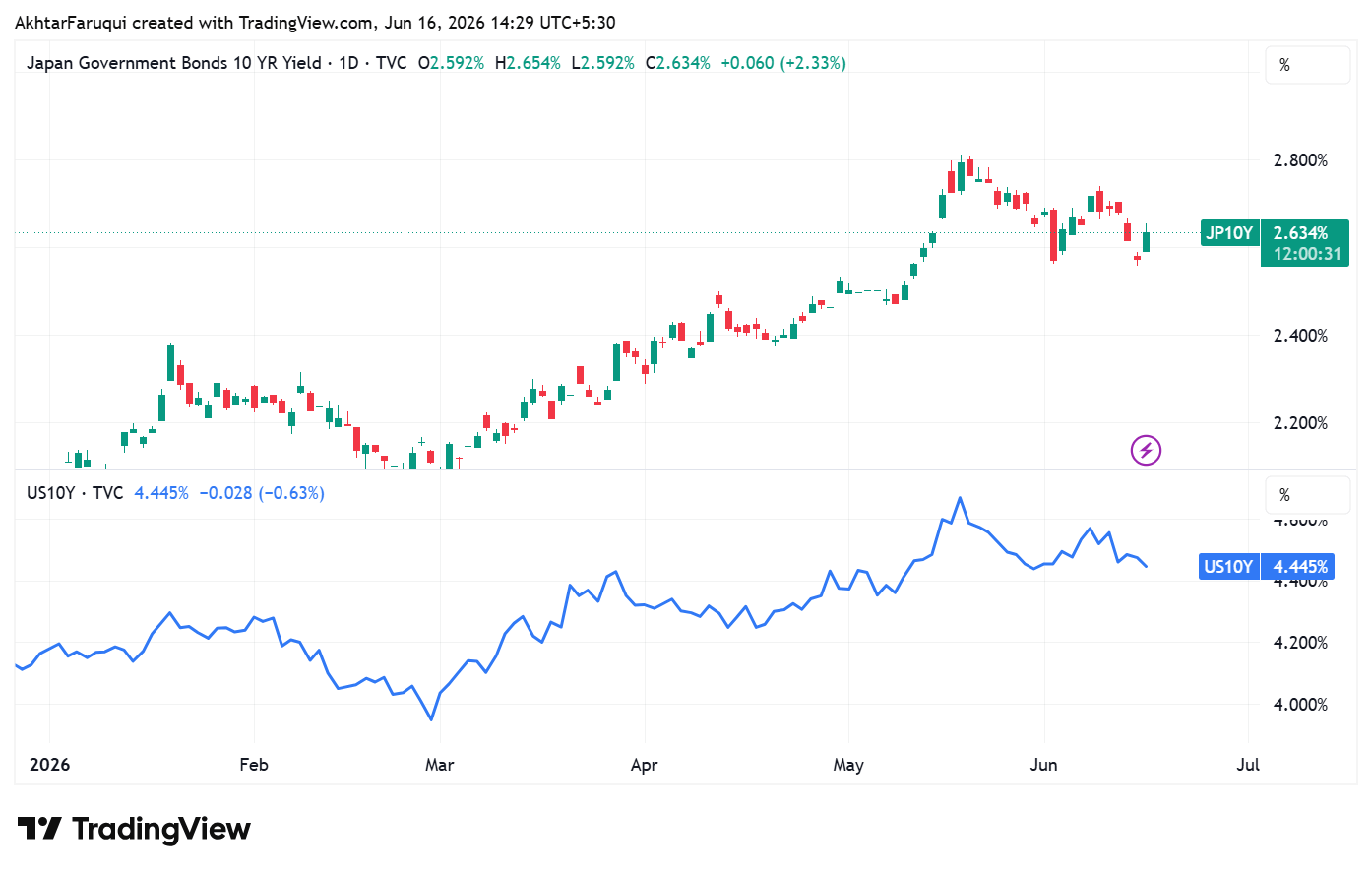
This yield gap differential ensures that the Yen carry trade remains highly profitable for investors. By borrowing in cheap Yen to invest in higher-yielding, Dollar-denominated assets, traders can continue to capitalize on the wide spread, keeping pressure on the Japanese currency despite the BoJ's recent policy tightening.
Further rate increases by the Bank of Japan would narrow this gap – analysts at Societe Generale expect the bank to increase at a cadence of 25bps every quarter to reach the terminal policy point of 2% by the end of next year –, but the Fed could also respond with higher rates if inflation in the US remains above target.
The communication challenge
The primary impact of BoJ Governor Ueda's absence was felt in communication. Market participants generally view a change in the briefing head as a risk. Traders noted that parsing the subtle nuances of future rate trajectories is harder when a less familiar official is delivering the message. Ueda is expected to return at the next meeting, scheduled for the end of July.
What would it take to resist 160.00?
For the JPY to reverse its course and successfully push USD/JPY back below 160.00, it needs aggressive BoJ forward guidance. BoJ officials would need to explicitly signal a rapid pace of upcoming rate hikes alongside an aggressive reduction in their Japanese Government Bond (JGB) monthly buying program.
Japan’s Ministry of Finance has previously spent record-breaking JPY 9.2 trillion to defend the 160.00 line. A rate hike acts as a fundamental floor, but the actual "teeth" guarding 160.00 right now is the looming threat of authorities stepping into the market to forcefully dump US Dollars and buy Yen.
The 160.00 line still matters, but its psychological power may be fading. If markets begin to believe intervention is no longer enough to defend the Yen, USD/JPY could test Japan’s tolerance far more aggressively.
Author

Akhtar Faruqui
FXStreet
Akhtar Faruqui is a Forex Analyst based in New Delhi, India. With a keen eye for market trends and a passion for dissecting complex financial dynamics, he is dedicated to delivering accurate and insightful Forex news and analysis.
















