|

Analyzing select group of USD based pairs

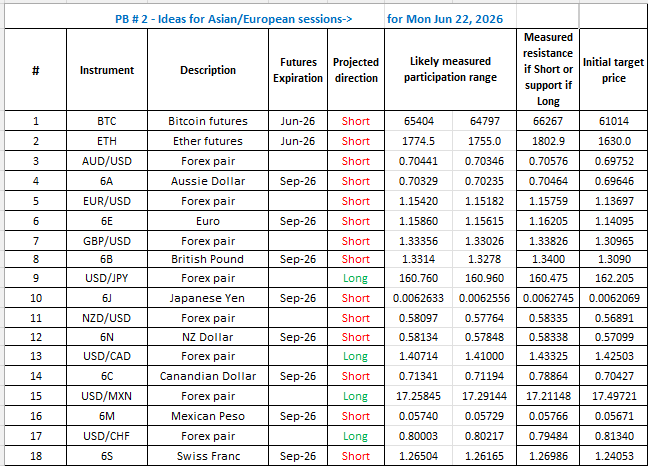
EUR/USD initially slipped on Friday but then rebounded, showing renewed strength after several days of weakness. With U.S. markets now past the holiday weekend, a bounce from the 1.1417 area was expected and appears to be holding into the Monday session. This could set up a modest recovery early in the week, provided there is no major deterioration in risk sentiment. However, there is a band of resistance from 1.15420~1.14945 which could stall any move to the upside if traders continue to weigh this with the ongoing negotiations in Switzerland between warring nations. For now, risk appetite may weigh on the U.S. dollar. The 1.16 level should continue to act as resistance, as it sits near the middle of the broader range and aligns with the 200-day EMA. Although the 50-day EMA is attempting to cross below it, the pair remains largely sideways. In this environment, short-term buyers may have the advantage. However, a break below 1.14 could open the door to a move toward 1.12.

Interest rates have fallen in both economies, largely offsetting one another and reinforcing the likelihood that EUR/USD remains within its yearlong range. Aside from occasional brief moves, the pair continues to trade between support near 1.14, where it bounced on Friday, and resistance around 1.15760, a level that has repeatedly capped rallies.

Here is our Playbook for the day session of Monday June 22, 2026 for the US trading session:
Author

Murali Sarma

Murali Sarma

Trade Guidance, LLC

Murali Sarma is a private investor and trader, dealing in currencies, commodities (grains, energies, metals, bonds, indices) and stocks.


More from Murali Sarma
Share:

Editor's Picks

AUD/USD meets fresh supply and tests 0.7100 amid weak Australian PMIs

AUD/USD has come under fresh selling pressure and is testing 0.7100 in the Asian session on Wednesday. Australia's flash PMIs showed manufacturing slipped into contraction and services expanding slowly for a second straight month, renewing the pair's downside. Furthermore, a bullish US Dollar acts as a headwind for the pair as traders keenly await the crucial Trump-Xi summit on Thursday. Meanwhile, markets shrug off US-Iran indirect talks.

USD/JPY stands firm near mid-157.00s, close to two-week high

USD/JPY hovers around mid-157.00s in the Asian session on Wednesday, near two-week highs touched last Friday as the BoJ's dovish rate hike continues to undermine the Japanese Yen. Meanwhile, the US Dollar remains firm amid the Fed's hawkish stance, adding support to the pair, though JPY intervention fears cap further gains. Markets pay little heed to the completion of the round of US-Iran indirect talks ahead of Trump-Xi meeting.

Gold approaches $4,300 as Fed hike bets boost USD to fresh high since late July

Gold extends its steady intraday slide through the first half of the European session, reversing a part of the previous day's recovery from sub-$4,300 levels. US Dollar buying remains unabated on the back of the Federal Reserve's hawkish outlook, which is seen as a key factor driving flows away from the non-yielding yellow metal.

Bitcoin outperforms US equities and Gold since mid-August
Bitcoin (BTC) extends its rally, trading above $86,000 at the time of writing on Wednesday after gaining more than 6% so far this week. Strong institutional demand is supporting BTC’s bullish price action, with spot Exchange Traded Funds (ETFs) recording over $714 million in inflows on Tuesday after nearly $1 billion in positive flows the previous day.
S&P Global PMIs expected to show resilient US economic growth in September
S&P Global will release on Wednesday its preliminary September Purchasing Managers' Indices (PMIs) for the United States, based on surveys of top private sector executives, to provide an early indication of economic momentum. The data is expected to highlight US economic resilience.
BoJ Recap: Not as hawkish as expected

The Bank of Japan (BoJ) raised its short-term interest-rate target to 1.25% from 1.00% in a 7-2 vote, marking another step in the normalisation of monetary policy and widely matching what everyone has been expecting for weeks.