Aluminum market breaks as supply shock empties the buffer
- The aluminum market is no longer trading with comfortable surplus assumptions. It is operating on razor-thin visible inventory that can be absorbed in a single demand surge.
- The real risk is not headline supply disruption but the collapse in accessible metal. When availability tightens, price becomes a rationing tool rather than a valuation signal.
- With the Gulf supply channel under stress and Western inventories already lean, the path of least resistance remains higher as buyers are forced to secure material ahead of further dislocation.

Supply shock empties the buffer
What is unfolding in the aluminum market is not just another tight-market narrative. It is the moment the tape realizes the warehouse doors were never as full as advertised.
Mercuria’s call cuts through the noise with trader clarity. This is not a squeeze you fade into quarter-end positioning. It is a structural air pocket forming under a market that was already leaning the wrong way. When Nick Snowdon talks about the largest single supply shock since 2000, he is not reaching for drama. He is describing a market where the marginal ton has simply vanished from the screen.
Nine percent of global supply sitting in the Gulf was always a quiet risk parked off to the side like unused optionality. Now the Strait of Hormuz has turned that optionality into a hard constraint. Force majeure declarations are not just legal language. They are the market’s way of admitting the physical chain has snapped. Once alumina flows stall this is not a tap you reopen overnight. Smelters do not flick back on like a light switch.
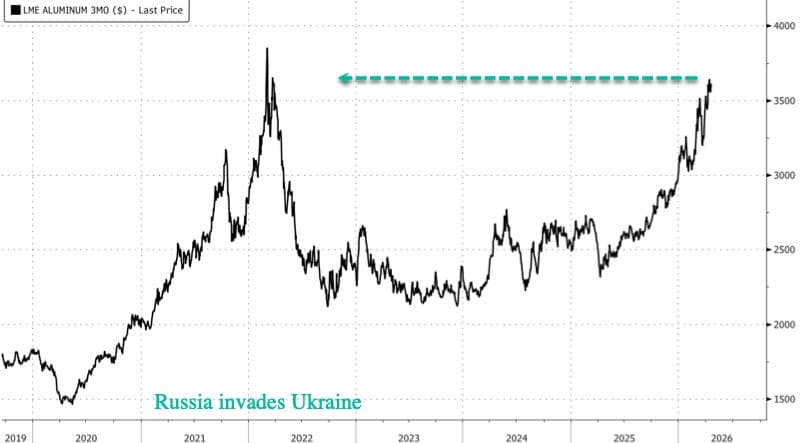
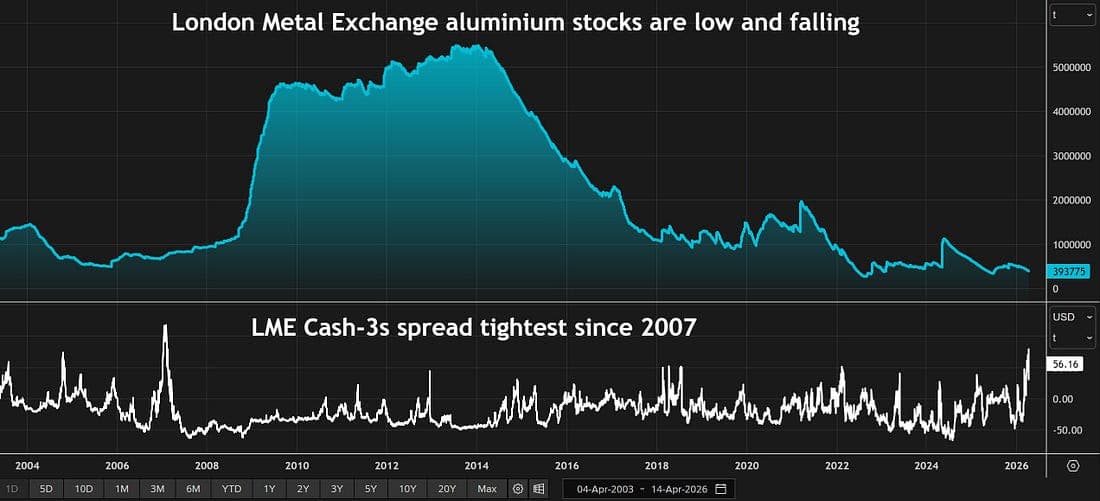
The price action is already telling you something is broken. A four-year high is not a rally. It is a repricing of scarcity. And the real tell sits underneath. A projected 2-million-ton deficit, staring down barely 1.5 million tons of visible inventory. Even if you stretch and count the shadow stocks, the buffer looks thin enough to trade through in a single panic cycle.
Aluminum market faces ‘black swan’ supply shock as Middle East war disrupts global flows( Mercuria says)
That is where JPMorgan’s black hole analogy lands. This is the kind of setup where the market stops trading direction and starts trading availability. Once participants realize the inventory cushion is more theoretical than real, the psychology flips. Every consumer becomes a hoarder. Every producer becomes a reluctant seller. Liquidity dries up exactly when you need it most.
Aluminum in crisis: War, tariffs and a market running on empty ( Reuters)
Goldman’s read is the other side of the same coin. The initial instinct to fade the move, that classic trader reflex to sell the headline, now looks like a positioning error. In this regime, uncertainty is not a discount. It is the premium. History says you do not short these shocks. You chase them because the rebalancing happens at higher prices than anyone is comfortable underwriting.
What makes this one dangerous is the downstream chain. Aluminum is not a niche input. It is the bloodstream of industrial production. Aircraft, autos, defence systems, and power grids. When the feedstock tightens, everything downstream starts bidding against each other. That is when you get cross-asset bleed. Margins compress. Project timelines slip. Suddenly, a metals story becomes a macro story.
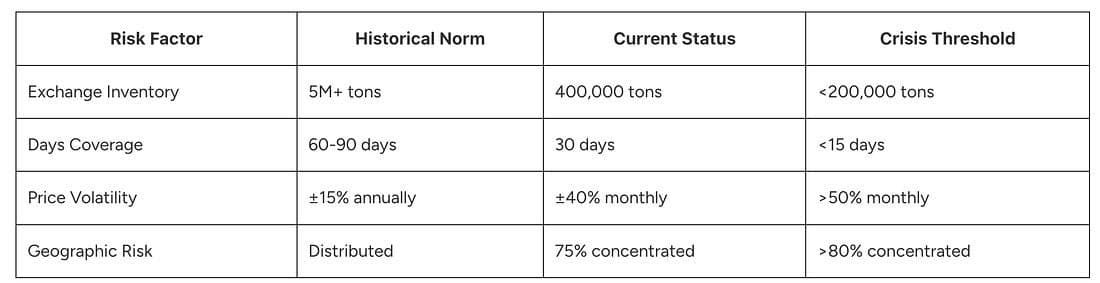
And the geographic exposure sharpens the edge. The United States and Europe are effectively running lean into this shock, dependent on Gulf flows that are now compromised. Low inventories in those regions mean they do not have the luxury of waiting this out. They have to bid aggressively and immediately.
Strategic supply chain fragility matrix: ( April 19)
Discovery/alert
This is how a commodity market stops behaving like a market and starts behaving like a rationing mechanism.
From Mercuria to JPMorgan to Goldman Sachs, the message is unusually aligned for a street that rarely sings in unison. The aluminum market is not just tight. It is transitioning into a regime where price is no longer the balancing tool. Availability is. And once that shift takes hold, the path of least resistance is not sideways. It is higher, sharper, and far more disorderly than most are positioned for.
Author

Stephen Innes
SPI Asset Management
With more than 25 years of experience, Stephen has a deep-seated knowledge of G10 and Asian currency markets as well as precious metal and oil markets.