|

Advanced economies facing the risk of stagflation

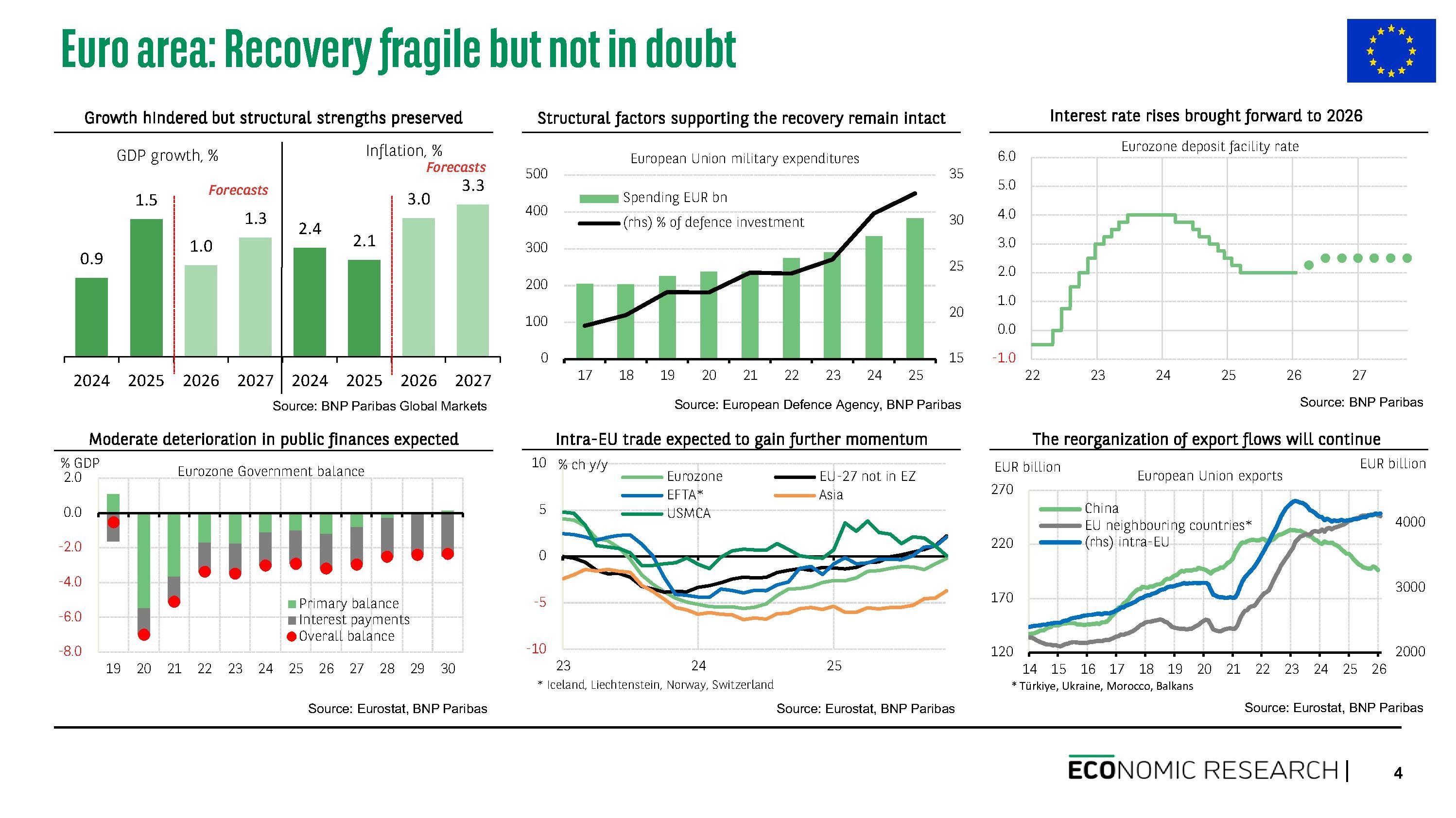
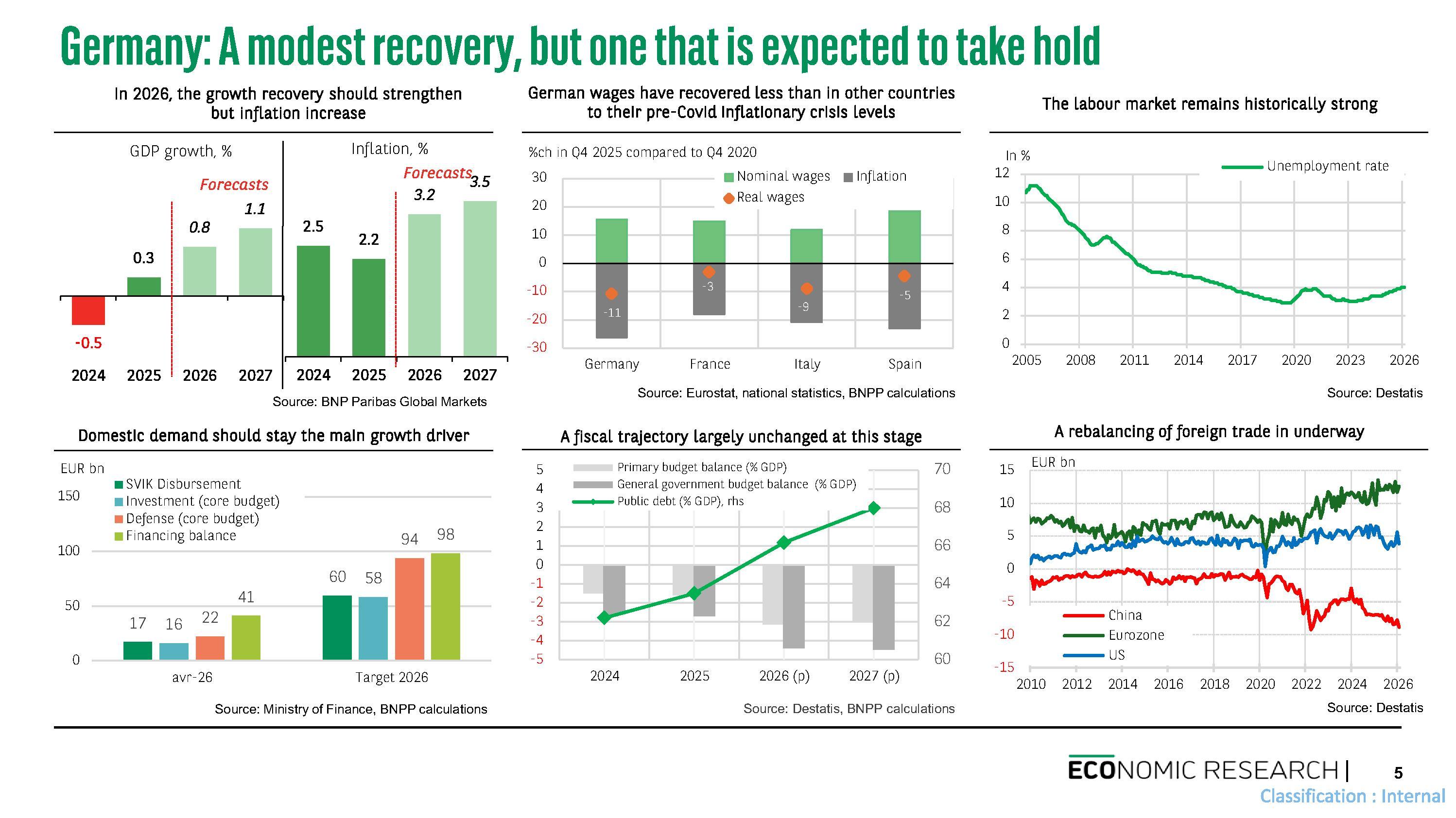
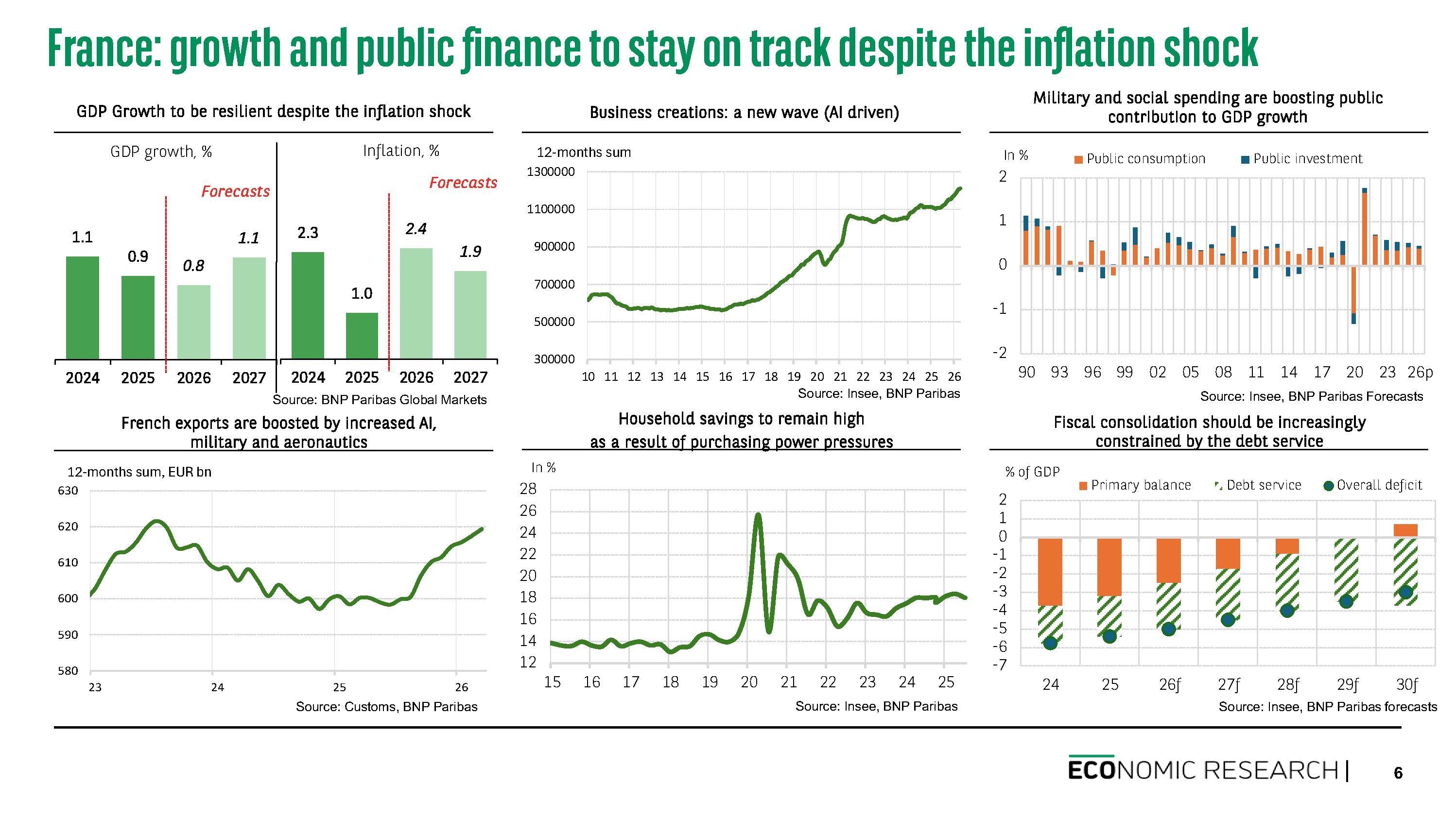
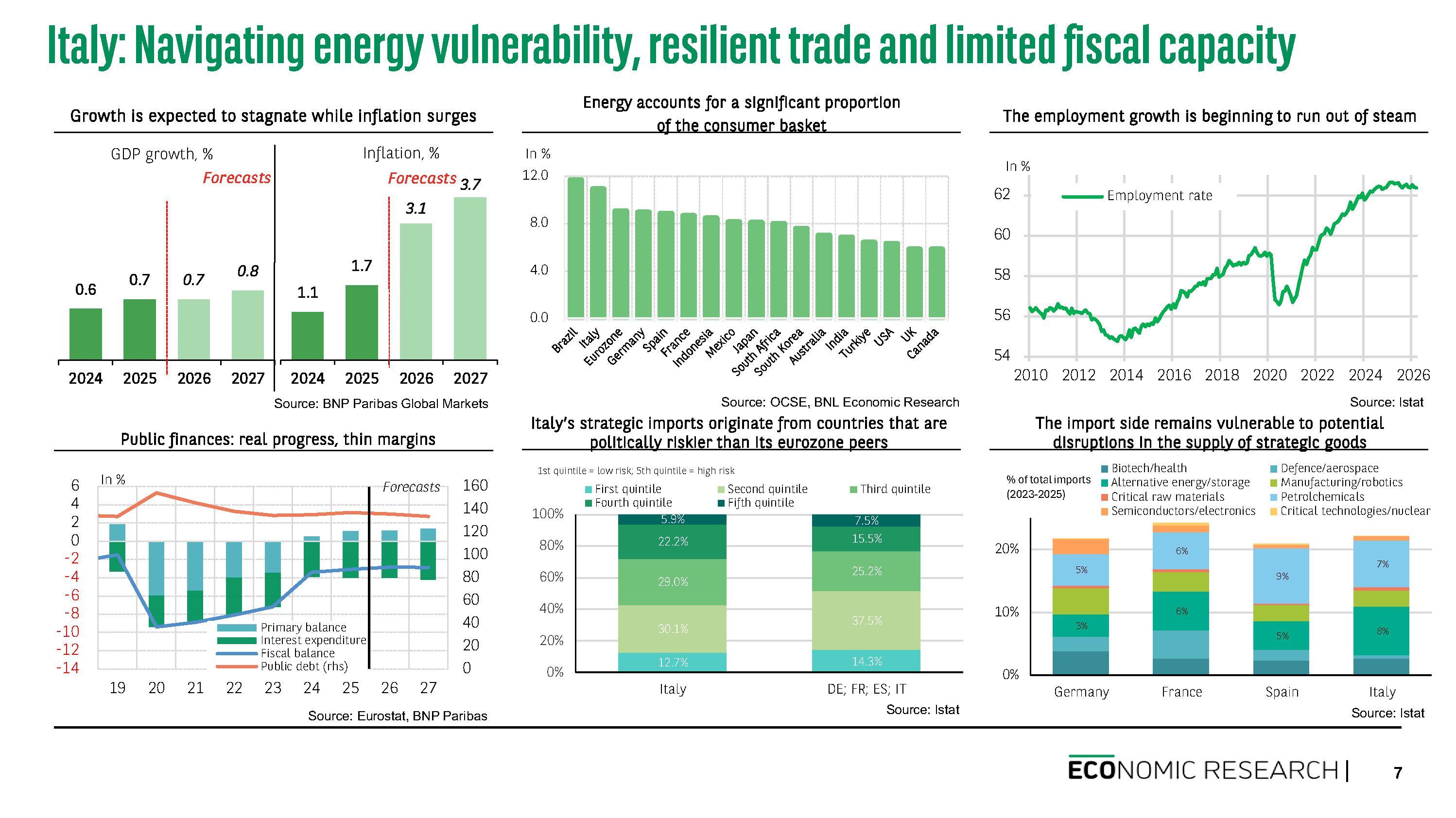
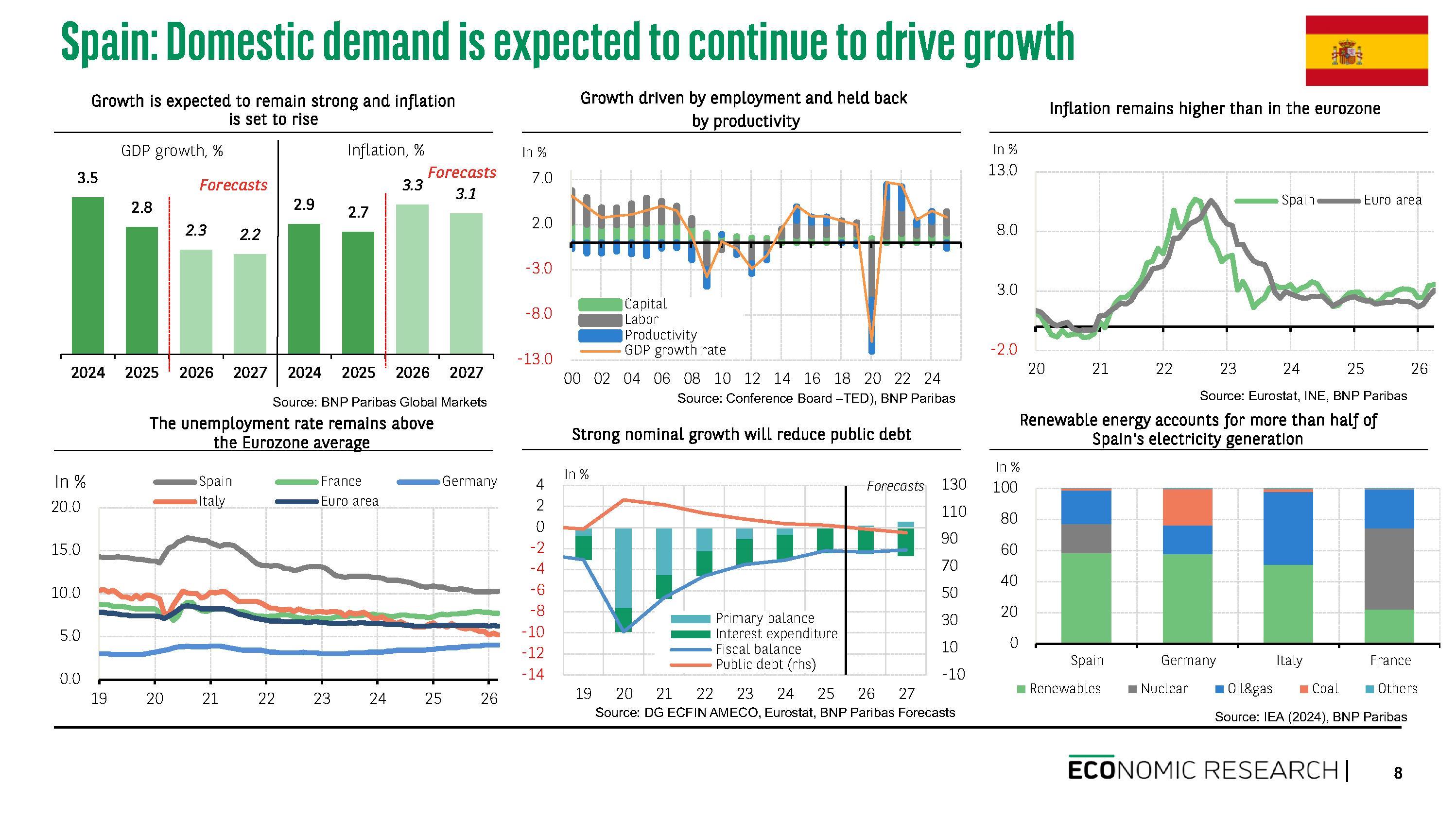
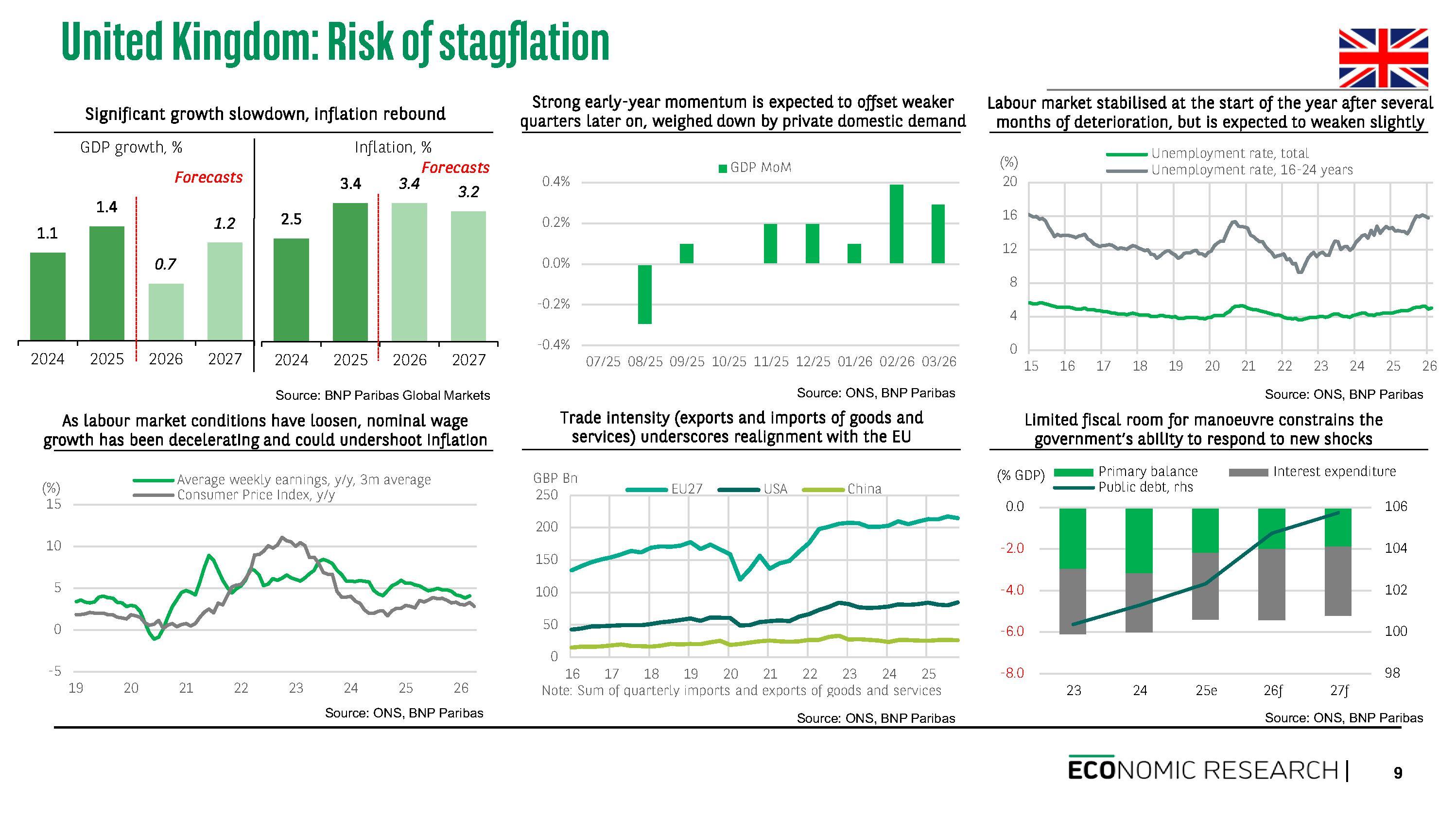
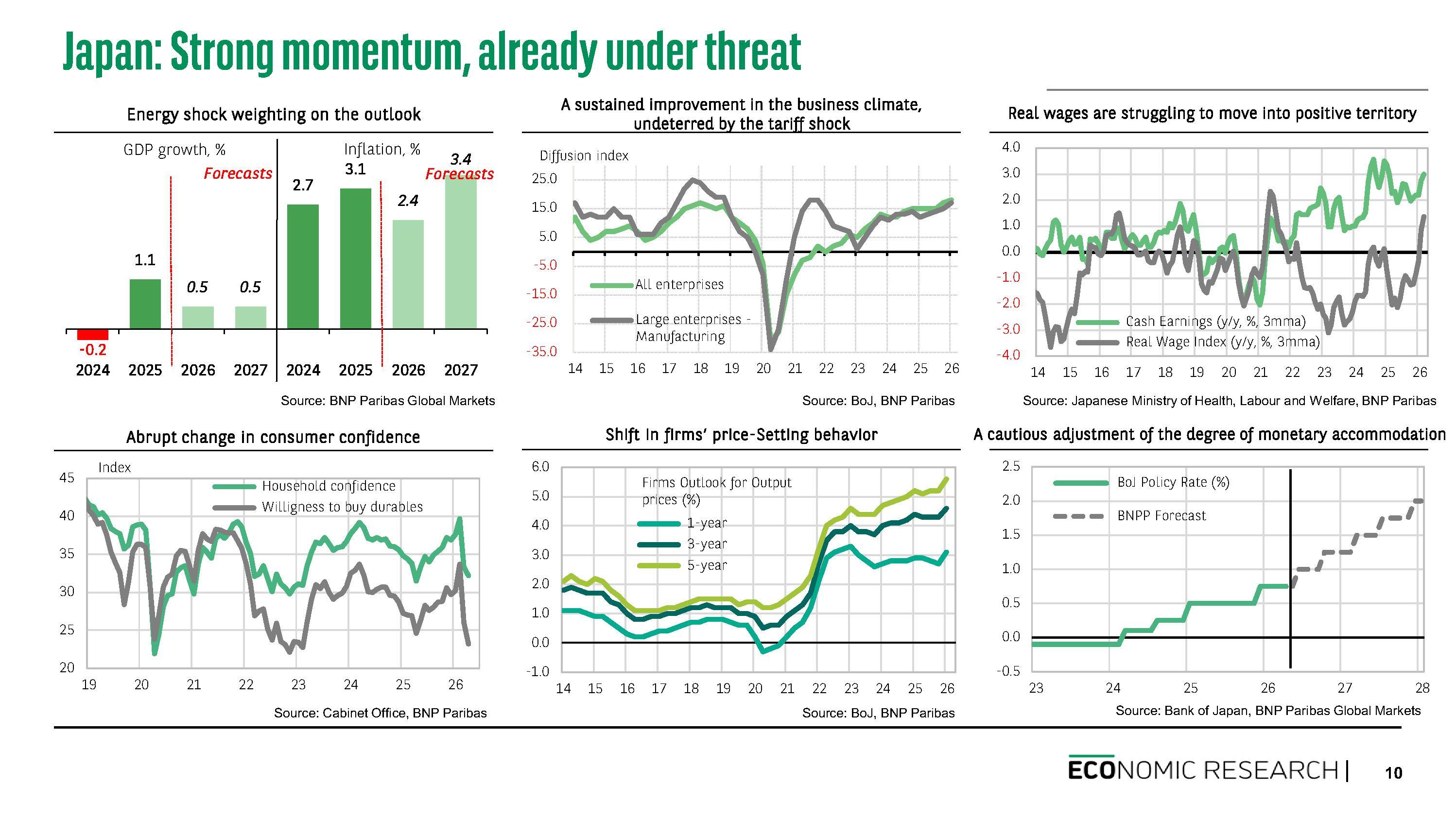
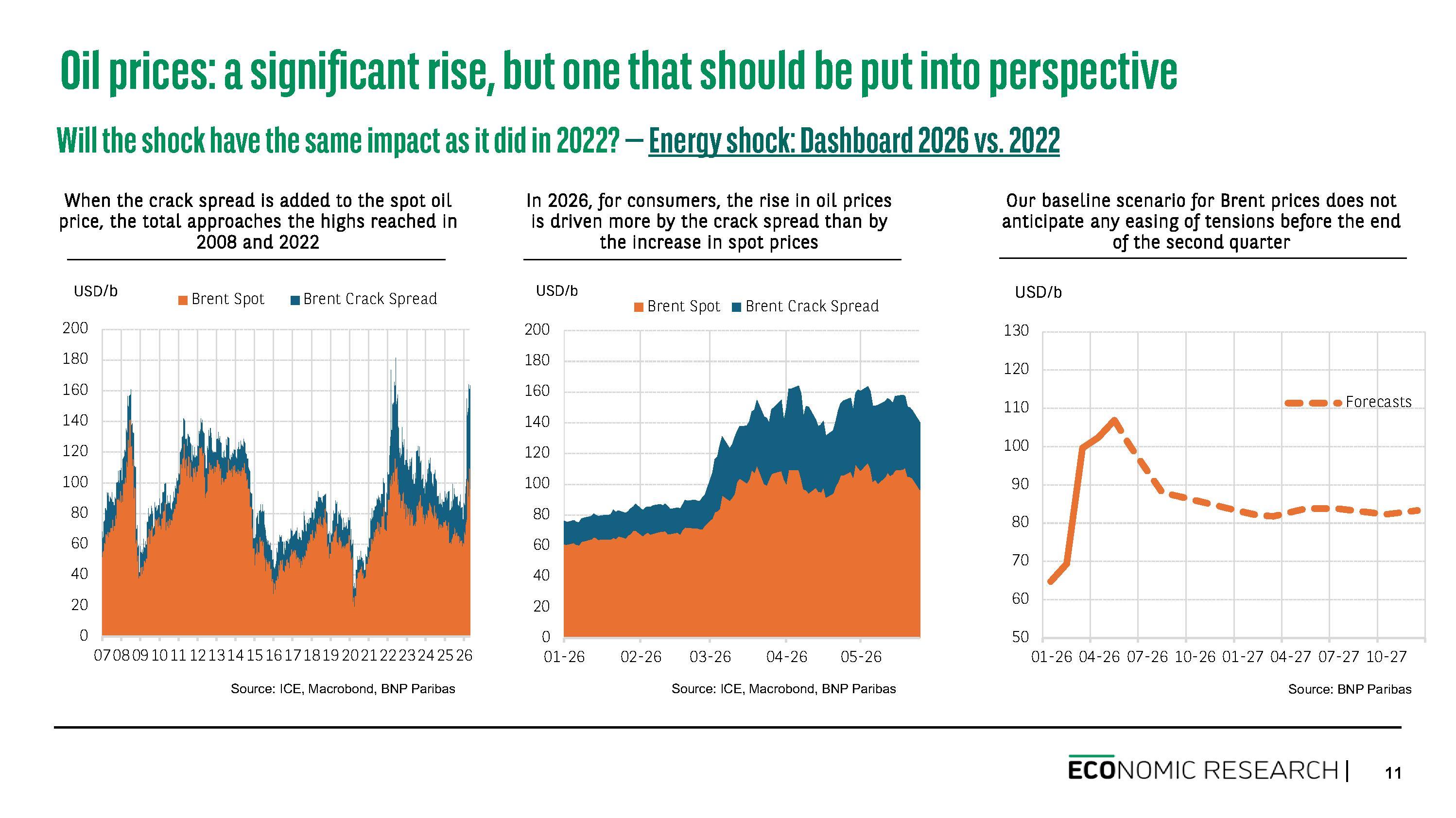
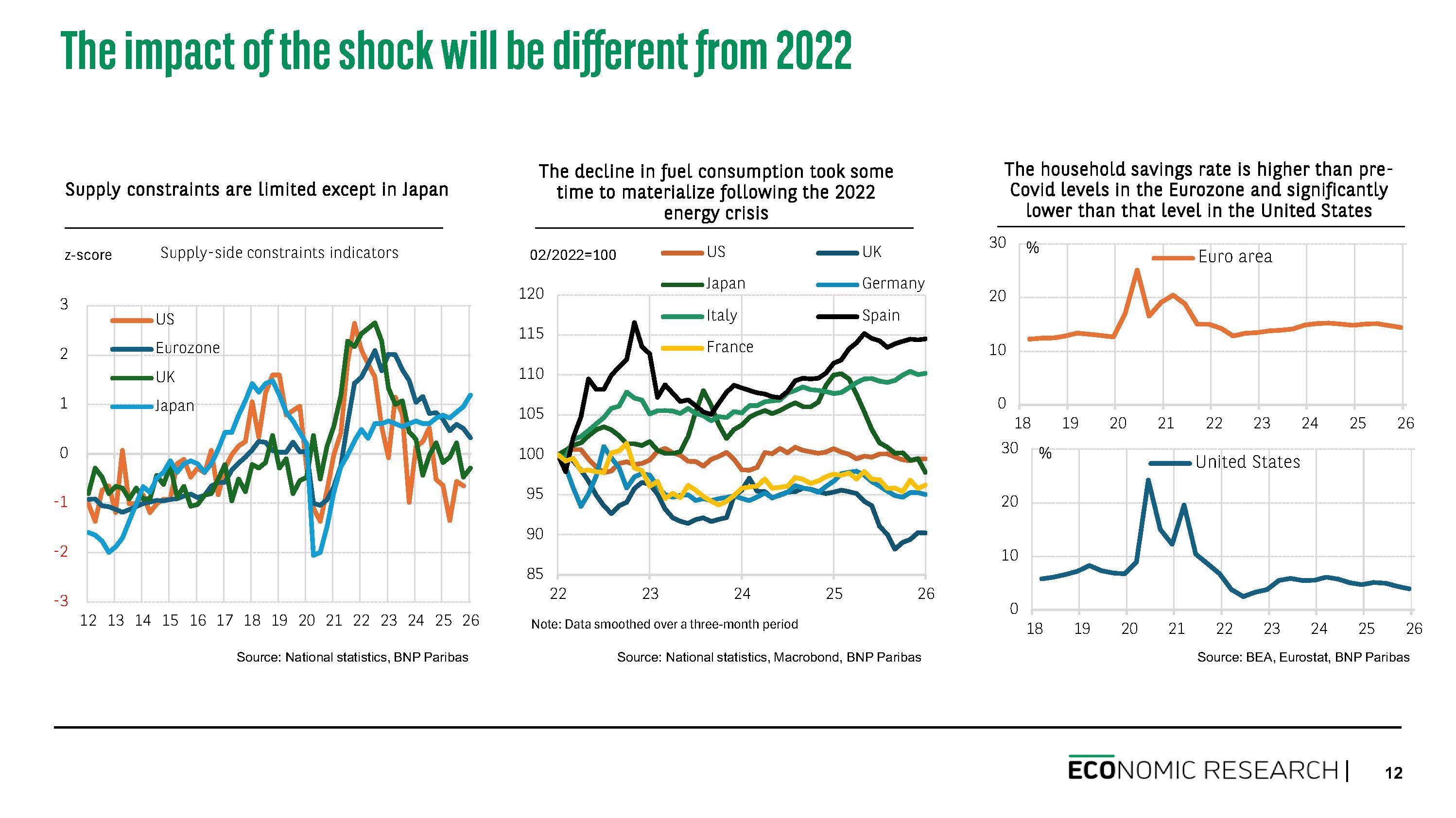
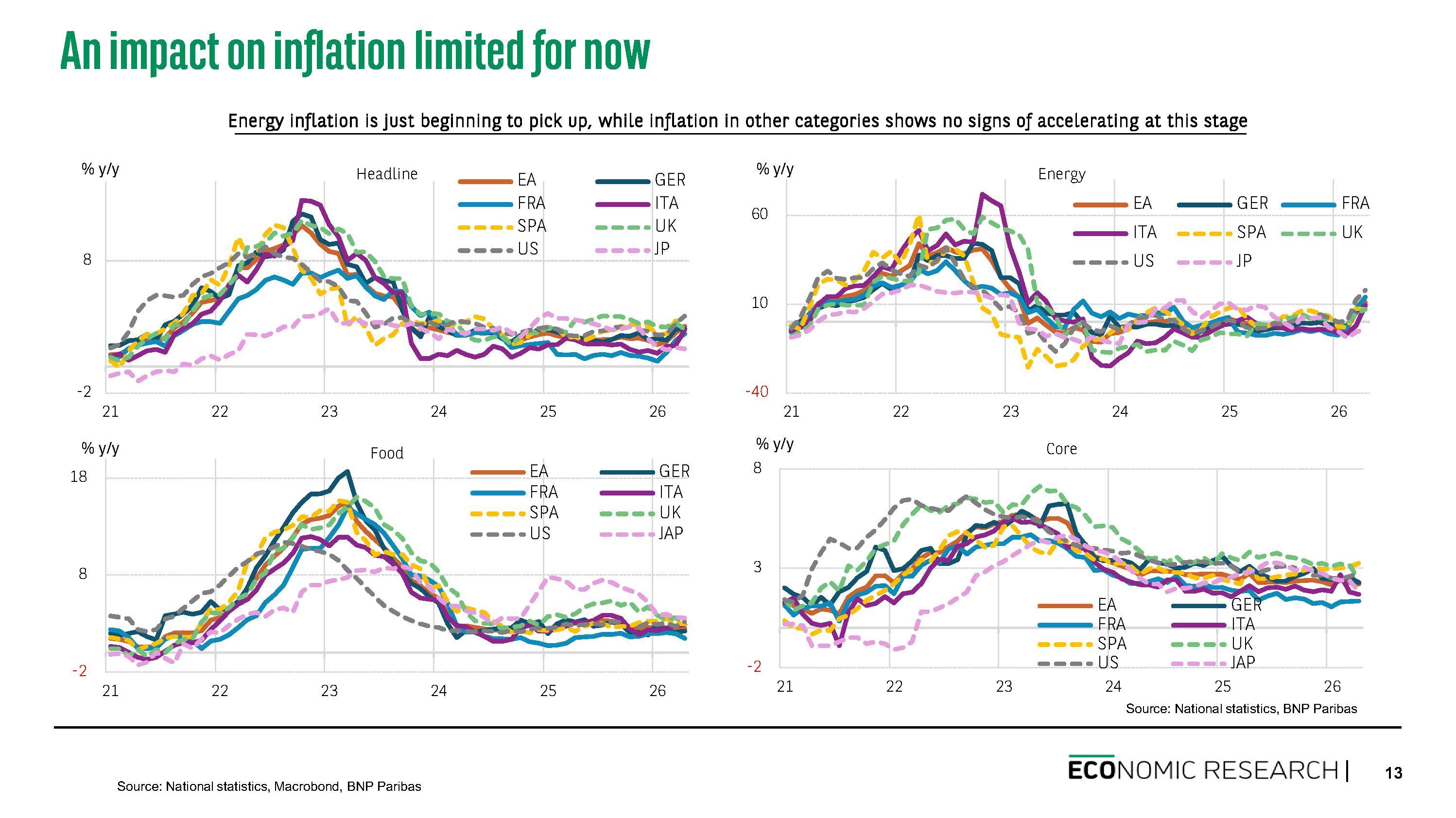
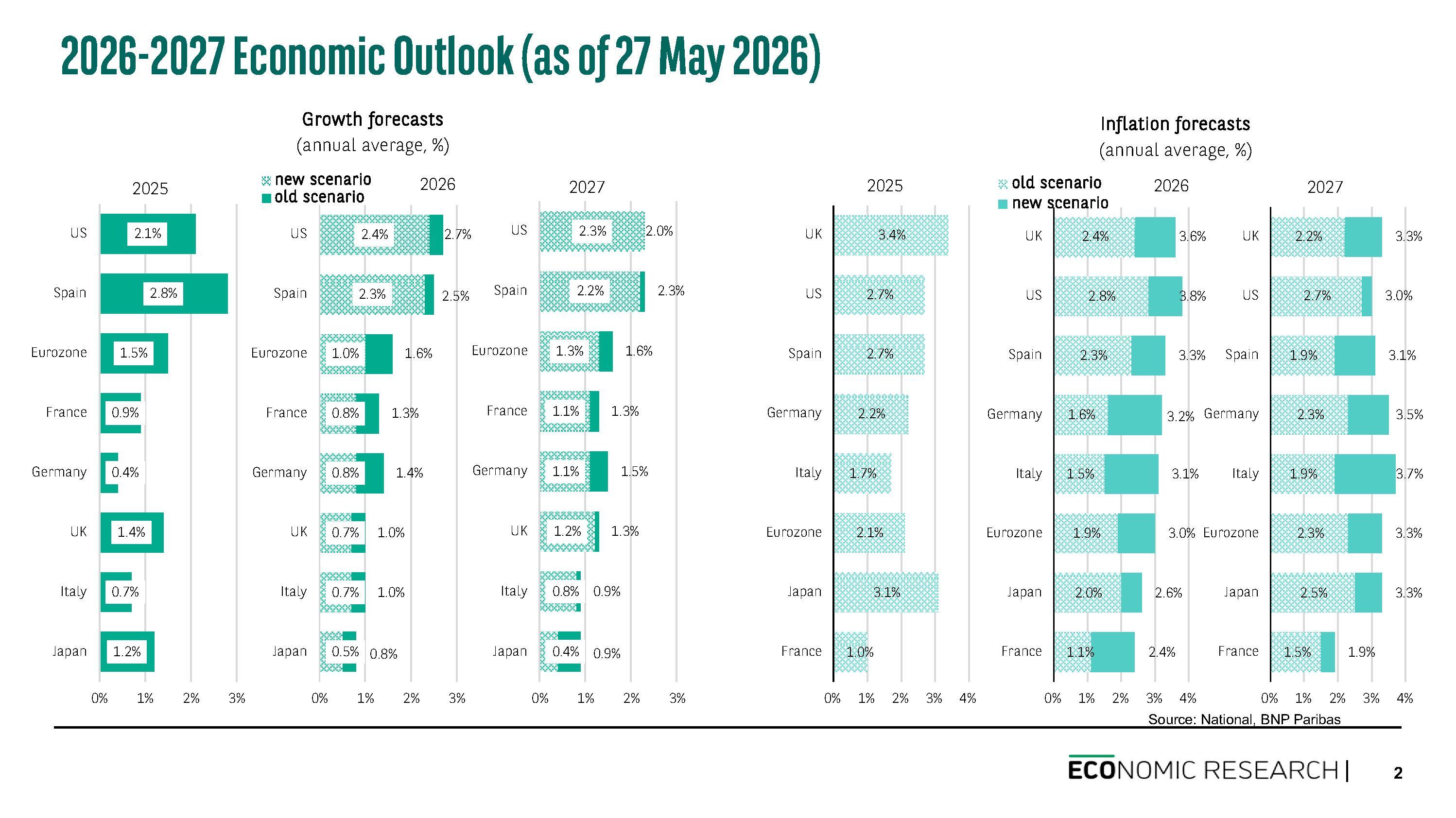
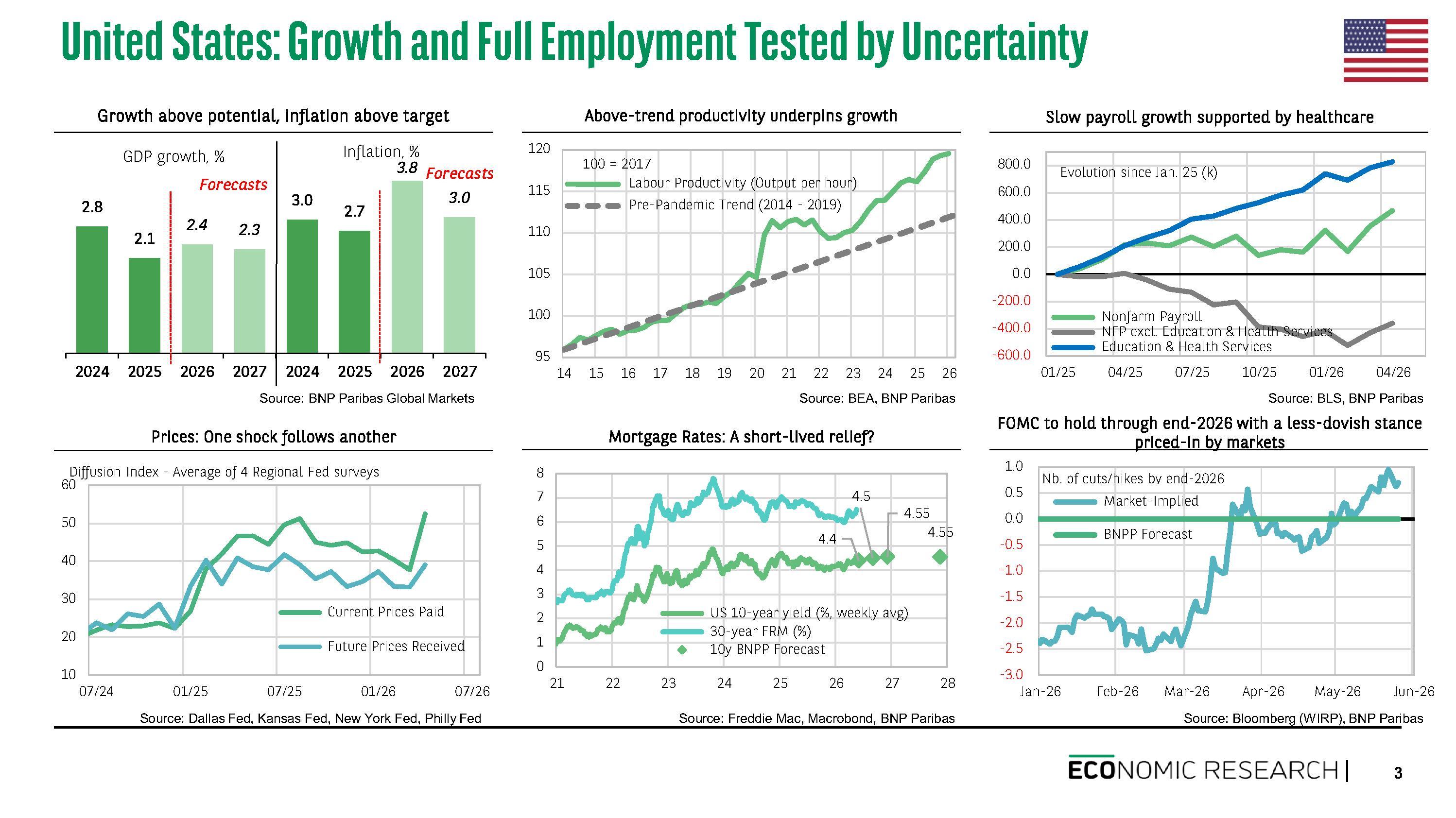
Advanced economies proved resilient in 2025 despite a tariff shock that disrupted global trade. By early 2026, they were on track for faster growth and lower inflation. A fresh shock linked to the war in the Middle East, however, is reigniting inflation while slowing growth. This mix primarily reflects the impact of a likely decline in purchasing power on consumer spending.

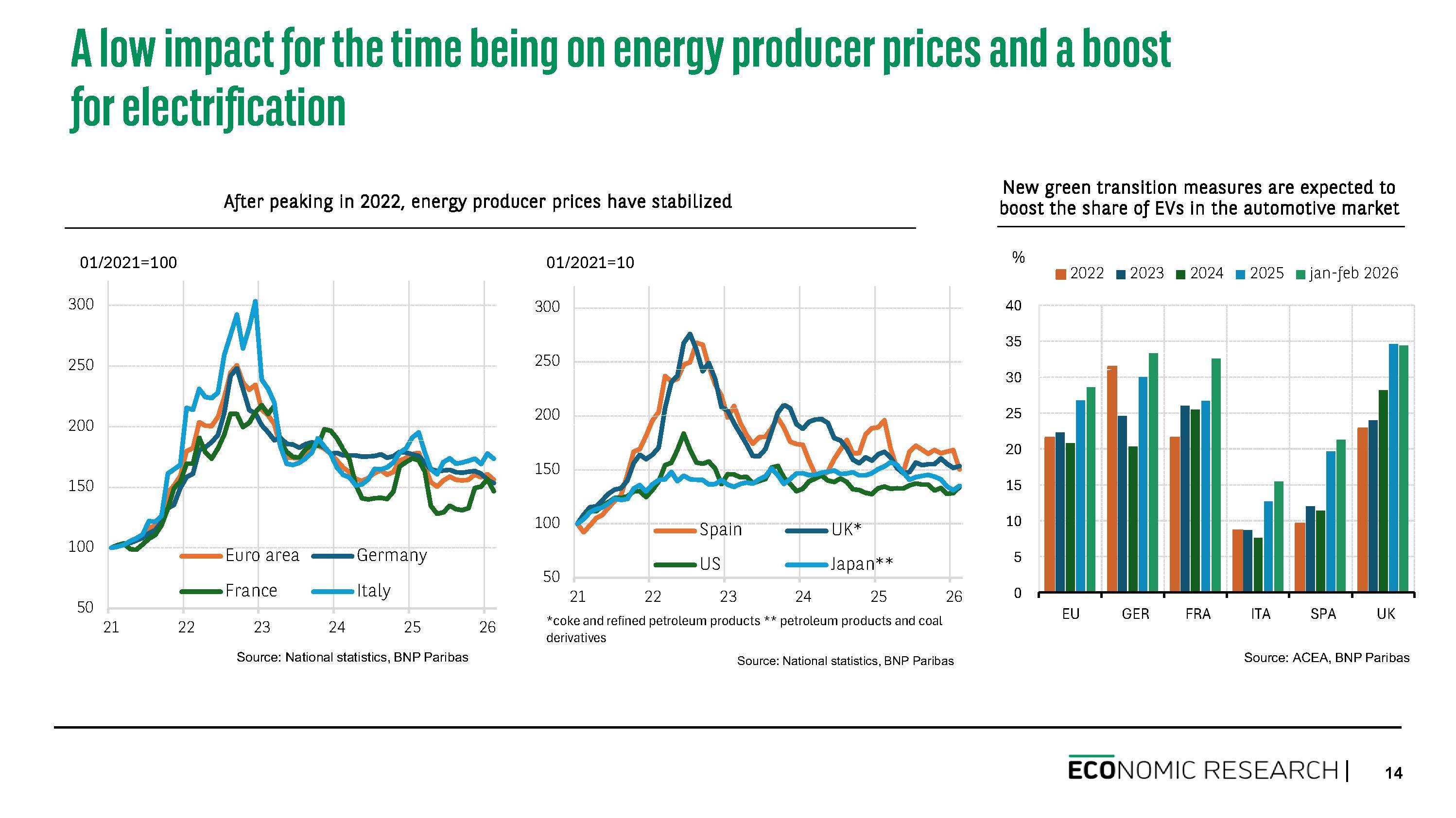
However, many of the factors that underpinned 2025 growth — AI development, higher defense spending (especially in Europe), and continued trade growth — are set to persist in 2026. They would be reinforced by an acceleration of electrification, against a backdrop of rising oil prices and an AI-driven rise in electricity demand.

These growth-supporting factors should limit the drag on growth to -0.4pp (on average), while the shock would add about 1.1pp to inflation.

Meanwhile, major advanced economies’ fiscal leeway has narrowed as public debts and interest rates have risen. Fiscal support for households would therefore be significantly less important than in 2022. At the same time, central banks will likely have to raise rates to prevent inflationary pressures from becoming entrenched. The ECB and the BoE are expected to follow suit. The BoJ is expected to continue the ongoing, very gradual monetary adjustment. The greatest uncertainty surrounds the Fed, but we still anticipate that it will remain on hold throughout the year.
Author

BNP Paribas Team

BNP Paribas Team

BNP Paribas

BNP Paribas Economic Research Department is a worldwide function, part of Corporate and Investment Banking, at the service of both the Bank and its customers.


More from BNP Paribas Team
Share:

Editor's Picks

GBP/USD extends the drop to 1.3360

GBP/USD builds on Monday’s decline and briefly clinches five-day lows near 1.3360 on Tuesday. Cable’s extra pullback follows the better tone in the Greenback as uncertainty in the Middle East prompts investors to adopt a cautious stance. Meanwhile, an apathetic UK labour market report also collaborates with the selling pressure on the British Pound.

EUR/USD holds gains above 1.1400 on hawkish ECB expectations despite US-Iran tensions

The EUR/USD pair trades with mild gains around 1.1405 during the early Asian session on Wednesday. A hawkish tone from the European Central Bank provides some support to the Euro against the US Dollar. Traders await the upcoming ECB interest rate decision on Thursday. 

Gold hits one-week high, near $4,100 as bulls shrug off Fed hike bets and firmer USD

Gold advances to an over one-week high during the Asian session on Wednesday, with bulls now awaiting a move beyond $4,100 before positioning for additional gains. However, concerns about energy-driven inflation risks continue to fuel Fed rate-hike bets and act as a tailwind for the US Dollar amid escalating US-Iran tensions, which, in turn, could cap the bullion.

XRP rebounds on rising on-chain activity
Ripple (XRP) ticks up and trades around $1.13 at the time of writing on Tuesday. This rebound aligns with a broader recovery in the cryptocurrency market, attributed to reports that mediators between the United States (US) and Iran are seeking a 10-day cessation of strikes to find a way back to the signed Memorandum of Understanding (MoU).
The Iranian war has again risen
The Iranian war has again risen to the top of the economics factor list. There is no end in sight. Intelligence experts say the current level of offense/retaliation will not change minds in Tehran, while in Washington, Trump fears all-out war, which would mean boots on the ground.
US Dollar mid-year outlook: Exceptional currency, exceptional risks?
The US Dollar enters the second half of 2026 in a markedly different position from a year ago. The King currency has recovered, reflecting persistent US inflation, changing expectations for Fed policy, geopolitical tensions and renewed demand for defensive assets.