Zuperior: What new traders should look for in a Forex broker and trading platform

For new forex traders, choosing a broker is one of the first decisions that can shape the trading experience. Beyond spreads and leverage, traders need to consider regulation, platform functionality, account conditions, withdrawals, educational resources and tools that can help them manage risk and trading behaviour.
For someone only a few months into trading, the challenge can be less about finding another market prediction and more about understanding the environment in which trades are being placed.
That is where broker selection becomes important.
What Should Traders Look for in a Forex Broker?
A broker's marketing materials are only one part of the evaluation process. Traders should also examine the company's legal status, regulatory or licensing arrangements, account structures, trading conditions, fees, withdrawal procedures and platform capabilities.
These details can help traders understand what they are actually signing up for before depositing funds.
Zuperior, operated by Superior FX Limited, states that it is incorporated in Saint Lucia under Registration No. 2025-00033, with a registered office in Gros Islet, Saint Lucia. The company also states that it holds financial services authorisation from the Neves Licensing Authority under licence number ZP-2026-143.
For traders, the distinction between incorporation and licensing is important. A company's incorporation establishes its legal existence, while a licence or authorisation relates to the regulatory framework under which it operates. Traders should independently verify these details through the relevant public registers and review what a particular authorisation actually covers.
The same principle applies to any broker: regulatory information should be checked rather than accepted solely on the basis of marketing claims.
Trading Platforms: Functionality Matters
The trading platform is another important consideration.
MetaTrader 5 (MT5) remains a familiar choice for many forex traders, while browser-based platforms can offer an alternative for traders who prefer not to rely on a separate desktop installation.
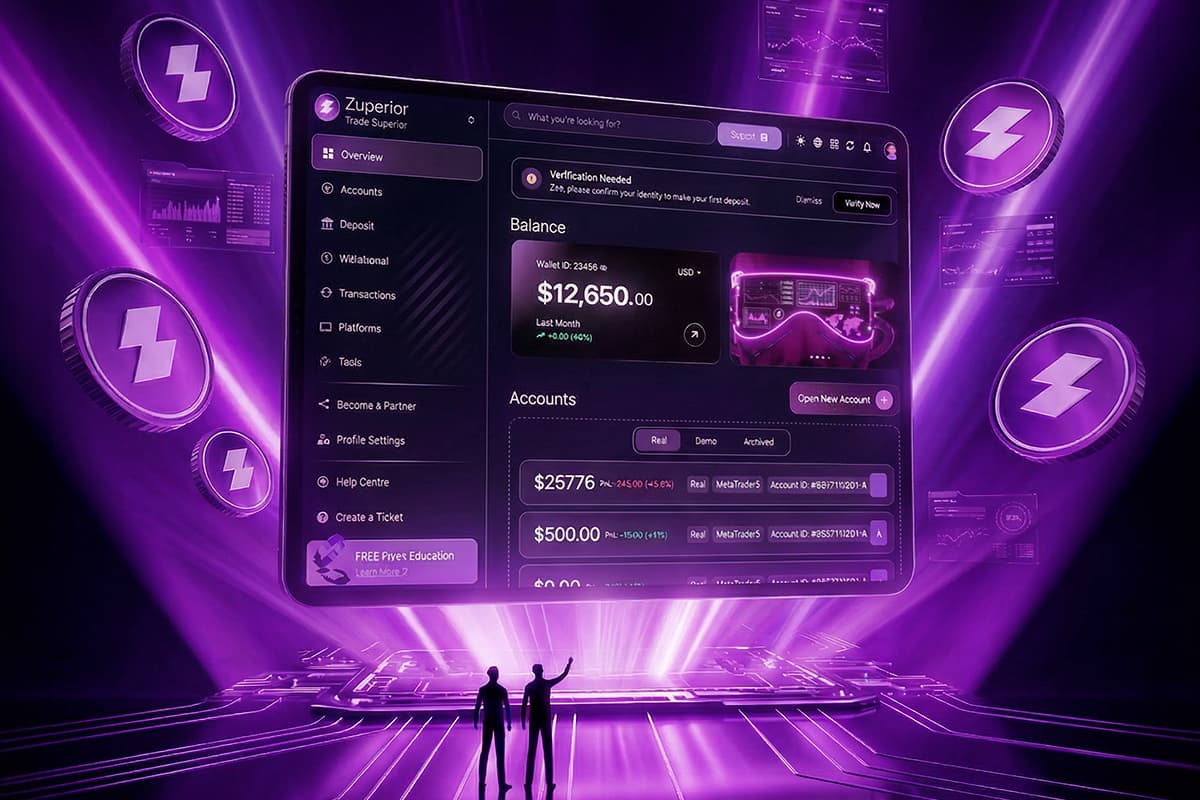
Zuperior provides access to MT5 as well as its own browser-based Web Terminal. According to the company's platform information, the Web Terminal includes TradingView-powered charts, multiple chart views, drawing tools, technical indicators, watchlists, alerts and different order modes.
The choice between platforms ultimately depends on the trader's requirements.
An experienced trader may already be comfortable with MT5 and its broader trading environment. A newer trader may instead value a browser-based interface that brings charts, orders and account information into a single workspace.
The key consideration is not simply how many features a platform contains, but whether the trader understands how to use those features.
Why UI and UX Can Matter in Trading
User interface design is sometimes treated as a secondary consideration, but trading can involve fast decisions and multiple pieces of information.
A trader may need to locate an open position, adjust an order, monitor a chart or close a trade quickly. If essential functions are difficult to find, the platform can add unnecessary friction.
Zuperior's Web Terminal is designed to place charts, order placement, positions and account information within the same trading environment.
That does not eliminate market risk or improve a trading strategy by itself. However, a clear interface can make it easier for traders to understand what they are doing and access the functions they need.
For beginners in particular, simplicity can be useful while they are still learning the mechanics of trading.
Demo Trading Before Using Real Money
One of the most straightforward ways for a new trader to become familiar with a platform is to use a demo account before committing real capital.
Zuperior's Demo Lab allows traders to practise using virtual funds and explore the platform before moving to live trading. This can provide an opportunity to test trading ideas, become familiar with order placement and understand platform functionality without immediately exposing capital to market risk.
Demo trading does not replicate every aspect of live trading. Emotional responses can be different when real money is involved, and market execution conditions may also vary.
Nevertheless, practising first can help traders understand the mechanics of a platform before they begin trading with real funds.
Account Types and Trading Costs
Different traders can have different requirements, which is why account structures deserve careful attention.
Zuperior currently presents Startup and Professional account options with different capital requirements and trading conditions.
The account name alone, however, does not tell a trader whether a particular account is suitable.
Before opening an account, traders should examine factors including:
- Spreads
- Commissions
- Swap or overnight financing costs
- Leverage
- Minimum lot sizes
- Margin requirements
- Available instruments
- Deposit and withdrawal conditions
These factors can affect both the cost and risk of trading.
A lower advertised spread, for example, should not automatically be viewed in isolation. Traders need to understand whether commissions or other charges also apply and how the total trading cost compares with their requirements.
Managing Behaviour Is Part of Risk Management
Trading risk is not limited to market volatility.
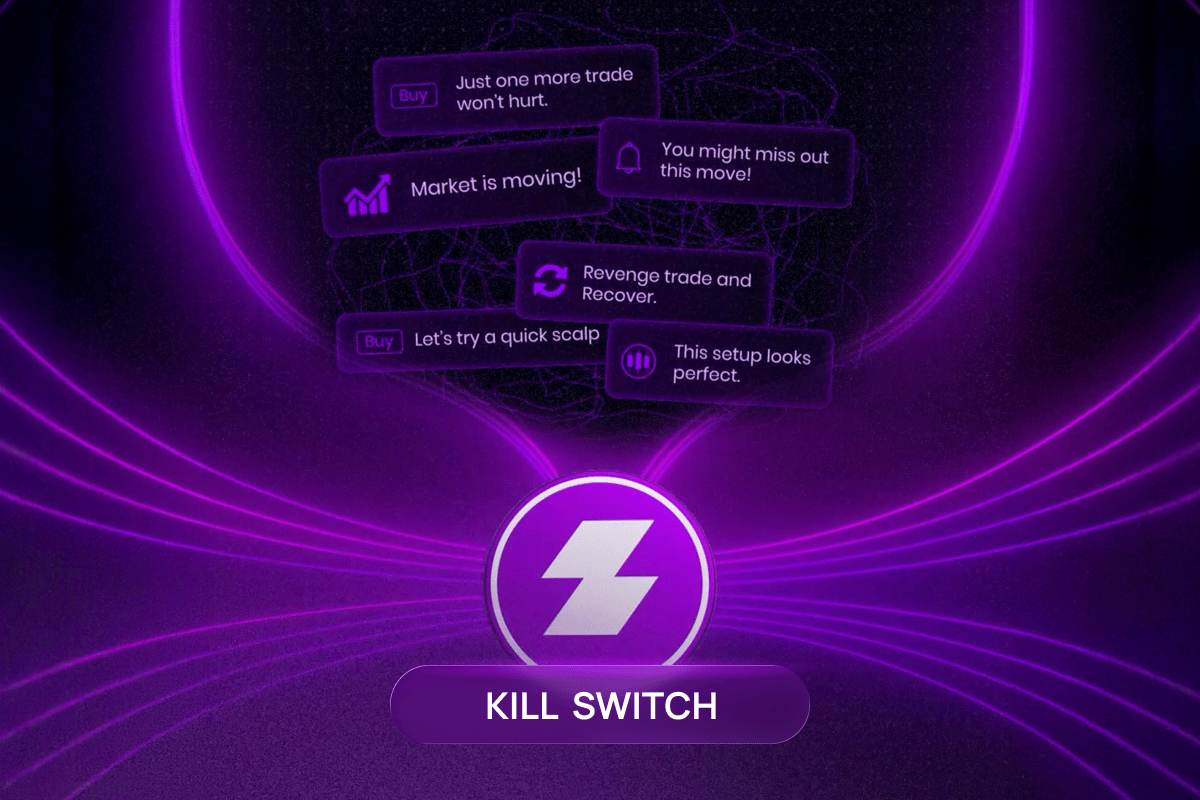
Emotional decisions can also affect trading outcomes. After a losing trade, some traders may attempt to recover the loss immediately by increasing their position size or entering additional trades. This behaviour is commonly associated with revenge trading or overtrading.
Zuperior offers a feature called the Kill Switch, which allows traders to pause trading with a single action.
The purpose is behavioural rather than predictive. The feature cannot prevent losses that have already occurred, remove market risk or guarantee better trading results. Instead, it provides a mechanism for traders who recognise that they may be entering an excessive or emotionally driven trading cycle.
For some traders, having a deliberate mechanism for stepping away from the market can form part of a broader risk-management routine.
Withdrawals: Read the Conditions, Not Just the Headline
Withdrawal procedures are another area traders should examine before opening an account.
Zuperior highlights instant bank withdrawals among its platform features and provides withdrawal options that can include bank transfers and supported crypto networks.
However, the actual processing time can depend on the payment method, verification procedures, compliance requirements and third-party processing.
Zuperior's stated terms indicate that withdrawals may take up to seven business days, excluding third-party delays, and that withdrawals can be delayed for anti-money-laundering, compliance or security checks.
That makes the relevant question more specific than simply asking whether a broker offers "instant withdrawals."
Traders should understand:
- Which withdrawal methods are available
- What verification is required
- Whether fees apply
- What processing times are stated in the terms
- When compliance checks can delay a withdrawal
Understanding these conditions before depositing funds can help prevent unexpected complications later.
Education and Trading in the Same Ecosystem
For new traders, education and execution are often separated.
A trader may learn a strategy through one website, follow market commentary elsewhere, practise on another platform and then use a broker for execution.
Zuperior combines its trading environment with educational resources through ZuperLearn.
The concept is straightforward: traders can learn about markets, practise through a demo environment and then decide whether they are ready to trade with real capital.
Educational material should still be treated as educational material rather than personalised financial advice. Zuperior's terms state that its educational content, analytics, sentiment tools and commentary do not constitute financial advice.
Traders remain responsible for evaluating whether a strategy, instrument or level of risk is appropriate for their circumstances.
What Does the "Gen Z Broker" Positioning Mean?
Zuperior describes itself as a Gen Z broker, reflecting a broader shift in how younger traders interact with financial technology.
For a generation accustomed to mobile applications and digital-first services, factors such as interface design, accessibility, educational content and ease of navigation can influence how a trading platform is experienced.
Zuperior's approach combines browser-based trading, MT5 access, demo practice, educational resources and behavioural tools such as the Kill Switch.
The broader trend is not necessarily about making trading more fashionable. It reflects the expectation that financial platforms should be understandable and accessible while still providing the tools required by active traders.
The Questions Traders Should Ask Before Choosing a Broker
There is no single broker that will meet the requirements of every trader.
Instead of asking which broker is "the best", traders can ask a more useful set of questions:
Where is the company incorporated?
Which regulator or licensing authority oversees its activities, and what does that authorisation cover?
Which trading platforms are available?
What are the spreads, commissions and overnight costs?
What leverage and margin conditions apply?
Is there a demo environment for practice?
How do deposits and withdrawals work?
What verification or compliance procedures can affect withdrawals?
What account types are available?
Are educational resources provided?
Does the platform include tools that can help traders manage their behaviour?
These questions allow traders to compare brokers according to their own requirements rather than relying on promotional claims or headline features.
Where Zuperior Fits In
Zuperior brings several elements into one trading ecosystem, including its Web Terminal, MT5 access, demo and live accounts, ZuperLearn, the Kill Switch and multiple withdrawal options.
For newer traders, the combination is aimed at addressing several stages of the trading journey: learning, practising, accessing the market and managing trading behaviour.
None of these features removes the fundamental risks associated with forex and leveraged trading. Market movements can result in losses, and a platform cannot replace a trader's own risk-management process.
The more useful way to assess a broker is therefore to look beyond individual features and examine the complete trading environment: its legal and regulatory information, costs, execution platforms, account conditions, withdrawal procedures, educational resources and risk-management tools.
A Trading Platform Should Reduce Friction, Not Risk
Becoming a more capable trader is rarely about finding one perfect trade.
It involves understanding the costs of trading, learning how a platform works, practising before committing significant capital, managing risk and recognising when stepping away from the market may be appropriate.
That is the context in which Zuperior's approach can be considered: not as a way to eliminate trading risk, but as an attempt to combine trading access, education, practice and behavioural tools within a single digital environment.
For any trader evaluating a broker, the starting point remains the same: verify the company's status, understand the terms, compare the costs and make sure the platform and account structure match your own trading requirements.
Because the market is complicated enough. The trading environment should be clear.
Legal Information
Zuperior FX Limited is incorporated in Saint Lucia, Registration No. 2025-00033. Registered office: Office No. 24, Cap Drive, Cap Estate, Gros Islet, Saint Lucia. Licensed by the Neves Licensing Authority, licence number ZP-2026-143.