WTI Oil prices fall as G7 considers reserve release, IEA calls emergency meeting
- Oil prices drop sharply on Tuesday as G7 energy officials signal readiness to release strategic reserves if needed.
- The International Energy Agency called an emergency meeting to assess global supply security and market conditions.
- Ongoing disruptions around the Strait of Hormuz continue to support volatility in the Oil market.
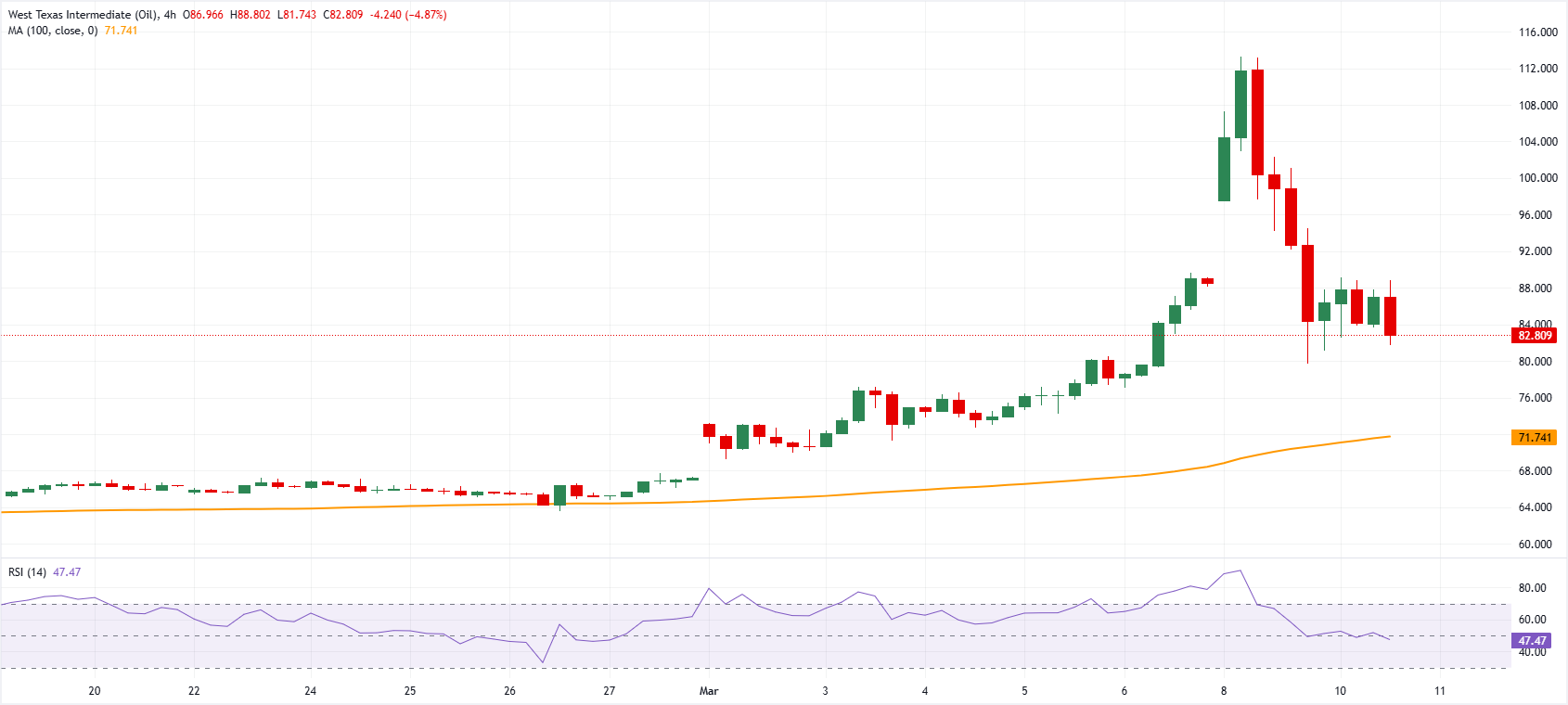
West Texas Intermediate (WTI) US Oil corrects lower on Tuesday, with the price trading around $82.30 at the time of writing, down 1.15% on the day as markets reassess supply risks following comments from international energy officials.
The decline comes after remarks reported by Reuters suggesting that G7 countries are considering the possibility of releasing strategic Oil reserves to stabilize markets amid current supply disruptions.
Japan’s Industry Minister Ryosei Akazawa said on Tuesday that he discussed the global energy situation with G7 energy ministers, including the potential release of strategic Oil reserves if necessary. According to Akazawa, the G7 confirmed its readiness to take “necessary measures” to support global energy supplies.
The Executive Director of the International Energy Agency (IEA), Fatih Birol, also stressed the need to restore shipping through the Strait of Hormuz, a crucial waterway through which roughly 20% of global Oil shipments pass. He added that a coordinated release of strategic reserves could be considered to ease tensions in the market.
In this context, Fatih Birol announced that the IEA has convened an extraordinary meeting of member governments later today to assess the current security of supply and overall market conditions.
These discussions come as Oil markets remain highly volatile. Supply disruptions linked to the closure of the Strait of Hormuz recently pushed Crude Oil prices sharply higher, as traders feared a significant tightening of global supply.
However, the prospect of a coordinated intervention by major economies to inject additional Oil into the market is helping to ease immediate supply concerns, prompting some profit-taking after the recent surge in prices.
(This story was corrected on March 10 at 17:25 GMT to say that Japan’s Industry Minister's name is Ryosei Akazawa, not Yoji Muto Akazawa.)
Author

Ghiles Guezout
FXStreet
Ghiles Guezout is a Market Analyst with a strong background in stock market investments, trading, and cryptocurrencies. He combines fundamental and technical analysis skills to identify market opportunities.