Why is the Japanese Yen at 40-year lows when Japan’s economy is growing?

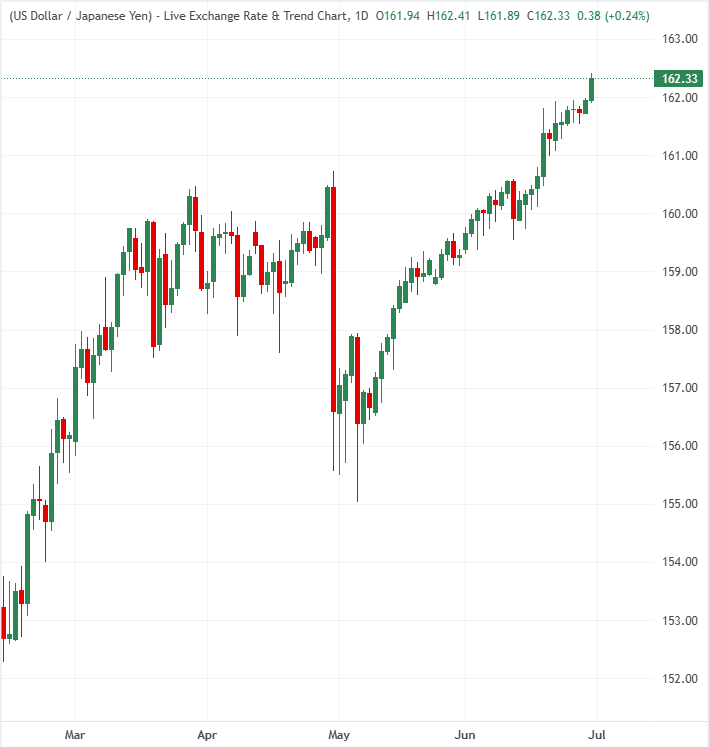
The Japanese Yen (JPY) has decisively breached long-standing four-decade technical resistance, climbing past 162.00 to reach values not seen since 1986. This historic technical breakdown is unfolding against a complex backdrop of a strong US Dollar, intensifying geopolitical friction between Beijing and Tokyo and persistent capital outflows, effectively neutralizing otherwise strong domestic commercial data and locking the Yen into a deeply defensive posture.
Broad US Dollar strength triggers spillover among Asia-Pacific currencies
Macro strategists at BNY emphasize that the renewed strength of the US Dollar is forcing international investors to prioritize portfolio protection over basic economic fundamentals. They warn that the breach of key technical levels on the major currency crosses acts as a systemic trigger, threatening to send shockwaves well beyond the foreign exchange market and disrupt broader Asian asset classes.
A decisive break above 162 technical resistance would raise the risk of negative spillovers across APAC currencies, equities, and rates.
Geopolitical friction and capital outflows counter robust Japanese trade data
BNY also highlights an escalation in trade disputes, with China blacklisting a wave of Japanese firms and expanding its rigid export control lists. While Japan's domestic commercial sales data for May printed a resilient 5.0% year-on-year increase, these supportive figures are being completely overwhelmed by institutional capital flight and heavily extended short positioning on the Japanese Yen.
[Beijing’s move to place 20 Japanese organizations to its export control list] raises supply chain risks, especially for rare earths and defense manufacturing, and extends tensions linked to Taiwan comments.
Multi-decade technical breakout pushes USD/JPY into uncharted territory
The strategy team at UOB Group notes that while the currency cross is fundamentally overextended, the path of least resistance remains skewed upward. Even though momentum indicators like the daily MACD show a clear negative divergence, flashing an early warning sign that the current rally is structurally fatigued, the breakdown will only face a serious challenge if key short-term moving averages fail to hold.
With USD/JPY in uncharted territory, there are few obvious technical reference points to identify as meaningful resistance. As such, round-number resistance levels may serve as the most practical resistance levels.
Banks anticipate a weak near-term trend for the Japanese Yen
These banks note that the Japanese Yen remains highly vulnerable to extended losses. BNY maintains a deeply cautious stance, clarifying that negative capital flows, persistent short positioning, and escalating Sino-Japanese supply chain risks will keep the currency structurally capped despite solid retail and wholesale data.
Aligning with this soft baseline outlook, UOB Group reinforces that while the technical pace of the Yen's decline appears overstretched, the historic break into uncharted territory above 162.00 means the currency will likely continue to trend lower toward psychological round numbers as long as it preserves its footing above the critical 161.00 support zone.
(This article was created with the help of an Artificial Intelligence tool and reviewed by an editor.)
Author

FXStreet Insights Team
FXStreet
The FXStreet Insights Team is a group of journalists that handpicks selected market observations published by renowned experts. The content includes notes by commercial as well as additional insights by internal and external analysts.