Wall Street Close: Stocks still all smiles six days in a row
- The S&P 500 posted its sixth day of gains for its best run higher since late August.
- Markets were in a risk-on mood on Monday amid stimulus and pandemic hopes coupled with dovish central bank vibes.
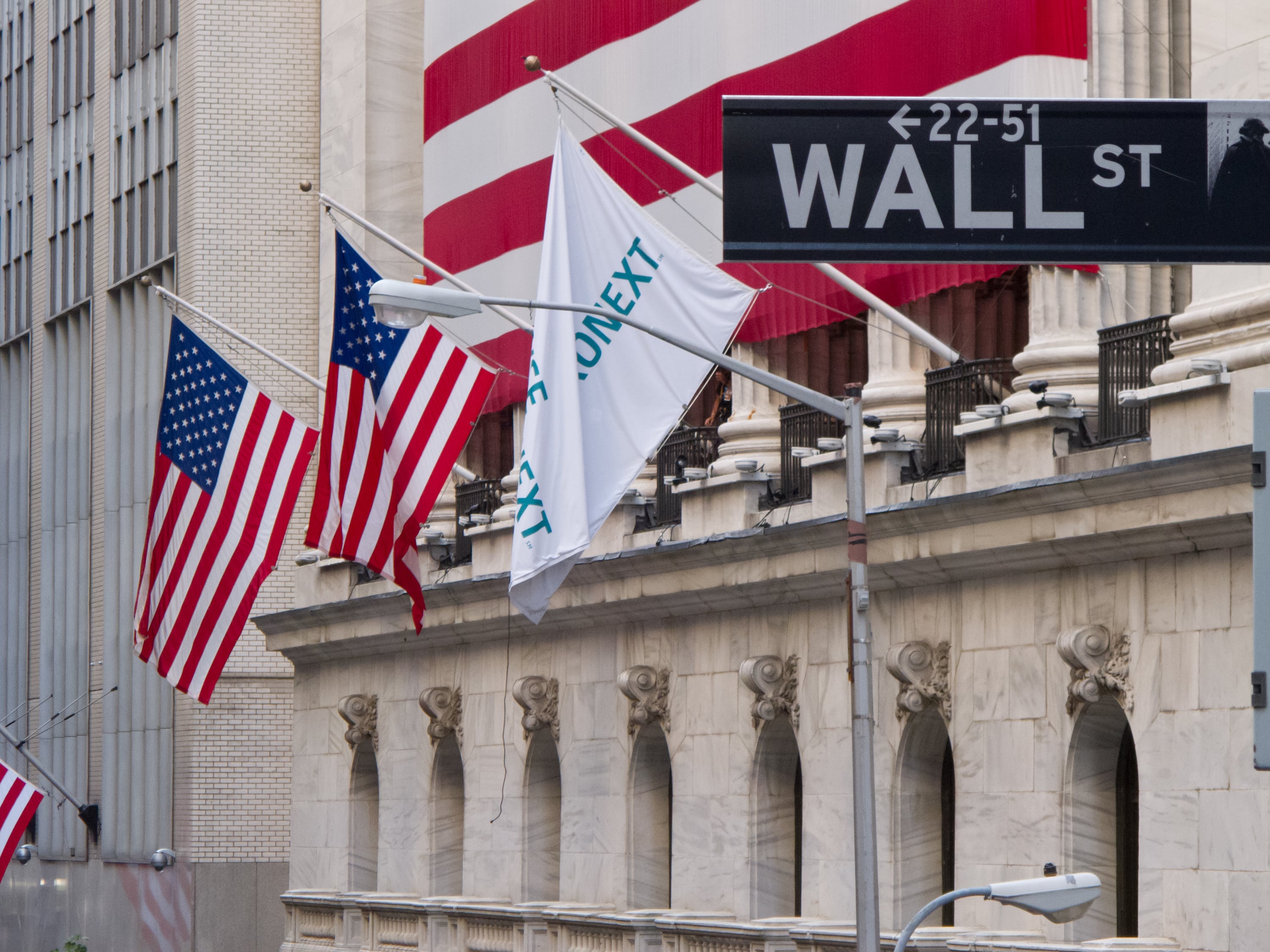
It was another strong performance on Wall Street as US equity bourses took their cue from buoyant global risk sentiment. In fact, the S&P 500 (+0.65%) posted its sixth day of gains, the longest such streak since the indices managed a seven day run in the green between 20 August to 28 August last year – as a reminder, this runup in stock prices at the time was seen as something of a “melt-up” and was quickly followed by a more than 10% correction (in the Nasdaq 100 anyway!).
The Dow (+0.66%) and Russell 2000 (+2.4%) also posted their sixth days of gains, the latter seeing significant outperformance as a result of the “reopening trade”, i.e. when investors are betting on the economy to reopen/return to normal, and this disproportionately benefits smaller US businesses (largely because a lot of Tech has actually benefitted from the much more digitally reliant lives people in quarantine tend to lead). The Nasdaq 100 (+0.67%) also saw solid gains.
Of course, more gains mean more all-time highs; the S&P 500 surpassed the 3900 level for the first time and closed at 3915, an all-time intraday and closing high. The Dow posted intra-day and closing highs also. The Nasdaq 100 missed out on an intra-day high but closed at record levels just below 13,700.
Optimism oozing
The feeling of economic optimism is oozing from every corner of the market;
Optimism about the fact that Congress will more likely than not deliver another sizeable fiscal stimulus package within the next few weeks; Congress approved the budget outline for budget reconciliation on Friday and US Treasury Secretary Janet Yellen said she thinks that the US can reach maximum employment by the end of 2022 if Congress adopts US President Joe Biden’s full $1.9T stimulus package.
Optimism that falling Covid-19 cases in the US (and globally) coupled with accelerating vaccination rollouts will facilitate economic reopening over the summer, which ought to bring with it an aggressive rebound in economic activity.
Optimism that ultra-accommodative monetary conditions are not going anywhere any time soon; a few FOMC members gave comments on Monday/over the weekend and all largely stuck to the script (i.e. did not deviate from Fed Chair Jerome Powell’s strong pushback against the notion that the Fed will be looking to taper asset purchases any time soon in order to dampen rapidly rising inflation expectations). FOMC Member Thomas Barkin reiterated that he sees the need for continued accommodation and that the economy would have to come back “quite significantly” alongside inflationary pressures to warrant any hikes. FOMC Member Raphael Bostic said that we need to be sure that we don’t wave the flag of success too soon and FOMC Member Lorreta Mester said she sees the Fed remaining very accommodative for a very long time.
The combination of the above factors has got the market betting on higher inflation going forward; US 10-year break-evens rose above 2.20% on Monday for the first time since 2014, the 10 year yield at one point rose above the 1.20% mark and 30-year yields briefly went above 2.0%. As long it is the type of inflation that is conducive to long-term economic growth, rather than harmful, inflation itself can push stock prices higher. After all, stocks prices are (theoretically) the discounted sum of all future cash-flows, a nominal number; if inflation goes up, companies raise prices accordingly and this pushes up earnings and so pushes up stock prices (though the purchasing power of the cash value of the stock would be unchanged).
Elsewhere, earnings season has been going much better than expected and that is another tailwind for equities; so far, 294 S&P 500 companies have reported earnings and 83% have beaten consensus analysts earning forecasts. Analysts now expect S&P 500 companies to post Q4 2020 earnings growth of 2.4% YoY. At the start of January, equity analysts expected S&P 500 companies to post a Q4 2020 earnings decline of over 10%. Big business has adapted to lockdowns and the virus much better than expected.
Looking ahead to the rest of the week, earnings remain in focus, as do the themes of stimulus and the pandemic. Of most interest on the economic calendar, however, will be the US Consumer Price Inflation data on Wednesday (which is garnering a lot of scrutiny amid the elevated attention on rising inflation expectations). Fed Chair Jerome Powell will then be speaking later in the day and is expected to reaffirm the Fed's dovish commitments to keep policy ultra-accommodative for the foreseeable future.
Author

Joel Frank
Independent Analyst
Joel Frank is an economics graduate from the University of Birmingham and has worked as a full-time financial market analyst since 2018, specialising in the coverage of how developments in the global economy impact financial asset