|

Vietnam Dong: Inflation and trade headwinds build – Commerzbank
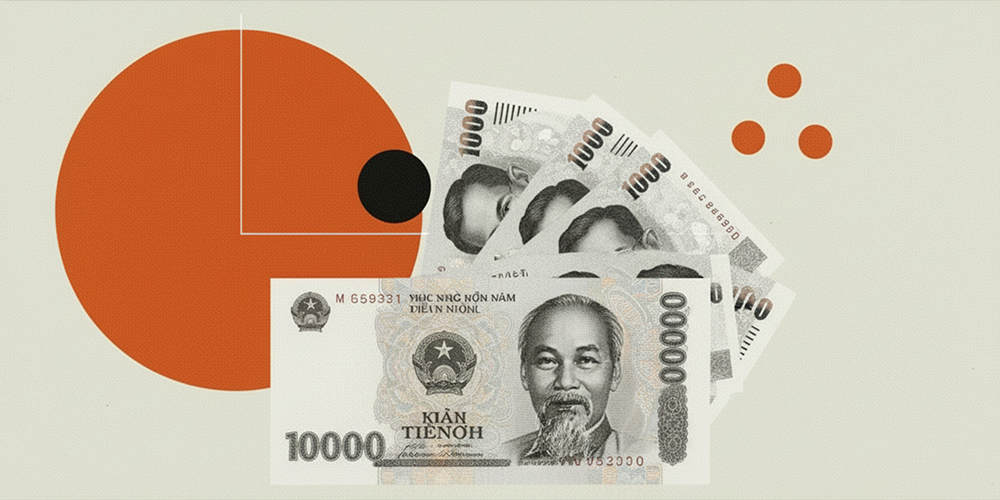
Commerzbank highlights that Vietnam’s May Consumer Price Index (CPI) rose to 5.6% year-on-year, the highest since January 2020, driven by food and energy costs, while the trade deficit widened to a record USD 5.2 billion on strong import growth. Despite these supply-side pressures, USD/VND remains relatively anchored by a stable State Bank of Vietnam (SBV) fixing, with the Dong down only 0.3% versus the Dollar year-to-date.

Higher CPI and record trade deficit

"May inflation came in slightly below expectation at 5.6% yoy (Bloomberg consensus: 5.8%) vs 5.5% in April, marking the highest reading since January 2020. CPI averaged 4.3% in the first five months of the year, slightly below the State Bank of Vietnam’s (SBV) 4.5% target."

"Elevated food and energy prices drove the increase as these items faced supply disruptions linked to Middle East tensions. Core CPI, which excludes volatile and administered prices, was steady at 4.7%, unchanged from April."

"In FX, USD/VND rose 0.1% to 26,344 yesterday. The pair remains anchored by a stable SBV fixing rate in the past month. Nonetheless, the pair is still 1.1% higher than its pre-conflict level. Year-to-date, the VND is down 0.3% vs the USD."

"Overall, the economy faces growing supply-side headwinds as inflation quickens. On a bright note, inflationary pressures remain primarily driven by higher energy prices, and signs of second-order effects have not emerged yet."

(This article was created with the help of an Artificial Intelligence tool and reviewed by an editor.)

Author

FXStreet Insights Team

The FXStreet Insights Team is a group of journalists that handpicks selected market observations published by renowned experts. The content includes notes by commercial as well as additional insights by internal and external analysts.


More from FXStreet Insights Team
Share:

Editor's Picks

GBP/USD tumbles to three-day lows around 1.3420

GBP/USD comes under extra selling pressure and revisits the area of multi-day lows near 1.3420 in quite a bearish start to the week. Cable’s decline comes amid the firmer Greenback as investors continue to assess developments in the US-Iran conflict. Moving forward, attention will turn to the UK employment report on Tuesday.


EUR/USD meets some initial contention around 1.1400

EUR/USD keeps the bearish bias well in place, slipping back toward the 1.1400 region, where some initial support appears to have turned up. The auspicious start to the week of the US Dollar has kept the risk complex under pressure as investors has continued to closely follow developments from the Middle East conflict. The release of the ZEW Economic Sentiment in the Euroland and Germany are next on tap on the domestic calendar.

Gold holds above $4,000 as inflation-driven Fed hike bets cap upside

Gold holds steady above $4,000 during the Asian session on Tuesday, though the upside potential seems limited. Inflation fears stemming from elevated oil prices reaffirm bets for higher US interest rates, which, along with an escalation in the Middle East war, continue to underpin the safe-haven US Dollar. This should act as a headwind for the non-yielding bullion, warranting caution for bullish traders before positioning for any meaningful gains.

Bitcoin climbs above $65K as ETF flows recover despite rising macro risks
Bitcoin (BTC) has climbed above $65,000 on Monday as improving onchain activity, recovering US spot Bitcoin exchange-traded fund (ETF) flows, and stabilizing derivatives point to a more balanced market, according to Glassnode.
Here's where the Canadian Dollar is headed next: 4 bearish scenarios and a bullish one
The Canadian Dollar (CAD) has ridden a volatile first half of the year, with Oil prices surging and then falling as markets danced to the Middle East’s tune. Neither the Bank of Canada nor the Federal Reserve has changed rates so far this year, and the USD/CAD's next move may depend on which of the two banks fails to deliver what markets expect.
US Dollar mid-year outlook: Exceptional currency, exceptional risks?
The US Dollar enters the second half of 2026 in a markedly different position from a year ago. The King currency has recovered, reflecting persistent US inflation, changing expectations for Fed policy, geopolitical tensions and renewed demand for defensive assets.