|

USD/SGD: Range trade with defensive profile – OCBC
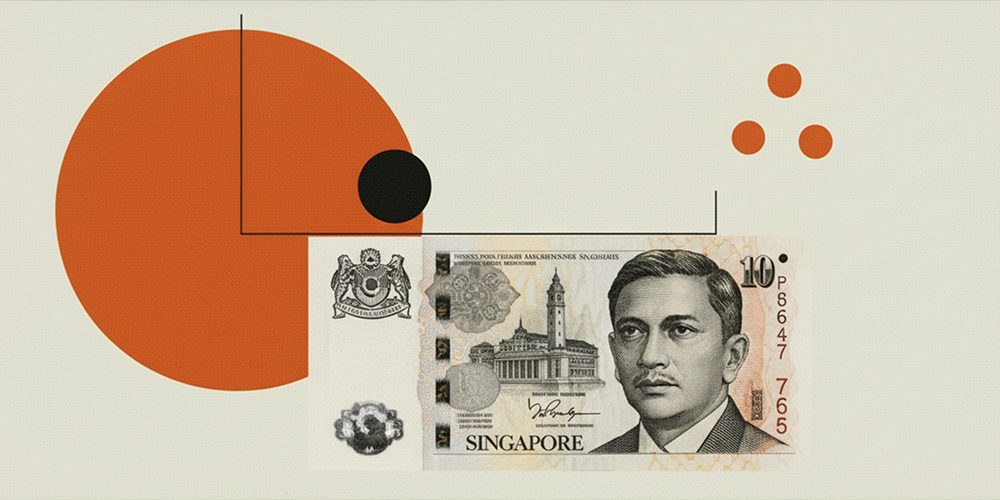
OCBC strategists Sim Moh Siong and Christopher Wong describe USD/SGD as slipping on broad USD weakness and expects two‑way, range‑bound trading in the near term, with resistance around 1.2780–1.2850 and support near 1.2720–1.2670. They note that Singapore Dollar (SGD) is likely to behave as a regional defensive currency, holding up better than higher‑beta FX if geopolitical uncertainties persist, supported by stronger domestic data.

Defined range and defensive SGD

"USD/SGD slipped amid broad USD pullback. Pair was last at 1.2745 levels. Daily momentum and RSI indicators are not showing a clear bias. 2-way trades likely in the interim. Resistance at 1.2780/1.28 levels (100 DMA, 38.2% fibo retracement of 2026 low to high), 1.2850 (200 DMA, 23.6% fibo). Support at 1.2720 levels (61.8% fibo), 1.2670 (76.4% fibo)."

"On relative terms, SGD can continue to trade like a regional defensive play, holding up better against higher-beta FX should geopolitical uncertainties continued to persist. "

"On data released yesterday, Singapore’s industrial production accelerated to 10.1% YoY in March, picking up speed from the upwardly revised February readings of 3.3% YoY. Electronics was the outperformer again at 30% YoY, followed by precision engineering, general manufacturing while output for both the biomedical and chemicals clusters both fell."

"Our economists noted that 1Q26 GDP growth is likely to be revised up from the advance estimate of 4.6% YoY to 5.2% YoY ceteris paribus as the manufacturing sector growth is likely to be notched higher to 7.9%YoY based on the March print versus the advance estimate of 5.0% YoY."

(This article was created with the help of an Artificial Intelligence tool and reviewed by an editor.)

Author

FXStreet Insights Team

The FXStreet Insights Team is a group of journalists that handpicks selected market observations published by renowned experts. The content includes notes by commercial as well as additional insights by internal and external analysts.


More from FXStreet Insights Team
Share:

Editor's Picks

AUD/USD sticks to positive bias above 0.7100; lacks bullish conviction

AUD/USD trades with a positive bias for the second straight day, holding above 0.7100 in the Asian session on Friday as softer US bond yields keep US Dollar bulls on the back foot. Furthermore, hawkish RBA Governor Bullock's comments boost rate hike bets and support the Aussie. However, the Fed's hawkish outlook, along with geopolitical uncertainties, limits USD losses and caps the pair.

USD/JPY approaches 158.00 as Japanese Yen resumes decline

USD/JPY is resuming its upside in the European session on Friday, refreshing two-week highs and nearing 158.00. The Japanese Yen extends losses, despite the Bank of Japan's (BoJ) expected rate hike to 1.25% and hawkish Governor Ueda's comments, as two surprise dissents against the rate hike weigh on it.

Gold keeps the bid tone in place; still below $4,400

Gold adds to the optimism seen in the second half of the week, trading with decent gains just below the $4,400 mark per troy ounce on Friday. The precious metal’s advance finds traction in declining crude oil prices and fresh selling pressure on the US Dollar.

Why altcoin season isn't coming back — and what stole its capital
If, after two years of being frozen in ice, Katara and Sokka woke you up to the crypto market, it would seem like 100 years have passed. With Bitcoin soaring to record highs just over a year ago, everyone expected a routine altcoin season, where investors take profits from the top crypto to chase higher returns in altcoins.
BoJ Recap: Not as hawkish as expected

The BoJ raised its short-term interest-rate target to 1.25% from 1.00% in a 7-2 vote, marking another step in the normalisation of monetary policy and widely matching what everyone has been expecting for weeks. Governor Kazuo Ueda said the policy phase had changed.

BoJ Recap: Not as hawkish as expected

The Bank of Japan (BoJ) raised its short-term interest-rate target to 1.25% from 1.00% in a 7-2 vote, marking another step in the normalisation of monetary policy and widely matching what everyone has been expecting for weeks.












