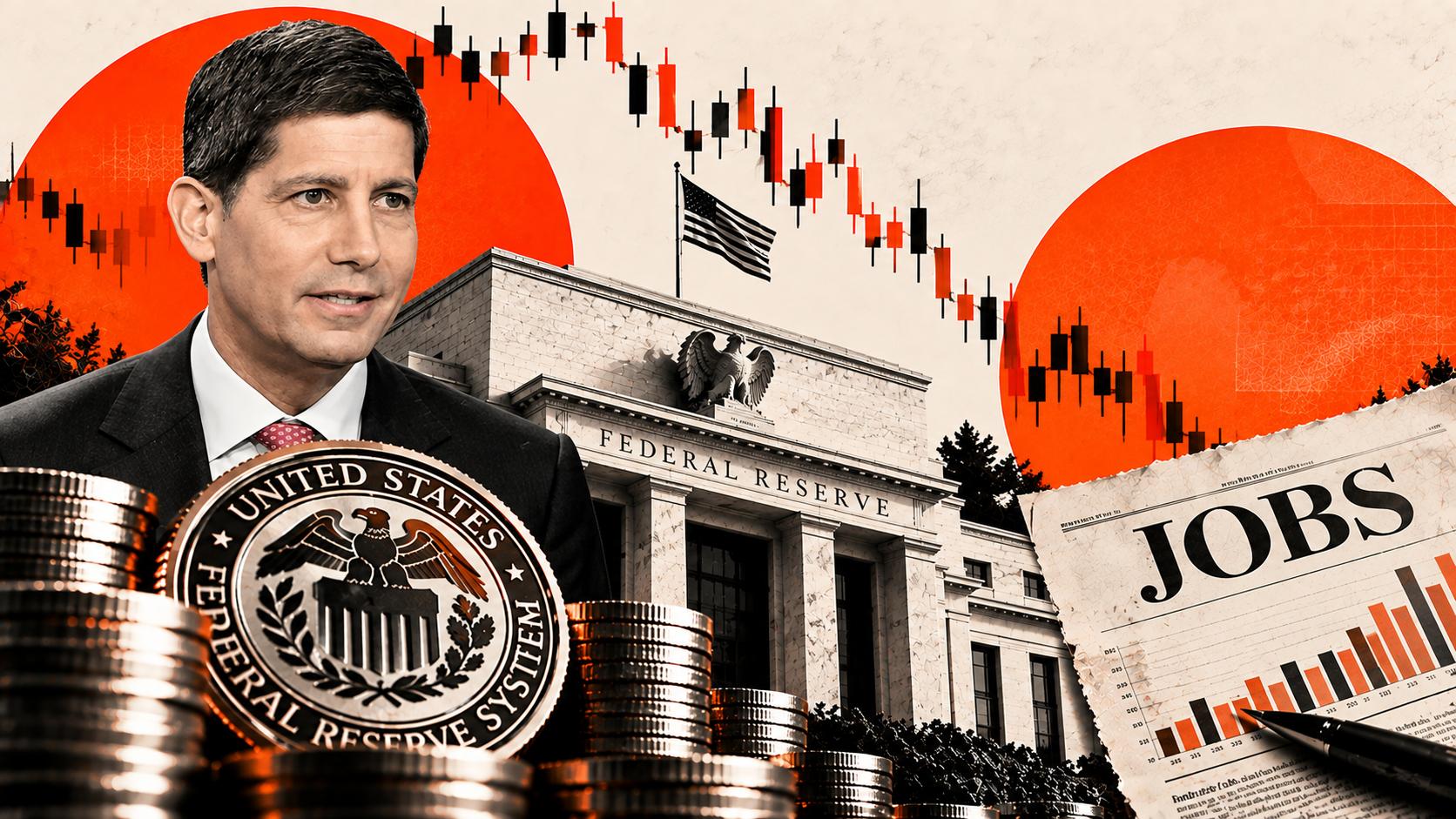
US Treasury yields surge as 30-year hits 2007 high
- US 30-year yield hits 2007 highs as inflation premium rises.
- Ten-year yield climbs to near 4.73% despite softer US data.
- Fed minutes loom as markets price September hold odds.

US Treasury yields advance on Monday during the North American session after reversing their course following the release of US Retail Sales data last week, which disappointed investors. Meanwhile, the lack of news from the Middle East kept Oil prices higher amid fears of a resumption of hostilities.
Long-end yields climb as debt, supply and inflation concerns dominate
US Treasury yields across the yield curve edged modestly higher, yet the 30-year bond yield surged to levels last seen in 2007 amid fears of a possible reacceleration of inflation in the United States.
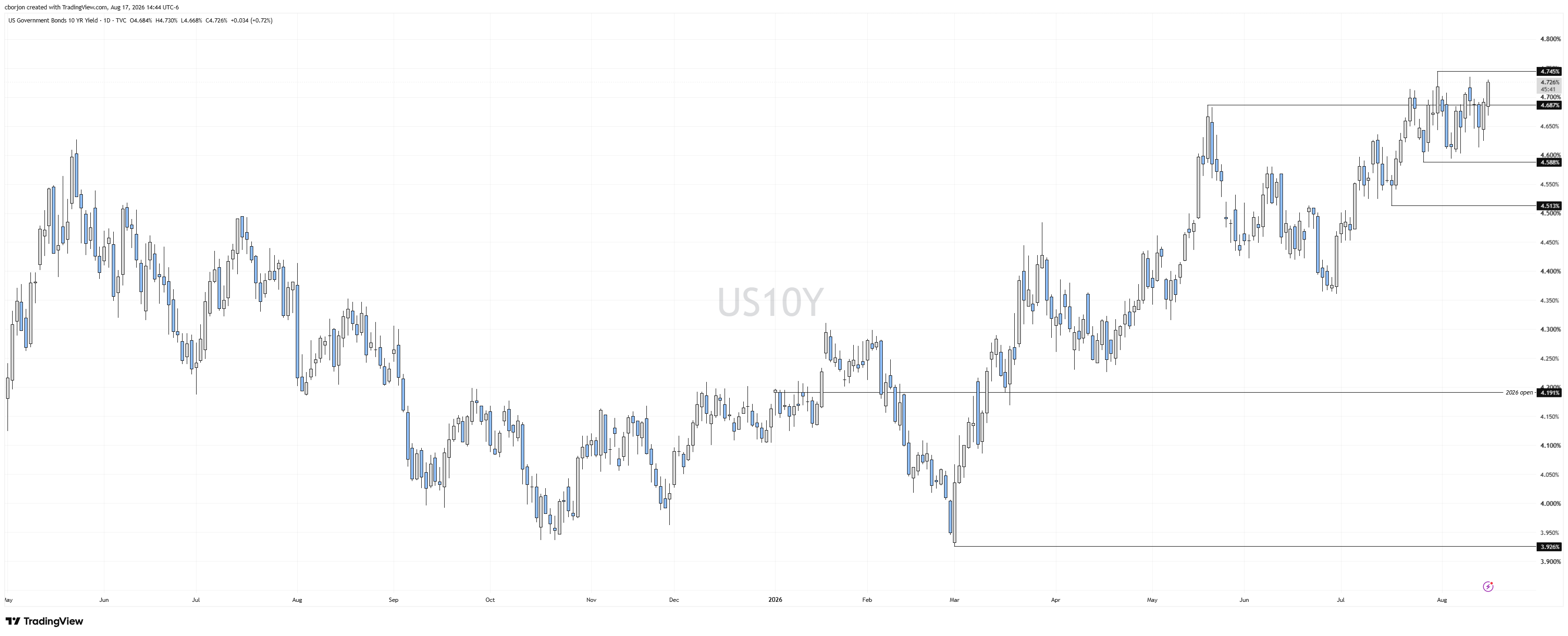
The US 10-year Treasury yield edged up by nearly four basis points to 4.728%, while the 30-year bond yield grabbed headlines, up nearly six basis points to 5.315%, as investors demand a higher premium. A Bloomberg article read that the rise in the 30-year is a reflection of “investor angst over the surging national debt, a flood of long-dated bond sales and inflation that’s been stuck over the Federal Reserve’s target for the past five years.”
Last week’s US data showed that consumer spending is slowing, while the disinflation process resumed, with consumer and producer prices posting two straight months of declines.
A light economic docket keeps investors focused on the release of the Federal Reserve’s last meeting minutes on Wednesday.
The US 2-year T-note yield, the most sensitive to interest rate expectations, rises by nearly 1.5 basis points to 4.179%. So far, money markets have priced in a 68% chance that the Fed will hold rates unchanged at the September 2026 meeting.
The US Dollar Index (DXY), which tracks the performance of the buck’s value against six currencies, is almost unchanged, down 0.02% at 99.59.
US 10-year Treasury yield chart
Interest rates FAQs
Interest rates are charged by financial institutions on loans to borrowers and are paid as interest to savers and depositors. They are influenced by base lending rates, which are set by central banks in response to changes in the economy. Central banks normally have a mandate to ensure price stability, which in most cases means targeting a core inflation rate of around 2%. If inflation falls below target the central bank may cut base lending rates, with a view to stimulating lending and boosting the economy. If inflation rises substantially above 2% it normally results in the central bank raising base lending rates in an attempt to lower inflation.
Higher interest rates generally help strengthen a country’s currency as they make it a more attractive place for global investors to park their money.
Higher interest rates overall weigh on the price of Gold because they increase the opportunity cost of holding Gold instead of investing in an interest-bearing asset or placing cash in the bank. If interest rates are high that usually pushes up the price of the US Dollar (USD), and since Gold is priced in Dollars, this has the effect of lowering the price of Gold.
The Fed funds rate is the overnight rate at which US banks lend to each other. It is the oft-quoted headline rate set by the Federal Reserve at its FOMC meetings. It is set as a range, for example 4.75%-5.00%, though the upper limit (in that case 5.00%) is the quoted figure. Market expectations for future Fed funds rate are tracked by the CME FedWatch tool, which shapes how many financial markets behave in anticipation of future Federal Reserve monetary policy decisions.
(This story was corrected on August 17 at 22:03 GMT to say that "US Treasury yields advance on Monday during the North American session" not Friday)
Author

Christian Borjon Valencia
FXStreet
Markets analyst, news editor, and trading instructor with over 14 years of experience across FX, commodities, US equity indices, and global macro markets.