|

Stocks push higher [Video]

Emini S&P SEPTEMBER futures beat minor short term trend line resistance at 7580/7590 for a buy signal targeting 7612/14 & all time high at 7632.

We got close, with a high for the day at 7628.

A break above the all time high at 7632 targets 7636/43, 76555/58, 7670/73, perhaps as far as 7680/83, eventually.

First support at 7601/7596 & longs need stops below 7585.

A break lower however risks a retest of Friday's low at 7559/7553.
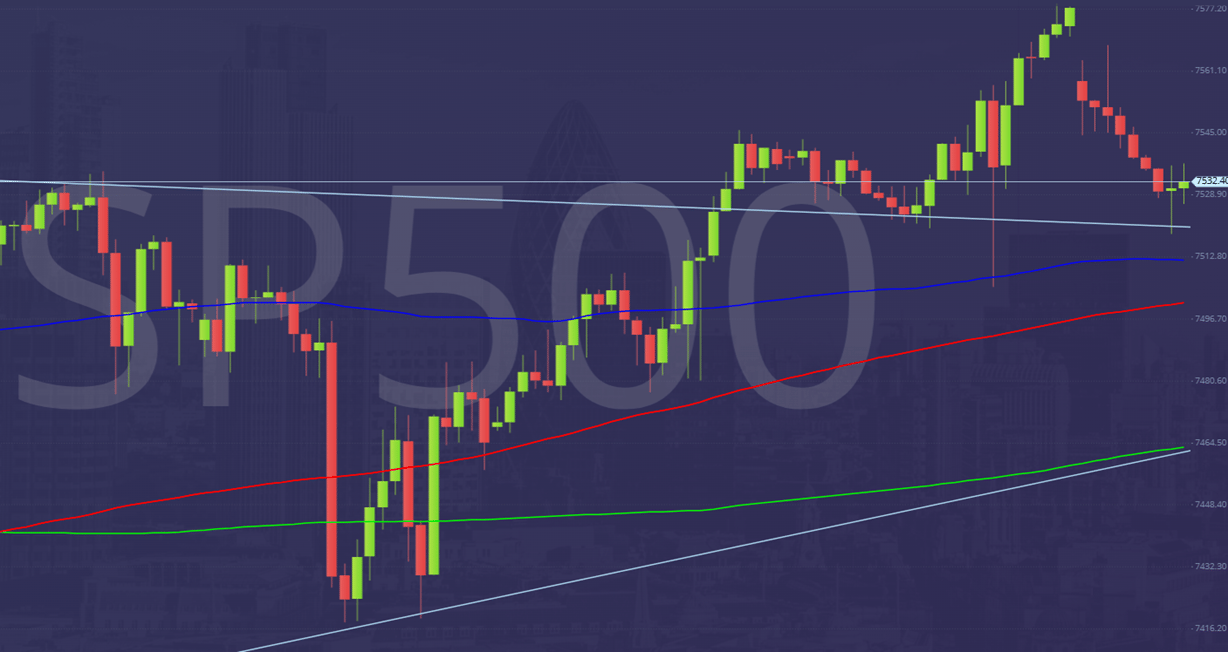
Chart

Emini Nasdaq SEPTEMBER the break above 29810 was a buy signal targeting 29860/890 then resistance at 29900/30000.

Well, we made a high for the day exactly here although we are not seeing any declines at this stage.

Shorts needed stops above 30100 and we could not break higher...yet.

A break above very short term trend line resistance at 30200 should be an important buy signal this week & we should target 30300/320 & 30580/600.

Shorts at resistance at 29900/30000 are not working yet but if we do see declines look for minor support at 29760/730 for some profit taking.

A bounce from here is certainly possible as we have positive momentum but a break below 29690 risks a slide to what could be better support at 25620/580.

Longs need stops below 29520.
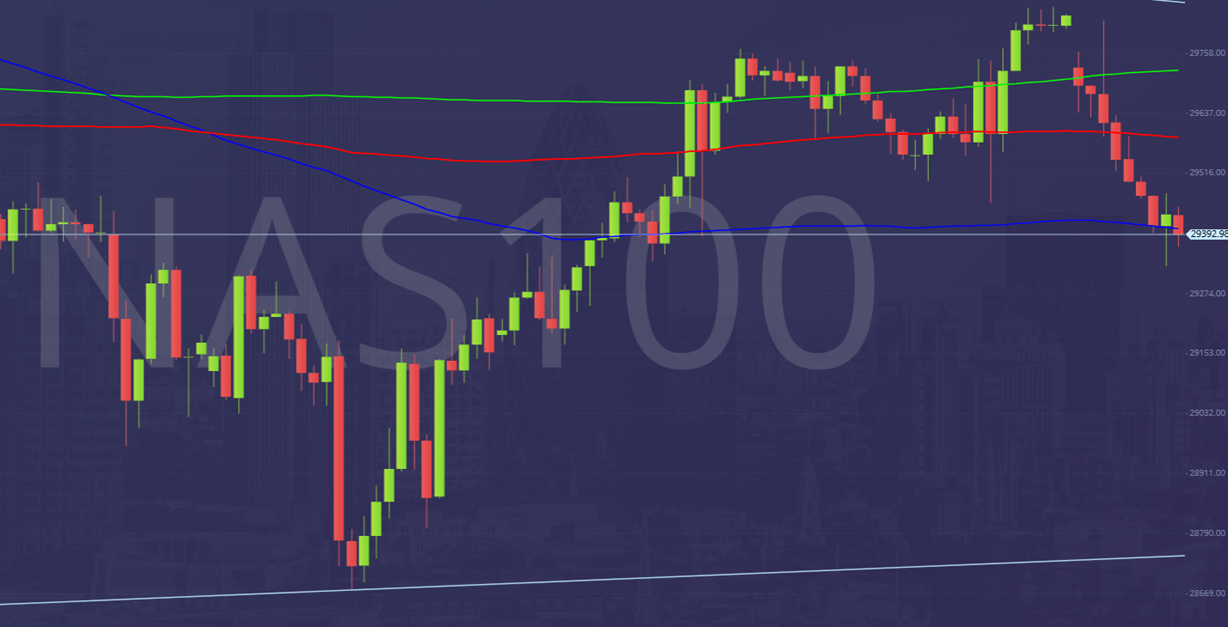
Chart

Emini Dow Jones SEPTEMBER break above 52950 (if sustained) targets 53130/170 then 52400/430, before a retest of the all time high at 53600/656.

First support at 52480/400 & longs need stops below 52300.

A break lower however risks a slide to 52050/52000 & even a test of support at 51750/650 is possible.

Longs need stops below 51550.

Youtube preview

Author

Jason Sen

Jason Sen

DayTradeIdeas.co.uk

Jason Sen began his career in the options pits on the trading floor of LIFFE in 1987 at the age of 19, making markets on his own account. In 2001 when the trading floor closed he successfully made the transition to day trading on computer screens.


More from Jason Sen
Share:

Editor's Picks

AUD/USD: Next on the upside is 0.7000

AUD/USD leaves behind Monday’s downtick and trades with marked gains, approaching the critical 0.7000 yardstick ahead of the opening bell in Asia on Wednesday. The pair’s solid performance follows the Greenback’s fresh downward trend amid cooling geopolitical tensions and caution ahead of the US CPI data.

USD/JPY extends retreat below 158.50 as intervention risks loom

USD/JPY is dropping below 158.50 in the Asian session on Tuesday, snapping a two-day winning streak and pulling back from an over two-week top touched the previous day, despite Japan's soft PPI inflation print. Bulls turn cautious amid speculation that authorities will step in to prop up the Japanese Yen, which, in turn, weighs on the pair.

Gold: Bears struggle to breach below $4,150

Gold now gives away its initial gains and resumes its decline, revisiting the $4,160 region per troy ounce on Tuesday. The precious metal’s pullback comes despite the fresh downward trend in the Greenback in combination with a mixed performance of US Treasury yields across the board and easing tensions on the geopolitical front.

Ethereum holds $2,500 as open interest drops to lowest level since February
Ethereum (ETH) quickly bounced back above $2,500 on Tuesday after sharp Asian equity selloffs briefly spilled into the crypto market. South Korea's KOSPI declined 5.4% while Japan's Nikkei 225 dropped by 1.8%. The volatility spike bled into cryptocurrencies, triggering a cascade of forced liquidations.
S&P 500 earnings just hit a record. The AI data centre bill hasn't landed yet
S&P 500 companies are on track for a third straight quarter of earnings growth above 25%, according to FactSet. Their profit margin hit 17% in the April-June quarter, the highest in FactSet data going back to 2009. The cash behind those earnings has been shrinking for two years, and almost all of the shrinkage is in the handful of companies building data centres for artificial intelligence (AI).
Has Bitcoin really escaped the macro forces it was built to fight?
Over 17 years ago, Satoshi Nakamoto designed Bitcoin (BTC) on the back of a global financial crisis as an alternative to the global monetary system outside the control of central banks, governments and traditional intermediaries. This raises a key question: has Bitcoin really become independent of the macroeconomic forces it was built to challenge?















