Silver charges toward $70, but Warsh could cool rally
- Silver rises nearly 3% on Thursday and returns toward the upper end of its weekly range.
- Investors await Kevin Warsh’s Jackson Hole speech for fresh clues about the US interest rate outlook.
- Hawkish comments from several policymakers and persistent inflation could limit the white metal’s upside potential.

Silver (XAG/USD) accelerates on Thursday and trades around $69.50 at the time of writing, up 2.74% on the day. The white metal is approaching the upper end of the range that has contained price action this week, as investors turn their attention to the Jackson Hole Symposium.
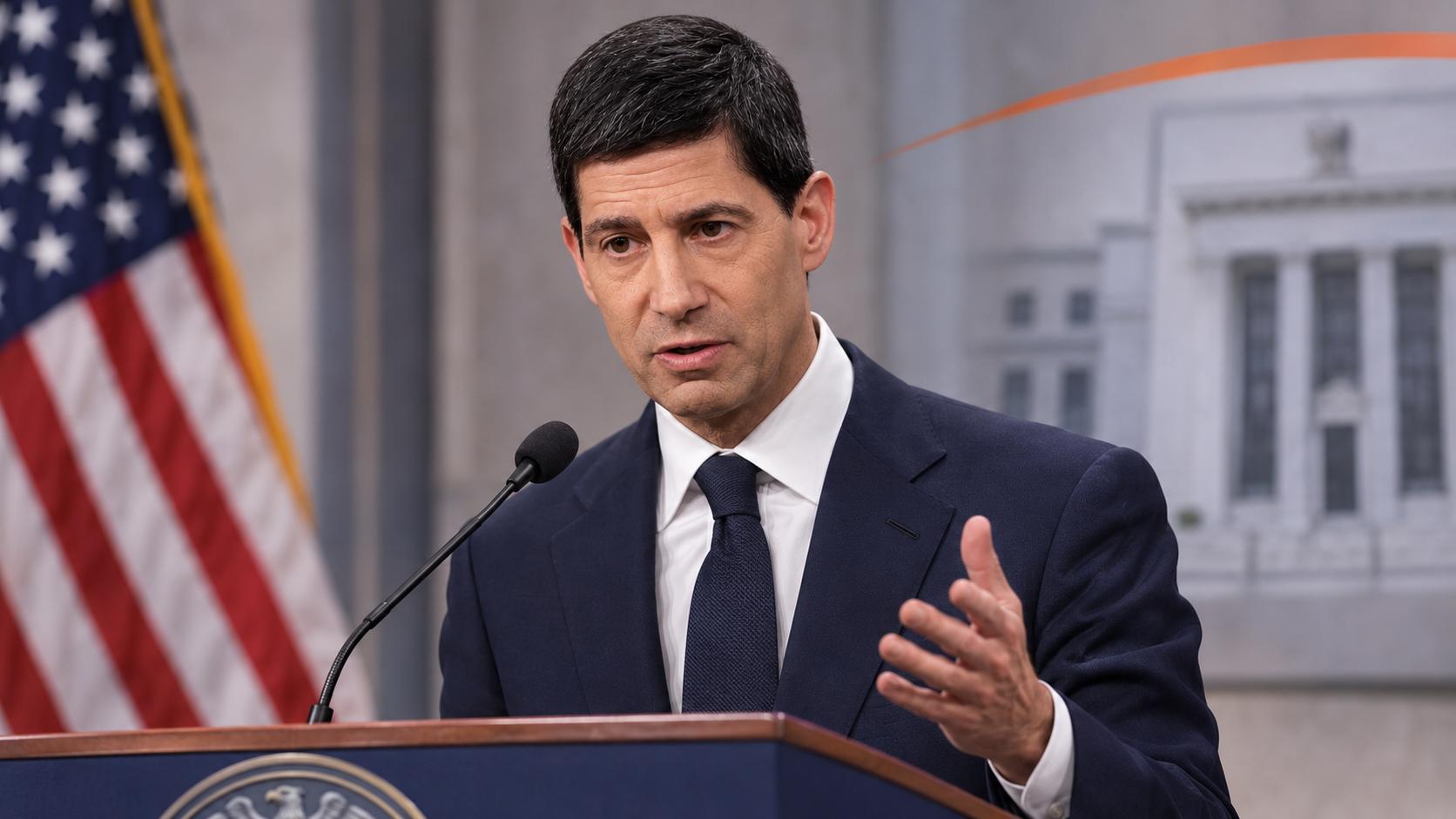
The main catalyst is now the speech from Federal Reserve (Fed) Chair Kevin Warsh, scheduled for Friday. Markets will look for indications about how the US central bank assesses persistent inflationary pressures and what they could mean for the interest rate outlook.
At the July monetary policy meeting, Kevin Warsh did not provide specific guidance on the Fed’s next moves but reaffirmed the central bank’s commitment to bringing inflation back toward its 2% target. A similar message on Friday could reinforce expectations that interest rates will remain elevated for longer, an environment generally unfavorable for Silver, which offers no yield.
Recent US data continue to point to persistent inflationary pressures. The Personal Consumption Expenditures (PCE) Price Index released on Wednesday suggests that inflation remains above the Fed’s target, although recent price indicators do not show a renewed sharp acceleration. According to the CME FedWatch tool, markets currently see around a 62% chance that the Fed will leave interest rates unchanged in September.
Several Fed officials are also maintaining a cautious stance on inflation. Cleveland Fed President Beth Hammack said on Thursday that now is the time to act given persistent inflation and indicated that she does not view current monetary policy as restrictive for the US economy. She also highlighted the risk that households could lose confidence in the Fed’s ability to bring inflation back to 2%.
Meanwhile, Kansas City Fed President Jeff Schmid said the energy shock is starting to feed through to the economy and reiterated the need to return inflation to target. Chicago Fed President Austan Goolsbee, for his part, said that the biggest short-term concern remains that inflation is not fully under control.
These comments could support the US Dollar (USD) and US Treasury yields if investors scale back expectations for monetary easing. A stronger US Dollar and elevated interest rates tend to weigh on Silver by increasing the opportunity cost of holding a non-yielding asset.
However, geopolitical uncertainty in the Middle East continues to provide some support to precious metals. Tensions surrounding the Strait of Hormuz remain elevated despite talks between Iran and Oman, while concerns about energy flows are sustaining both safe-haven demand and inflation risks. Silver therefore remains supported on Thursday, but Warsh’s speech could determine whether the precious metal can extend its advance beyond the $70 area.
Silver FAQs
Silver is a precious metal highly traded among investors. It has been historically used as a store of value and a medium of exchange. Although less popular than Gold, traders may turn to Silver to diversify their investment portfolio, for its intrinsic value or as a potential hedge during high-inflation periods. Investors can buy physical Silver, in coins or in bars, or trade it through vehicles such as Exchange Traded Funds, which track its price on international markets.
Silver prices can move due to a wide range of factors. Geopolitical instability or fears of a deep recession can make Silver price escalate due to its safe-haven status, although to a lesser extent than Gold's. As a yieldless asset, Silver tends to rise with lower interest rates. Its moves also depend on how the US Dollar (USD) behaves as the asset is priced in dollars (XAG/USD). A strong Dollar tends to keep the price of Silver at bay, whereas a weaker Dollar is likely to propel prices up. Other factors such as investment demand, mining supply – Silver is much more abundant than Gold – and recycling rates can also affect prices.
Silver is widely used in industry, particularly in sectors such as electronics or solar energy, as it has one of the highest electric conductivity of all metals – more than Copper and Gold. A surge in demand can increase prices, while a decline tends to lower them. Dynamics in the US, Chinese and Indian economies can also contribute to price swings: for the US and particularly China, their big industrial sectors use Silver in various processes; in India, consumers’ demand for the precious metal for jewellery also plays a key role in setting prices.
Silver prices tend to follow Gold's moves. When Gold prices rise, Silver typically follows suit, as their status as safe-haven assets is similar. The Gold/Silver ratio, which shows the number of ounces of Silver needed to equal the value of one ounce of Gold, may help to determine the relative valuation between both metals. Some investors may consider a high ratio as an indicator that Silver is undervalued, or Gold is overvalued. On the contrary, a low ratio might suggest that Gold is undervalued relative to Silver.
Author
Ghiles Guezout
FXStreet
Ghiles Guezout is a Market Analyst with a strong background in stock market investments, trading, and cryptocurrencies. He combines fundamental and technical analysis skills to identify market opportunities.