|

Pound Sterling Price News and Forecast: GBP/USD softens to around 1.3355 during Asian session

British Pound declines to near 1.3350 as US launches strikes on Iran

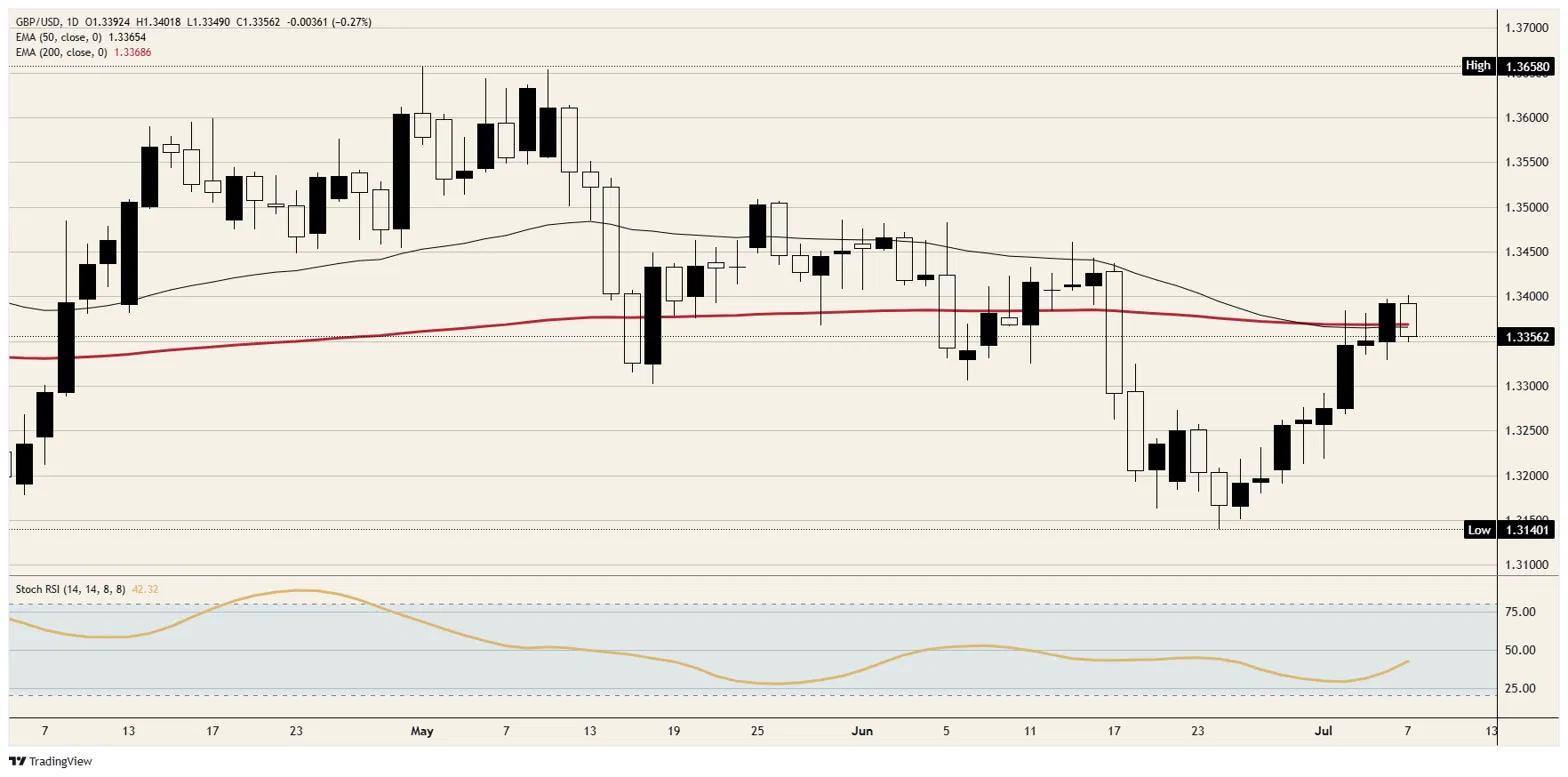
The GBP/USD pair loses traction to near 1.3355 during the Asian trading hours on Wednesday. The US Dollar (USD) edges higher against the British Pound (GBP) amid renewed geopolitical tensions after the US renewed strikes on Iran. The Federal Reserve’s (Fed) June meeting minutes will be published later on Wednesday.

Washington unleashed a new wave of strikes against Tehran on Tuesday and revoked a license allowing the country to sell oil after three tankers were attacked in the Strait of Hormuz, per Reuters. Geopolitical fears surge following this headline, supporting the Greenback as a safe-haven asset. Read more...

British Pound Sterling Runs Out of American Bad News After Nine Straight Days

The Pound's nine-session march against the Dollar ended on Tuesday, and it took exactly one geopolitical headline to finish it. Cable opened near 1.3392, poked above the 1.3400 handle in early European trade, and then spent the balance of the session giving ground to settle around 1.3356, down 0.27% and back below a daily moving-average cluster that has been waiting overhead for weeks.

The streak that died on Tuesday was never a Sterling story to begin with, and its fuel was entirely imported: nine consecutive gains off the 1.3140 base in late June, powered by a deteriorating American labour tape. June nonfarm payrolls printed 57,000 against a consensus near 115,000, earlier months were revised lower, and Tuesday's ADP four-week average employment change slipped to 21,000 from 24,250, extending the softening trend. Read more...
Author

FXStreet Team

Composed of a group of economic journalists and FX experts, the FXStreet content team produces and oversees all content published on FXStreet. It provides a purely journalistic approach to the Forex market.


More from FXStreet Team
Share:

Editor's Picks

GBP/USD declines to near 1.3350 as US launches strikes on Iran

The GBP/USD pair loses traction to near 1.3355 during the Asian trading hours on Wednesday. The US Dollar edges higher against the British Pound amid renewed geopolitical tensions after the US renewed strikes on Iran. The Federal Reserve’s June meeting minutes will be published later on Wednesday.


EUR/USD gains as the Dollar moves sideways amid market caution

EUR/USD maintains its position after registering modest losses in the previous day, trading around 1.1410 during the Asian hours. Traders’ attention is focused on Wednesday's release of the US Federal Reserve Meeting Minutes, the first under newly appointed Chairman Kevin Warsh, for crucial clues regarding the future path of US interest rates.

Gold regains $4,100 despite Iran risks, ahead of Fed Minutes

Gold is fading in the tepid rebound above $4,100 early Wednesday, having reversed a part of the previous sell-off. Traders eagerly await the Minutes of the US Federal Reserve June monetary policy meeting, due later in the day, for fresh trading impetus.

Pi Network crashes to a record low amid broader market stress

Pi Network (PI) price edges toward $0.1000 extending losses for the fifth straight day. Retail sentiment remains bearish as Open Interest and the funding rate decline. The technical outlook for PI is bearish as selling pressure mounts, despite oversold conditions.

WTI holds above $72.00, near two-week high amid fresh US-Iran tensions

West Texas Intermediate (WTI) struggles to capitalize on the previous day's strong move up and enters a bullish consolidation phase near a two-week high, touched during the Asian session this Wednesday. The black liquid currently trades just above the $72.00 mark, with bulls awaiting a sustained strength beyond a technically significant 200-day SMA amid renewed US-Iran hostilities.

Bye, forward guidance: How to trade when central banks choose silence

Central banks have spent years telling markets what might come next. Now, traders face the possibility that they say a lot less. From the Federal Reserve to the European Central Bank and the Bank of England, policymakers are pushing back against forward guidance.














