Pound Sterling Price News and Forecast: GBP/USD rises from a two-month low

British Pound recovers from two-month low ahead of BoE as Iran peace deal weigh on USD
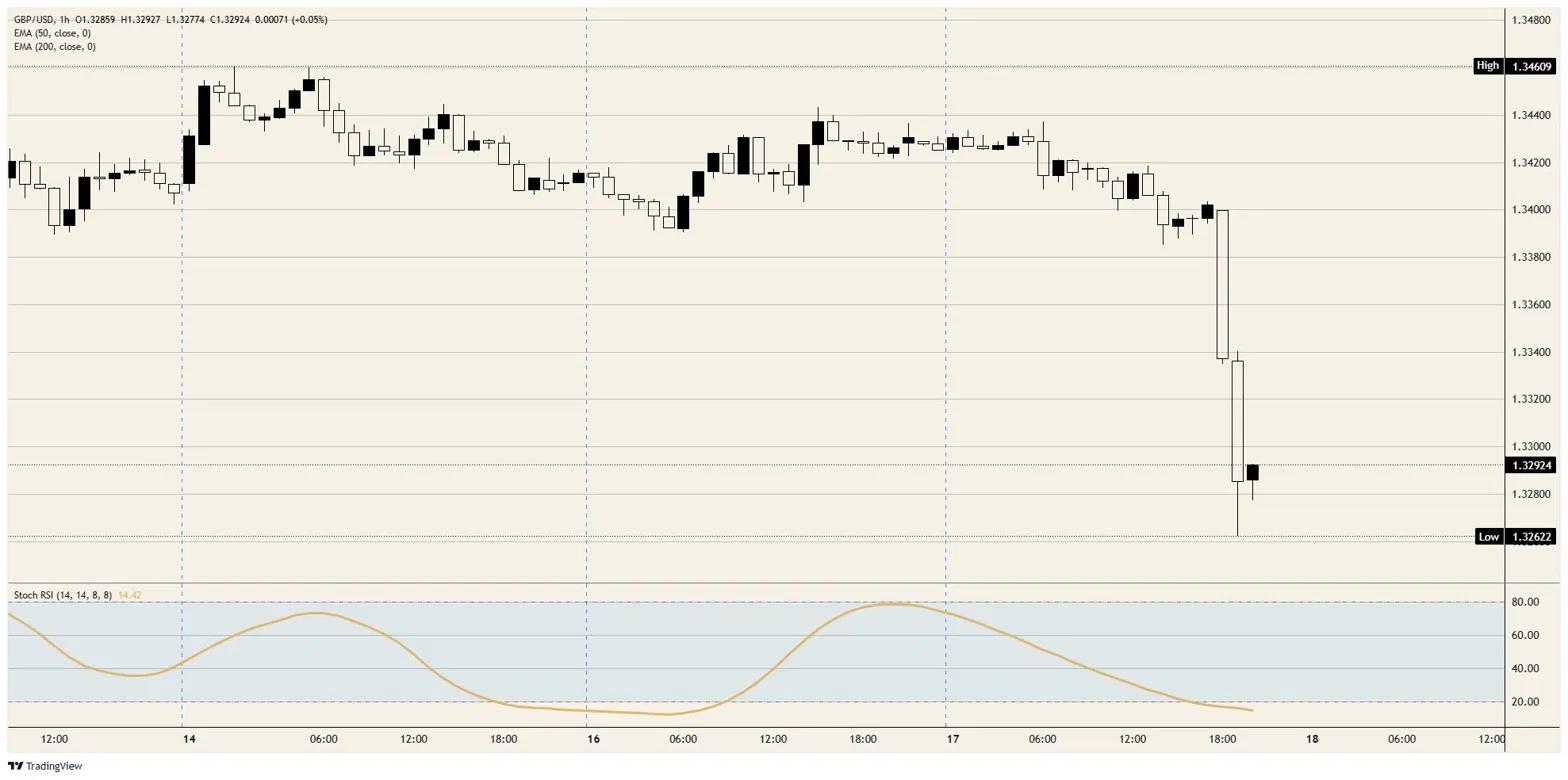
The GBP/USD pair gains some positive traction during the Asian session on Thursday and moves away from its lowest level since April 7, around the 1.3260 region set the previous day. Spot prices retake the 1.3300 mark amid a modest US Dollar (USD) downtick, though the upside potential seems limited amid a bearish fundamental backdrop.
US President Donald Trump and Iranian President Masoud Pezeshkian electronically signed a Memorandum of Understanding (MoU) aimed at ending hostilities between the two countries and reopening the Strait of Hormuz. Furthermore, Trump said that the 60-day negotiation period to reach a final agreement on Iran's nuclear program is not a hard deadline, boosting investors' confidence. This, in turn, prompts some USD profit-taking, following the overnight hawkish Federal Reserve (Fed)-inspired rally to the highest level since late March, and lends support to the GBP/USD pair. Read more...
British Pound double-teamed by soft CPI and a hawkish Fed
The British Pound (GBP) spent Wednesday absorbing blows from both sides of the Atlantic. Softer than expected UK inflation set a heavy tone in the morning, and Kevin Warsh's hawkish first Federal Reserve (Fed) decision finished the job in the evening. GBP/USD had been drifting near 1.3400 into the announcement and then collapsed close to 140 pips, tearing through 1.3350 and the 1.3300 handle to a session low near 1.3250 before steadying just below the figure.
The morning's Consumer Price Index (CPI) gave the Pound its first knock, with the May reading rising just 0.2% on the month against expectations of 0.4% and core annual inflation easing to 2.6% from a forecast 2.7%. Headline annual inflation held at 2.8%, so this was a miss rather than a collapse, but it was enough to nudge Bank of England (BoE) cut expectations and leave Sterling soft into the US session. Read more...
Author

FXStreet Team
FXStreet
Composed of a group of economic journalists and FX experts, the FXStreet content team produces and oversees all content published on FXStreet. It provides a purely journalistic approach to the Forex market.