Pound Sterling Price News and Forecast: GBP/USD loses momentum early Asian session

British Pound softens to near 1.3400 as US-Iran tensions boost safe-haven US Dollar
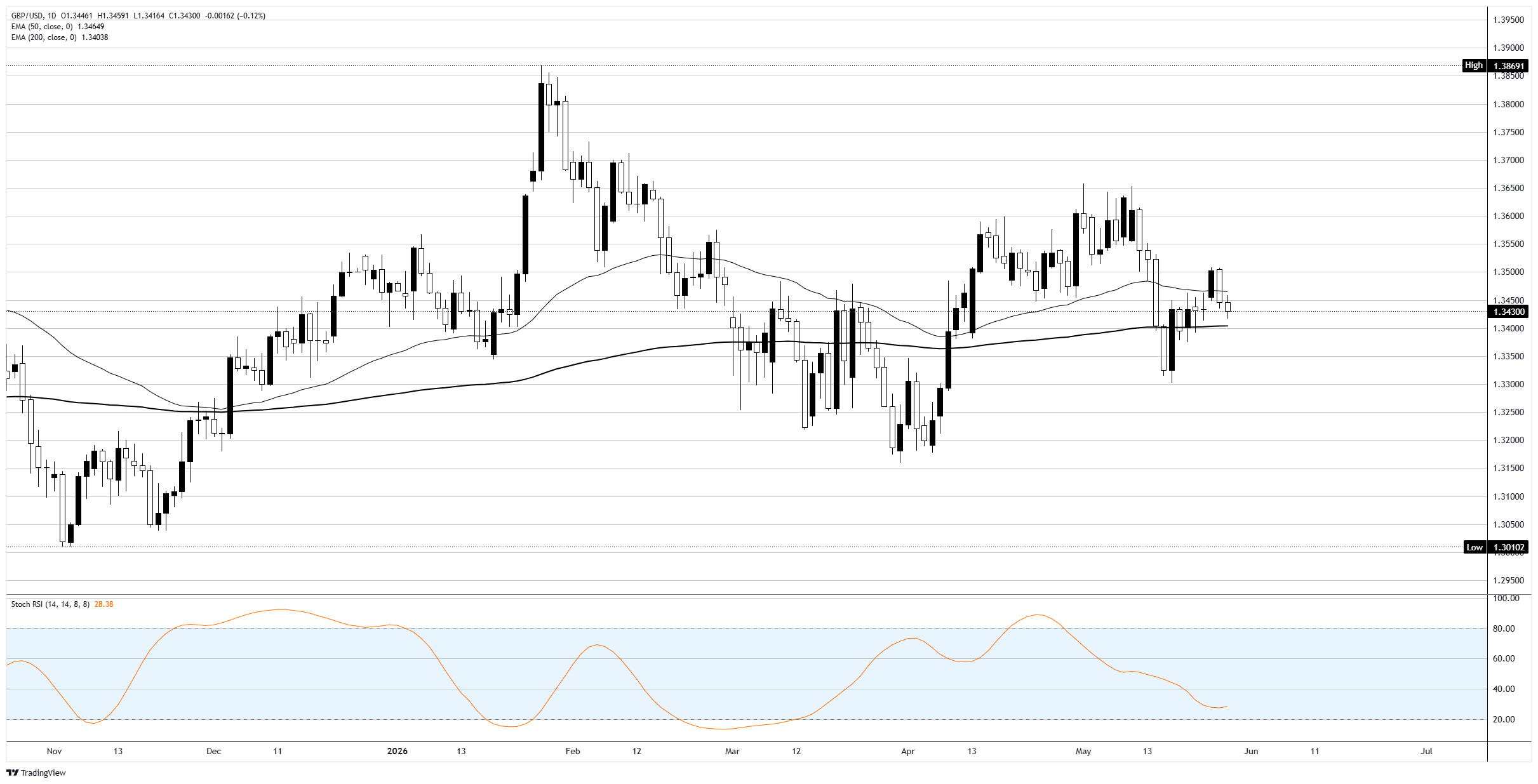
The GBP/USD pair attracts some sellers near 1.3400 during the Asian trading hours on Thursday. The British Pound (GBP) weakens against the US Dollar (USD) on fresh geopolitical developments. Markets remain cautious ahead of the release of the US April Personal Consumption Expenditures (PCE) Price Index inflation report, which is due later in the day.
The US military carried out new strikes in Iran, targeting a site that posed a threat to US forces and commercial traffic, according to Reuters. The US described the actions as measured, purely defensive, and intended to maintain the ceasefire. Read more...
Pound Sterling sleepwalks toward Bailey, not PCE
Sterling traders are spending the week parsing the wrong calendar. The pair has drifted from around 1.3500 down toward 1.3400, and the consensus has tied that move to Thursday's US Core Personal Consumption Expenditures Price Index (PCE) print and the wall of Federal Reserve (Fed) speakers in between. The framing is convenient, but it misses what is actually on the table. The Fed's policy rate sits at 3.50-3.75%; the Bank of England (BoE) at 3.75%. Both central banks closed their April meetings with hawkish dissent. Both are absorbing the same energy-import shock out of the Middle East. Whatever rate-differential narrative usually drives the Pound has, for now, gone flat.
The Federal Open Market Committee (FOMC) split 8-4 in April, with three members opposing any easing bias and one preferring a cut. The BoE's Monetary Policy Committee (MPC) went 8-1 the same week, with the lone dissent voting to hike. Two committees, same direction of friction, same reluctance to commit. Rate-cut pricing into year-end has narrowed on both sides of the Atlantic, and the spread between the two policy paths is barely worth modelling. If Sterling has been bleeding lower, it is not because the Fed has out-hawked the BoE. It is because the UK runs a deeper energy import bill, and the market has decided that is a Pound problem rather than a Dollar one. Whether that judgement holds is the actual question this week. Read more...
Author

FXStreet Team
FXStreet
Composed of a group of economic journalists and FX experts, the FXStreet content team produces and oversees all content published on FXStreet. It provides a purely journalistic approach to the Forex market.