Pound Sterling Price News and Forecast: GBP/USD drifts lower to near 1.3310 early European session

Pound Sterling weakens to near 1.3300 as geopolitical risks bolster US Dollar
The GBP/USD pair attracts some sellers to around 1.3310 during the early European session on Wednesday. Escalating conflict in the Middle East triggers a "flight to safety," supporting the US Dollar (USD) against the Pound Sterling (GBP). Traders will take more cues from the US ADP Employment and ISM Services Purchasing Managers Index (PMI) reports, which are due later on Wednesday.
US President Donald Trump said the war was the "last best chance" of addressing the threat posed by Iran's ballistic missiles and nuclear program and that the campaign could last four to five weeks with the "capability to go far longer than that.” Read more...
GBP/USD slips below key averages as geopolitical risks mount
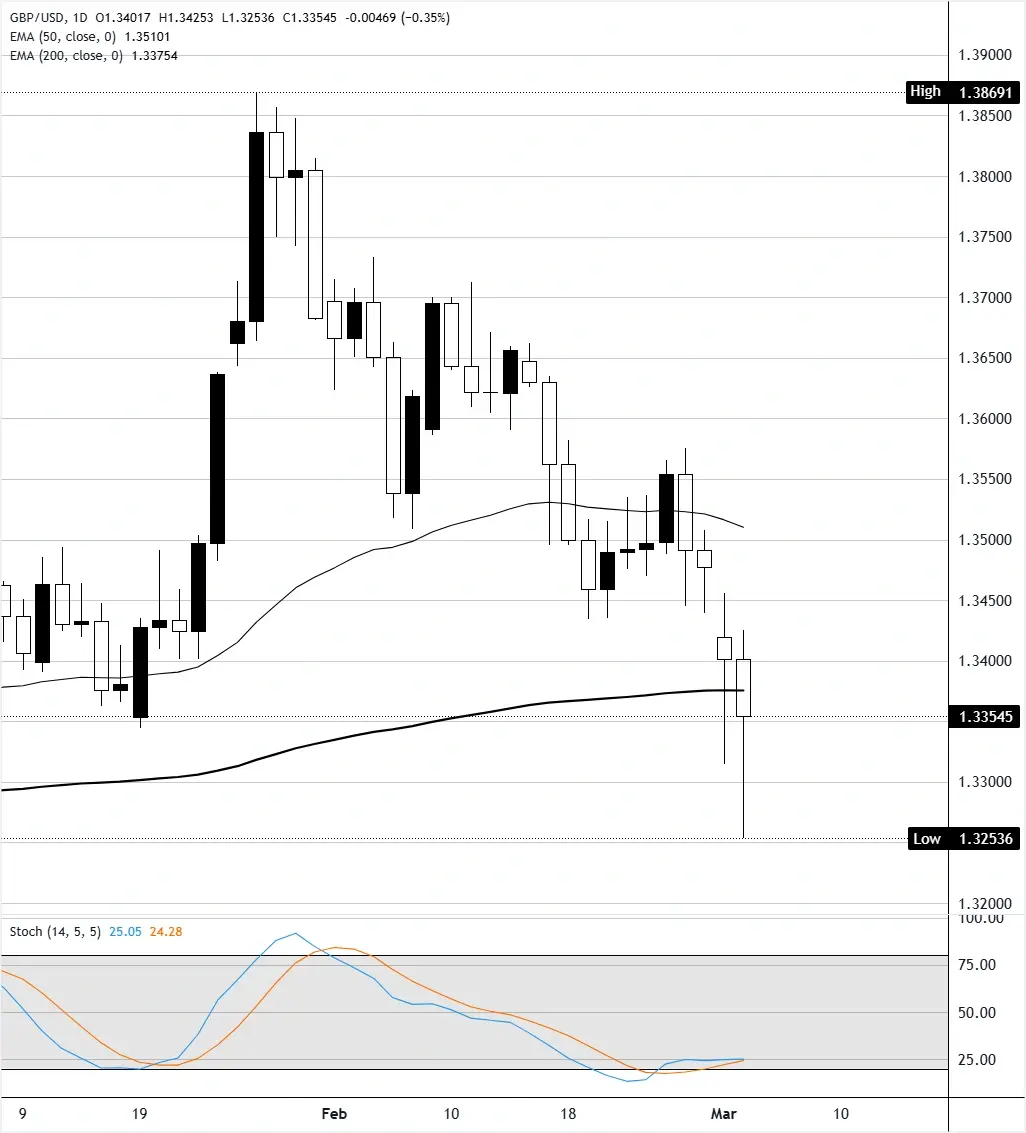
GBP/USD fell about 0.35% on Tuesday, settling around 1.3350 after slipping below the 200-day Exponential Moving Average (EMA) for the first time since early December. The pair has pulled back sharply from its late-January high near 1.3870, shedding over 500 pips in a series of lower highs and lower lows. A cluster of mixed candles over the past two weeks had pointed to indecision, but the latest move lower suggests sellers are regaining control.
The Bank of England (BoE) held rates at 3.75% in February by a narrow 5-4 vote, with Governor Andrew Bailey casting the deciding vote to hold. Testifying before parliament's Treasury Committee, Bailey said a March rate cut is "a genuinely open question," noting that services inflation came in at 4.4% in January, well above the BoE's forecast. Chief Economist Huw Pill echoed the caution, warning against cutting too quickly. However, the escalating conflict in the Middle East has added a new dimension; surging oil prices threaten to push UK inflation higher, and markets have begun to scale back expectations for a March cut. UK government bond yields rose sharply on Monday as traders repriced the rate path. Adding to the pressure on Pound Sterling, Labour's loss in the Gorton and Denton by-election has renewed questions about PM Starmer's leadership and Chancellor Reeves's fiscal plans, with investors wary that political instability could lead to a looser spending stance. Read more...
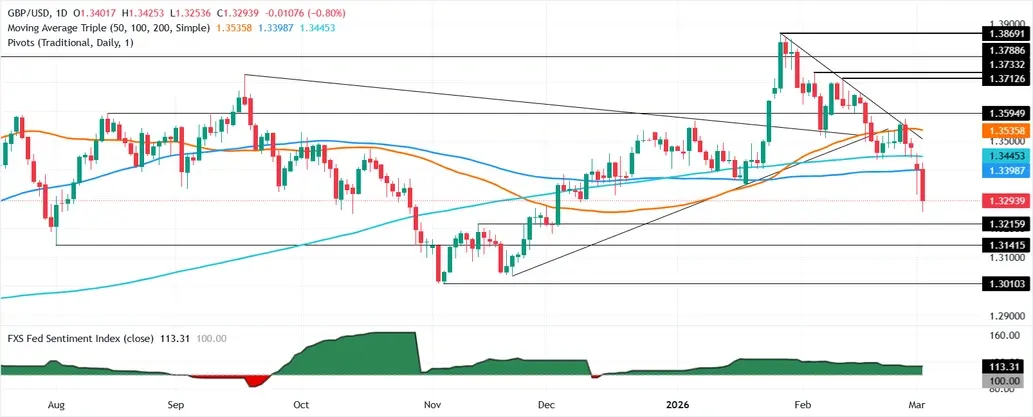
GBP/USD slides to 1.3300 as Middle East war lifts US Dollar
The Pound Sterling (GBP) extends its losses on Tuesday during the North American session as the conflict in the Middle East involving the US, Israel and Iran intensified, fueling a flight to safety sponsored by inflationary pressures on high Oil prices. GBP/USD trades at 1.3304, down 0.73% as the Greenback remains bid. The US Dollar Index (DXY), which measures the buck’s value against a basket of six currencies, is up 0.78% at 99.31 near the highs of the day.
Market sentiment continues to deteriorate as geopolitical news emerged. Iran’s envoy to the United Nations (UN) said that Tehran has not contacted the US about possible peace talks, while sirens sounded in Kuwait, according to Al Hadath. The lack of economic data in the US left traders adrift on comments by Federal Reserve (Fed) officials. Read more...
Author

FXStreet Team
FXStreet
Composed of a group of economic journalists and FX experts, the FXStreet content team produces and oversees all content published on FXStreet. It provides a purely journalistic approach to the Forex market.


![How Wall Street rigs the game [Video]](https://editorial.fxsstatic.com/images/i/market-chaos-01.jpg)