|

Pound Sterling Price News and Forecast: GBP slumps against US Dollar as risky assets turn fragile
British Pound slumps against US Dollar as risky assets turn fragile

The British Pound (GBP) is down 0.13% to near 1.3340 against the US Dollar (USD) during the European trading session on Wednesday. The GBP/USD pair faces selling pressure as renewed geopolitical risks have diminished the appeal of riskier assets.

At press time, S&P 500 futures are down almost 1% to near 7,430, demonstrating a risk-off market mood. The US Dollar Index (DXY), which tracks the Greenback’s value against six major currencies, trades marginally higher to near 101.15 after recovering early losses. Read more...

Pound awaits tighter policy from Bank of England

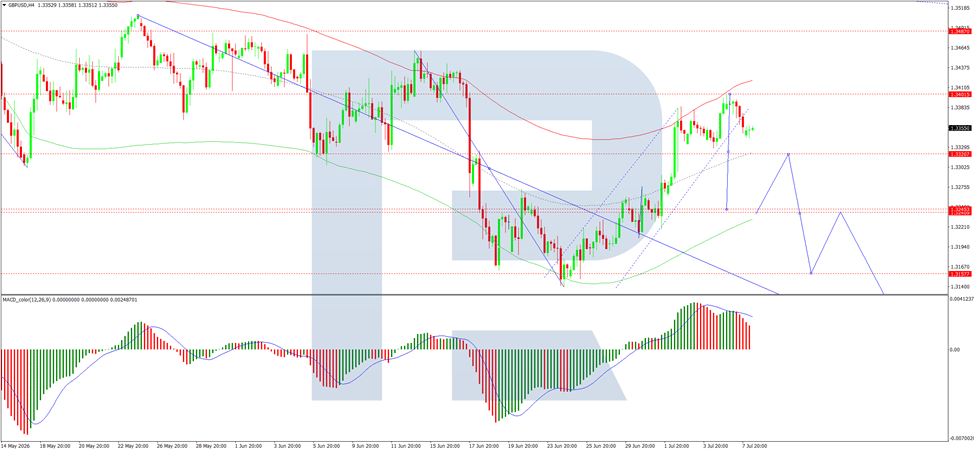
GBP/USD declined to 1.3352 on Wednesday amid a general deterioration in the external environment and a decline in risk appetite. The escalation of tensions in the Strait of Hormuz and Iran's attacks on facilities in Kuwait and Bahrain have prompted investors to move away from riskier assets.

Earlier, the pound had appeared more resilient, supported by oil prices rising above 72 USD per barrel and the associated inflationary risks. Market participants are currently pricing in approximately a 76% probability of a Bank of England rate hike before year-end, with the likelihood of tightening as early as November exceeding 50%. Read more...
GBPUSD

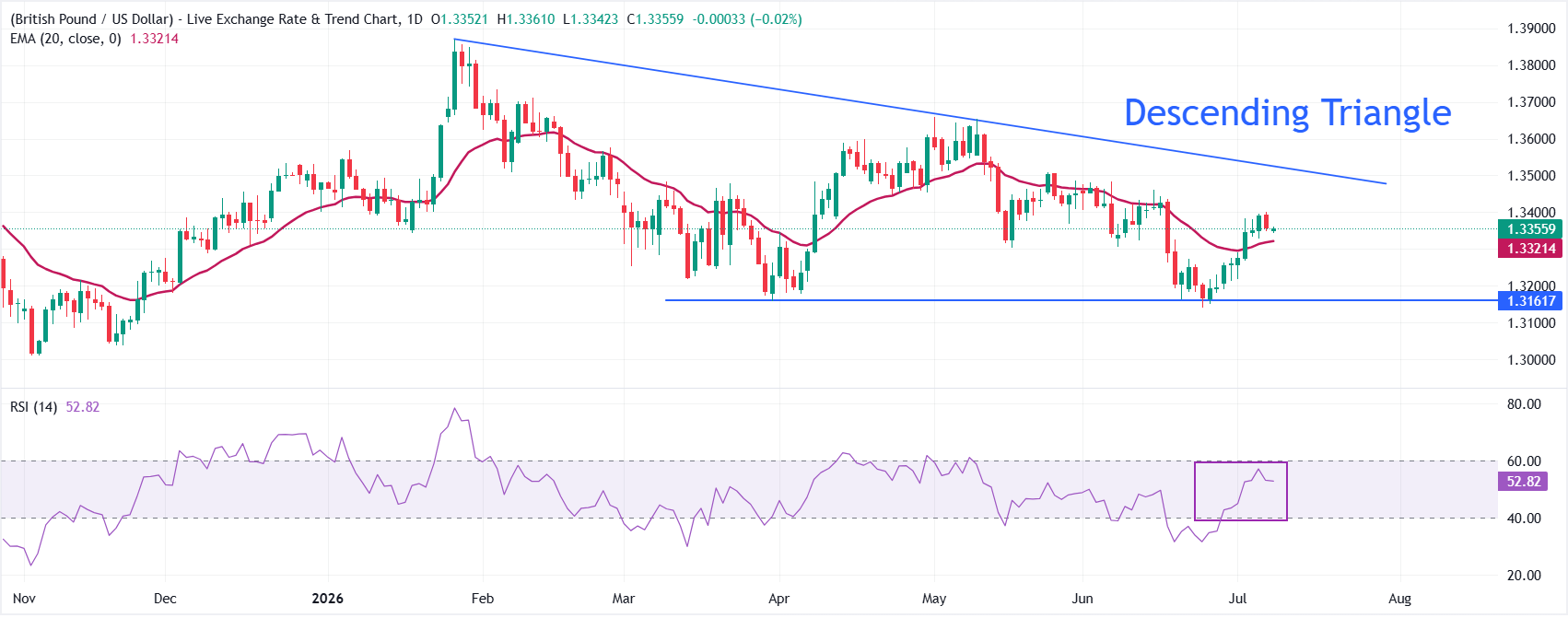
GBP/USD Price Forecast: Sustenance above 20-day EMA backs further upside above 1.3400

The GBP/USD pair trades almost flat at around 1.3355 during the European trading session on Wednesday. The Cable consolidates as investors await the Federal Open Market Committee (FOMC) minutes of the June policy meeting, which will be published at 18:00 GMT.

At press time, the US Dollar Index (DXY), which tracks the Greenback’s value against six major currencies, trades marginally lower to near 101.05. Read more...
GBPUSD

Author

FXStreet Team

Composed of a group of economic journalists and FX experts, the FXStreet content team produces and oversees all content published on FXStreet. It provides a purely journalistic approach to the Forex market.


More from FXStreet Team
Share:

Editor's Picks

GBP/USD retreats below 1.3350; Fed Minutes in focus

GBP/USD struggles to find its footing and trades in negative territory below 1.3350, pressured by the renewed USD strength. US President Donald Trump said on the MoU signed with Iran to end the conflict was "over", causing safe-haven flows to dominate the action in financial markets. Later in the American session, the Fed will publish the minutes of the June policy meeting.

EUR/USD tests 1.1400 as USD gathers strength on Trump comments

EUR/USD comes under bearish pressure on Wednesday and declines toward 1.1400. US President Trump said the MoU signed with Iran to end the conflict was "over" and added that the didn't want to engage with Tehran anymore, triggering a flight-to-safety and boosting the USD.

Gold drops below $4,100 as Middle East tensions escalate

Gold turns south on Wednesday and trades deep in negative territory near $4,050 on Wednesday. Investors adopt a cautious stance and help the USD gather strength after US President Trump said at the NATO summit that the MoU signed with Iran to end the conflict was "over" and added he didn't want to engage with Tehran.

Pi Network crashes to a record low amid broader market stress

Pi Network (PI) price edges toward $0.1000 extending losses for the fifth straight day. Retail sentiment remains bearish as Open Interest and the funding rate decline. The technical outlook for PI is bearish as selling pressure mounts, despite oversold conditions.

WTI surges above $74 as Trump confirms MoU with Iran is over

West Texas Intermediate (WTI) soars 3.2% to near $74.30 during the European trading session, the highest level seen in two weeks. The oil price surges as the confirmation, from the US President Donald Trump that the MoU with Iran is over, has revived risks of global energy supply disruption.

Bye, forward guidance: How to trade when central banks choose silence

Central banks have spent years telling markets what might come next. Now, traders face the possibility that they say a lot less. From the Federal Reserve to the European Central Bank and the Bank of England, policymakers are pushing back against forward guidance.















