Japanese Yen hesitates near 40-year lows as Iran war, Oil prices hold bulls
- USD/JPY trades at 162.30 after bouncing up from lows at the 162.00 area.
- Geopolitical tensions and higher Oil prices are offsetting the positive impact on the Yen of the recent USD pullback.
- Doubts about Tokyo's plan to repatriate pension fund investments are adding pressure on the JPY.
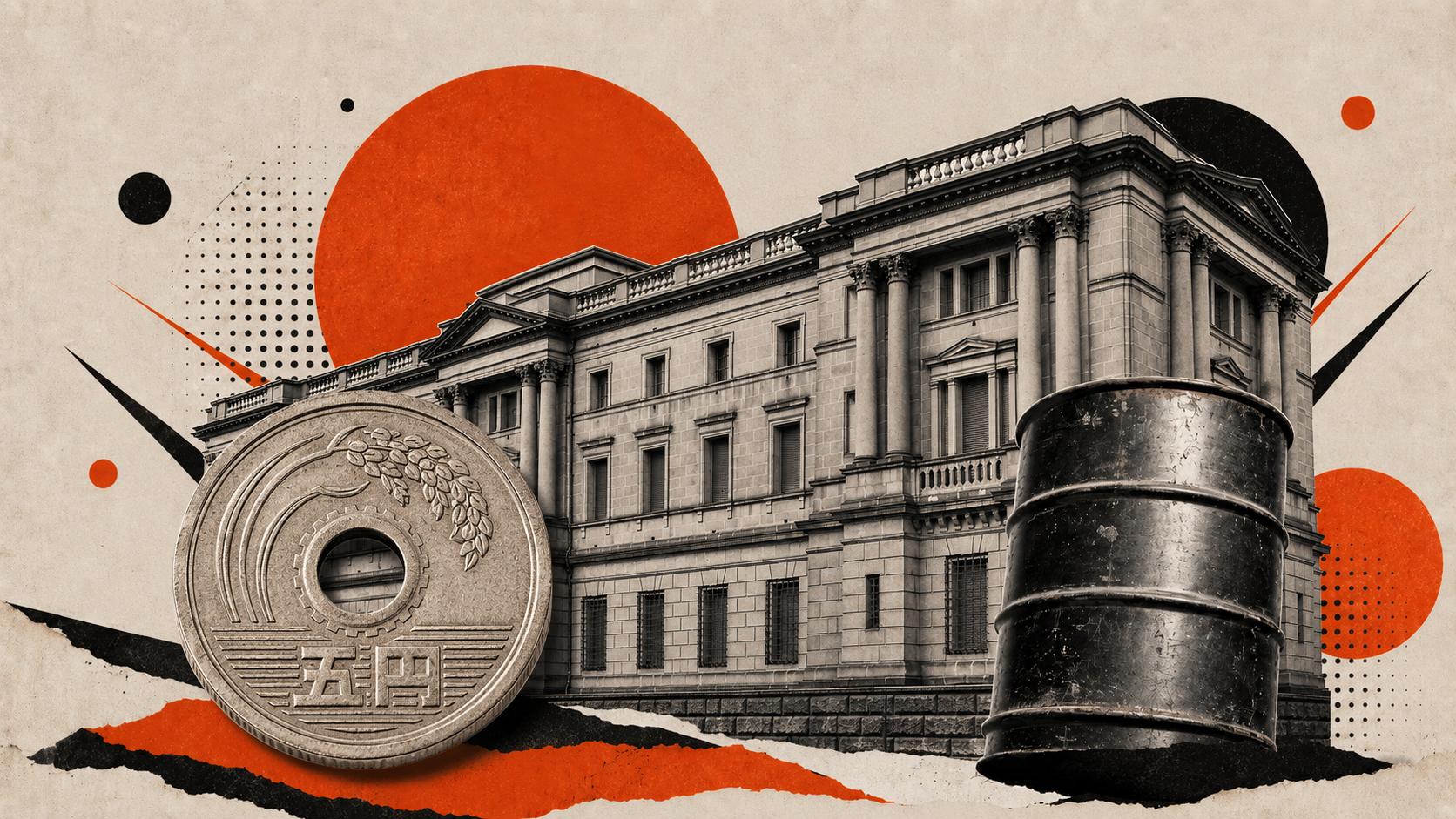
The Japanese Yen (JPY) struggles in the lower range of the 162.00s against the US Dollar (USD) on Wednesday, not far from the 40-year lows, at 162.85. Rising geopolitical tensions and higher Oil prices offset the positive impact of the soft US consumer inflation data released on Tuesday.
Data from the US Bureau of Labour Statistics revealed that Consumer Price Index (CPI) slowed down to a 3.5% year-on-year rate in June, from 4.2% in May, exceeding expectations of a 3.8% reading. Beyond that, monthly inflation contracted at a 0.4% rate, posting its weakest reading since April 2020, and practically offsetting May’s 0.5% growth.
US CPI data cools hopes of immediate Fed hikes
These figures grant a precious margin for the Federal Reserve (Fed) to keep interest rates on hold at its July meeting, and wait for further insight into the economic impact of the volatile energy prices. US Treasury yields dropped, and the US Dollar retreated further as investors repriced Fed interest rate hikes for this year.
The Yen, however, has failed to capitalise on the US Dollar’s weakness, as rising hostilities in the Middle East buoy Oil prices, adding pressure to the oil-importing Japanese economy.
Beyond that, the JPY has remained weighed since a Reuters report earlier this week stated that the Japanese Finance Ministry has no immediate plans to implement last week’s initiative to reallocate pension fund investments, including those of the massive Government Pension Investment Fund (GPIF).
This leaves the Japanese currency vulnerable, at the mercy of carry traders that take advantage of the wide differential between the Bank of Japan’s (BoJ) interest rates and those of the rest of the world’s major central banks.
Central banks FAQs
Central Banks have a key mandate which is making sure that there is price stability in a country or region. Economies are constantly facing inflation or deflation when prices for certain goods and services are fluctuating. Constant rising prices for the same goods means inflation, constant lowered prices for the same goods means deflation. It is the task of the central bank to keep the demand in line by tweaking its policy rate. For the biggest central banks like the US Federal Reserve (Fed), the European Central Bank (ECB) or the Bank of England (BoE), the mandate is to keep inflation close to 2%.
A central bank has one important tool at its disposal to get inflation higher or lower, and that is by tweaking its benchmark policy rate, commonly known as interest rate. On pre-communicated moments, the central bank will issue a statement with its policy rate and provide additional reasoning on why it is either remaining or changing (cutting or hiking) it. Local banks will adjust their savings and lending rates accordingly, which in turn will make it either harder or easier for people to earn on their savings or for companies to take out loans and make investments in their businesses. When the central bank hikes interest rates substantially, this is called monetary tightening. When it is cutting its benchmark rate, it is called monetary easing.
A central bank is often politically independent. Members of the central bank policy board are passing through a series of panels and hearings before being appointed to a policy board seat. Each member in that board often has a certain conviction on how the central bank should control inflation and the subsequent monetary policy. Members that want a very loose monetary policy, with low rates and cheap lending, to boost the economy substantially while being content to see inflation slightly above 2%, are called ‘doves’. Members that rather want to see higher rates to reward savings and want to keep a lit on inflation at all time are called ‘hawks’ and will not rest until inflation is at or just below 2%.
Normally, there is a chairman or president who leads each meeting, needs to create a consensus between the hawks or doves and has his or her final say when it would come down to a vote split to avoid a 50-50 tie on whether the current policy should be adjusted. The chairman will deliver speeches which often can be followed live, where the current monetary stance and outlook is being communicated. A central bank will try to push forward its monetary policy without triggering violent swings in rates, equities, or its currency. All members of the central bank will channel their stance toward the markets in advance of a policy meeting event. A few days before a policy meeting takes place until the new policy has been communicated, members are forbidden to talk publicly. This is called the blackout period.
Author

Guillermo Alcala
FXStreet
Graduated in Communication Sciences at the Universidad del Pais Vasco and Universiteit van Amsterdam, Guillermo has been working as financial news editor and copywriter in diverse Forex-related firms, like FXStreet and Kantox.