Indonesian Rupiah struggles amid record deficit, external pressures
- Indonesian Rupiah declines due to record USD 12.5 billion current account deficit and trade concerns.
- Bank Indonesia's rate pause and commitment to currency stability may limit further IDR’s downside losses.
- US Dollar advances on safe-haven demand as the US expands secondary sanctions targeting Iranian trade networks and Chinese institutions.


USD/IDR halts its three-day losing streak, trading around 17,770 during the Asian hours on Tuesday. The pair appreciates as the Indonesian Rupiah (IDR) struggles under the weight of cautious market sentiment driven by persistent external pressures.
Concerns have intensified following the widening of Indonesia’s current account deficit to a record USD 12.5 billion in Q2 2026. This dynamic suggests that elevated oil prices, firm import demand, and softer export performance could keep the country's external balance under strain over the near term. Caution among traders has also heightened ahead of the upcoming release of July trade data and August inflation metrics, while ongoing El Niño risks continue to fuel worries over potential food-price increases.
Despite these headwinds, the downside for the Indonesian Rupiah may remain limited due to market optimism regarding Bank Indonesia's policy stance. Under the leadership of acting Governor Destry Damayanti, the central bank is expected to maintain its firm focus on currency stability. This outlook is reinforced by BI's decision to hold interest rates steady for a second consecutive month in August, following a cumulative 100-basis-point rate hike implemented since May.
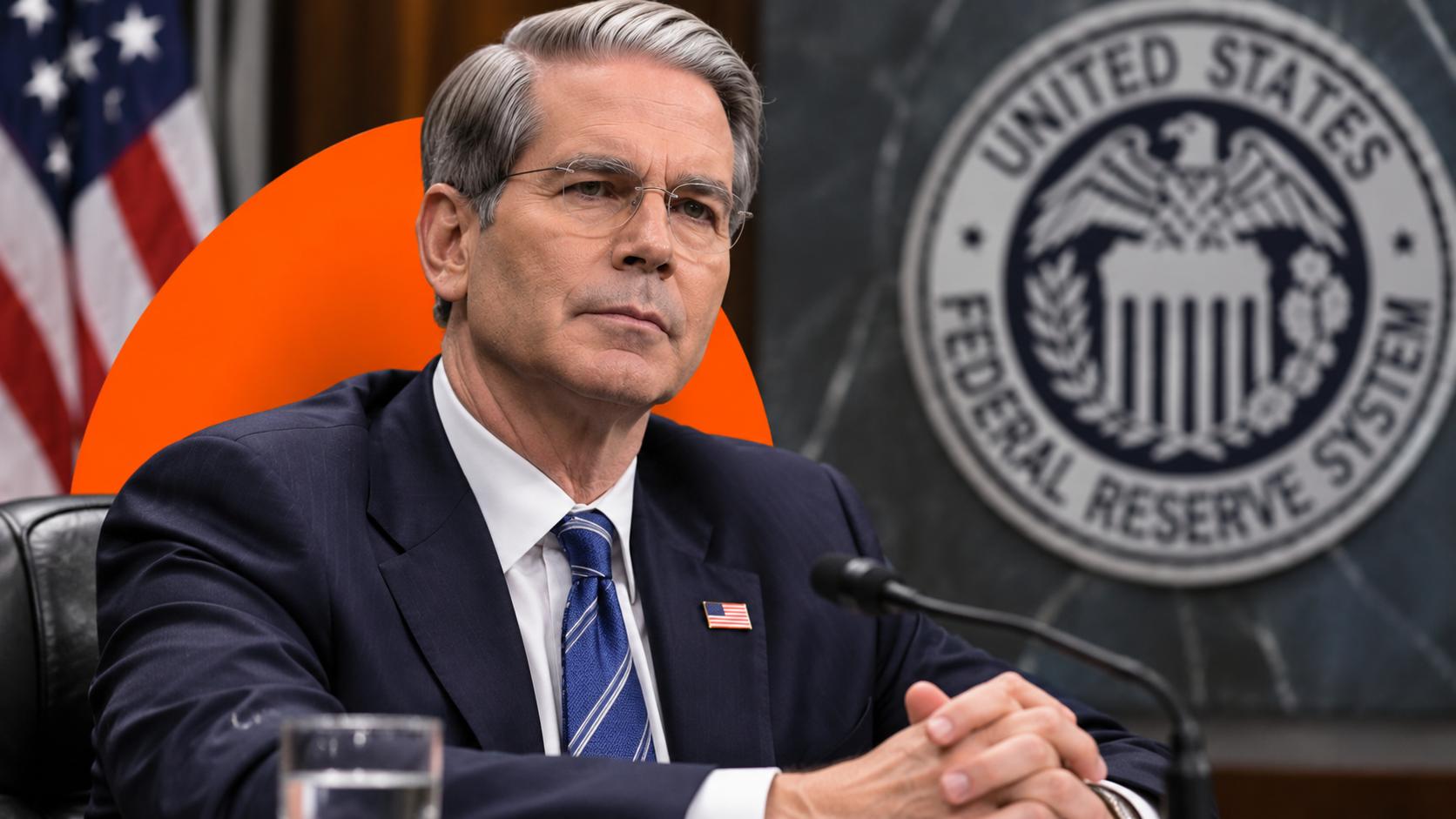
The USD/IDR pair appreciates as the US Dollar (USD) gains safe-haven support amid escalating geopolitical tensions. This upside follows the expansion of United States (US) secondary sanctions against entities trading with Iran. US Treasury Secretary Scott Bessent warned that a major financial institution could face enforcement action this week, explicitly clarifying that Chinese entities will not be exempt from these measures.
However, further gains for the Greenback may be capped by the US Treasury's decision to double its buyback operations for longer-dated bonds. Reports indicate that Secretary Bessent could utilize up to $1 trillion from the Treasury General Account to finance these repurchases, potentially altering market liquidity and yields.
Technical Analysis: USD/IDR gains despite ongoing bearish bias
In the daily chart, USD/IDR trades around 17,770, keeping a bearish near-term bias as spot holds below both the short- and medium-term Exponential Moving Averages (EMAs). The 14-day Relative Strength Index (RSI) at 39.78 hovers in bearish territory, suggesting that downside pressure persists even as the recent slide shows signs of moderating.
On the topside, immediate resistance is seen at the nine-period EMA near 17,830.89, with the 50-period EMA at 17,877.96 forming a higher barrier that would need to be reclaimed to ease the prevailing downside bias. Failure to overcome these clustered moving-average caps would leave the pair vulnerable to renewed selling, with traders likely watching for fresh lows below the recent 17,700 region to signal an extension of the decline.
Dollar downtrend intact as technical signals show only tentative relief
Strategists at Scotiabank note that the broader technical backdrop for the USD remains negative, emphasizing that “technical trends remain bearish.” They acknowledge that some of the pressure has eased, with “oscillator signals…showing some moderation in the dollar decline,” but stress that the move is not yet convincing, concluding that “no reversal is evident at this point.”
(The technical analysis of this story was written with the help of an AI tool. Know more.)
Risk sentiment FAQs
In the world of financial jargon the two widely used terms “risk-on” and “risk off'' refer to the level of risk that investors are willing to stomach during the period referenced. In a “risk-on” market, investors are optimistic about the future and more willing to buy risky assets. In a “risk-off” market investors start to ‘play it safe’ because they are worried about the future, and therefore buy less risky assets that are more certain of bringing a return, even if it is relatively modest.
Typically, during periods of “risk-on”, stock markets will rise, most commodities – except Gold – will also gain in value, since they benefit from a positive growth outlook. The currencies of nations that are heavy commodity exporters strengthen because of increased demand, and Cryptocurrencies rise. In a “risk-off” market, Bonds go up – especially major government Bonds – Gold shines, and safe-haven currencies such as the Japanese Yen, Swiss Franc and US Dollar all benefit.
The Australian Dollar (AUD), the Canadian Dollar (CAD), the New Zealand Dollar (NZD) and minor FX like the Ruble (RUB) and the South African Rand (ZAR), all tend to rise in markets that are “risk-on”. This is because the economies of these currencies are heavily reliant on commodity exports for growth, and commodities tend to rise in price during risk-on periods. This is because investors foresee greater demand for raw materials in the future due to heightened economic activity.
The major currencies that tend to rise during periods of “risk-off” are the US Dollar (USD), the Japanese Yen (JPY) and the Swiss Franc (CHF). The US Dollar, because it is the world’s reserve currency, and because in times of crisis investors buy US government debt, which is seen as safe because the largest economy in the world is unlikely to default. The Yen, from increased demand for Japanese government bonds, because a high proportion are held by domestic investors who are unlikely to dump them – even in a crisis. The Swiss Franc, because strict Swiss banking laws offer investors enhanced capital protection.
Author
Akhtar Faruqui
FXStreet
Akhtar Faruqui is a Forex Analyst based in New Delhi, India. With a keen eye for market trends and a passion for dissecting complex financial dynamics, he is dedicated to delivering accurate and insightful Forex news and analysis.