|

Fed: Warsh plans seen curve-steepening – Commerzbank
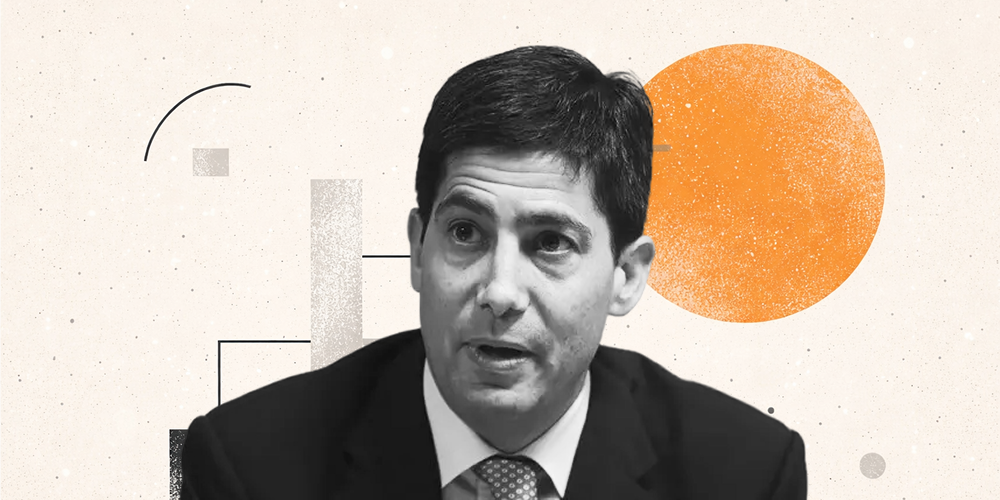
Commerzbank’s Christoph Rieger highlights Kevin Warsh’s confirmation hearing as a key event for US rates, with potential for far-reaching changes to Federal Reserve balance sheet operations. He expects the proposals to be technically complex but impactful across the yield curve, money markets, cross-currency funding and swap spreads. Banks are seen as likely beneficiaries if they assume more Fed-like functions.

Warsh agenda could reshape US rates

"More relevant could be Kevin Warsh's confirmation hearing before the Senate Banking Committee. A formal vote is not expected as the Republican Senator Tillis has not given up his opposition, which means the Committee is short one vote for advancing the nomination to the Senate floor."

"Tillis is unlikely to drop his veto before the DoJ charges against Powell are resolved. However, after today's hearing the committee could move immediately to a vote when the DoJ issue is resolved, keeping chances alive for Warsh to be sworn in before Powell's term expires on 15 May."

"In terms of content, the hearing could add colour to the profound fundamental changes Warsh wants to implement as Fed chair. As argued in last week's AotC, the proposals may sound technical, but they can have far-reaching consequences for various actors and market segments."

"The yield curve should steepen."

"In money markets, the measures should allow more repo volatility and generally higher market rates relative to the administered rates."

(This article was created with the help of an Artificial Intelligence tool and reviewed by an editor.)

Author

FXStreet Insights Team

The FXStreet Insights Team is a group of journalists that handpicks selected market observations published by renowned experts. The content includes notes by commercial as well as additional insights by internal and external analysts.


More from FXStreet Insights Team
Share:

Editor's Picks

AUD/USD hits nine-week lows below 0.7000 on RBA Bullock's remarks

AUD/USD reverses a brief uptick and turns lower to hit nine-week lows below 0.7000 in the European morning on Tuesday, as traders digest cautious remarks from Reserve Bank of Australia (RBA) Governor Michele Bullock during the press conference. Earlier on, the RBA raised the cash rate to 4.60%, as widely expected, leaving the door open to further rate hikes if needed.

USD/JPY consolidates near 157.50 as a bullish USD counters intervention risks

USD/JPY struggles to capitalize on the overnight bounce from a one-week low, consolidating around 157.50 in the Asian session on Tuesday. Trump's concerns about the Japanese Yen's weakness fueled speculation about another US-Japan joint intervention. This, along with the hawkish BoJ, underpins the JPY and caps the currency pair. Meanwhile, rising Fed rate-hike bets and oil-driven inflation fears continue to push US bond yields to multi-year highs, keeping the US Dollar pinned near a two-month high and supporting the pair.

Gold steadies after sharp drop as traders assess Fed outlook, Middle East risks

Gold steadies on Tuesday after suffering a sharp sell-off at the start of the week. The move appears to be a corrective bounce, as the broader narrative remains tied to expectations of further Federal Reserve interest rate hikes.

Chainlink trims gains after CCIP 2.0 launch, Swift ledger integration

Chainlink (LINK) edges below $15.00 on Tuesday, trimming its 10% gains from the previous day, driven by the launch of its new Cross-Chain Interoperability Protocol 2.0 and Swift ledger integration for tokenized deposits and 24/7 cross-border payments.

Focus turns to US job openings
In the euro area, focus turns to the September flash inflation print for Spain which will give the first indication of where the euro area data on Friday lands. We expect a modest rise in headline due to higher energy costs and a small increase in core inflation. We also receive the European Commission's business survey for September.
Fed vs BoJ: Both hiked. The market only believes one of them – and the chart shows which

The Fed and the BoJ have just done something remarkably similar. Both central banks raised interest rates by 25 bps last week, both are confronting inflation risks, and both signal that future decisions will depend on incoming economic data.