|

Fed Chair Warsh: Inflation will not be permanent
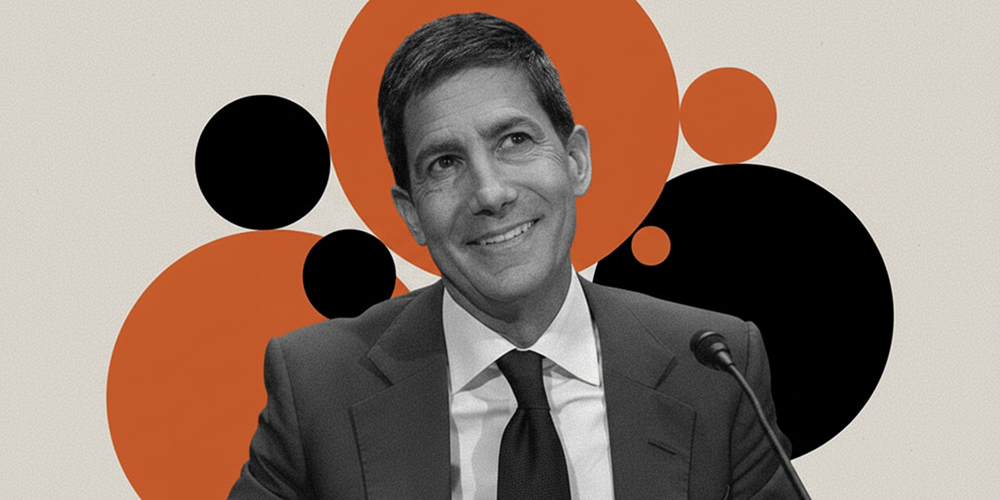
Federal Reserve (Fed) Chair Kevin Warsh said on Wednesday that current inflation pressure will not be permanent, while acknowledging that the latest inflation measures remain unsatisfactory. Warsh made the remarks while testifying at the Semiannual Monetary Policy Report before the US Senate Committee on Banking, Housing and Urban Affairs.

Key takeaways:

Inflation will not be permanent.

Monetary policy has contributed to inflation.

The labor market remains in good shape.

It is unclear whether previous interest rate cuts were responsible for the labor market’s resilience.

Warsh is not satisfied with any of the current inflation measures.

The Federal Reserve is expected to receive taskforce briefings in early September.

The labor market appears to be broadly balanced.

There is no fixed limit to how quickly the US economy can grow.

Inflation, which forms part of the Fed’s dual mandate, remains less encouraging.

The labor market is undergoing significant structural change.”

Warsh highlights AI as long-term jobs and wage driver

Fed Chair Warsh’s testimony scores 5.4/10 on the FXS Speechtracker, notably softer relative to the historical average of 7/10, signaling a more nuanced and less forceful tone. By calling recent inflation data an “imperfect gauge of underlying inflation” and stressing that whether AI proves inflationary is “up to the Fed,” Warsh reinforces the Fed’s policy primacy, which tempers immediate hawkish implications for the US Dollar.

The emphasis on AI as a long-term job and wage creator, coupled with acknowledgment of near-term disruption and the “puzzle” of translating productivity into wages, points to a cautious, medium-term constructive view on growth rather than imminent policy tightening.

The FXS Fed Sentiment Index for Warsh's comments was unchanged, moving 0.00 points to a still-elevated level of 126.13, confirming that the broader policy backdrop remains firmly in hawkish territory despite the more moderate speech tone captured by the FXS Speechtracker. The lack of index movement suggests that Warsh’s remarks on AI, wages, and inflation data did not materially shift market perceptions of the Fed’s stance, leaving the US Dollar supported by the prevailing hawkish baseline.

Author

Agustin Wazne

Agustin Wazne joined FXStreet as a Junior News Editor, focusing on Commodities and covering Majors.


More from Agustin Wazne
Share:

Editor's Picks

AUD/USD climbs toward 0.7000 after strong China data dump

AUD/USD attracts follow-through buyers for the second straight day on Monday, extending last week's recovery toward 0.7000 in Monday's Asian trading. Strong Chniese Q3 GDP and activity data for September strengthen the pair's advance, following RBA Assistant Governor Chris Kent's hawkish remarks.

USD/JPY struggles near 158.00 amid hawkish BoJ, subdued USD

USD/JPY remains defensive near 158.00 in the Asian session on Monday, as the US Dollar remains depressed near a two-week low amid the recent decline in US bond yields. Furthermore, looming intervention risks underpin the Japanese Yen and weigh on the pair amid BoJ Governor Kazuo Ueda's hawkish remarks. However, Fed rate-hike bets and geopolitical uncertainties could limit USD losses and the major.

Gold holds firm below $4,200 on falling US yields

Gold holds gains but remains below the $4,200 mark in the European session on Monday. US Federal Reserve Chair Kevin Warsh’s unwillingness to provide any cues on further policy moves led to a reduction in odds for policy tightening later this month. Moreover, the recent sharp retracement slide in US government bond yields from multi-year highs, acts as a tailwind for the non-yielding bullion.

Cardano risks 15% downside as retail demand, bullish momentum wane

Cardano (ADA) is trading above $0.2200 at press time on Monday, holding steady after a 12% decline the previous week. The altcoin is losing retail interest as the notional value of active ADA futures positions declines. The technical outlook for ADA suggests a downside bias following the bearish breakout below a near-term support trendline last week.

What to expect in the week ahead
Investors are still digesting last week’s price action as we start a new week. US stocks sold off sharply, with the Swiss and UK indices attracting inflows as tech sold off. Sovereign bonds, particularly Treasuries, rallied and acted as a safe haven as the AI trade suffered another bout of volatility.
Everyone's dumping Gold after hot US inflation. Here's why $4,100 could be a floor, not a cliff
Gold (XAU/USD) is recovering from a sharp sell-off triggered by hotter-than-expected United States (US) inflation data released on Wednesday. The precious metal briefly plunged toward $4,073 as investors increased their bets on further Federal Reserve (Fed) interest rate hikes before recovering as US Treasury yields and the US Dollar (USD) reversed their initial gains.