Euro extends gains, nearing 181.00 against Japanese Yen despite Ueda's hawkish comments
- EUR/JPY extends gains to levels near 181.00, as the Bank of Japan's rate hike failed to convince investors.
- Ueda expressed confidence in Japan's economic outlook and vowed to keep raising rates to tame inflation.
- The yen fell across the board as the BoJ's decision faced opposition from three committee members.
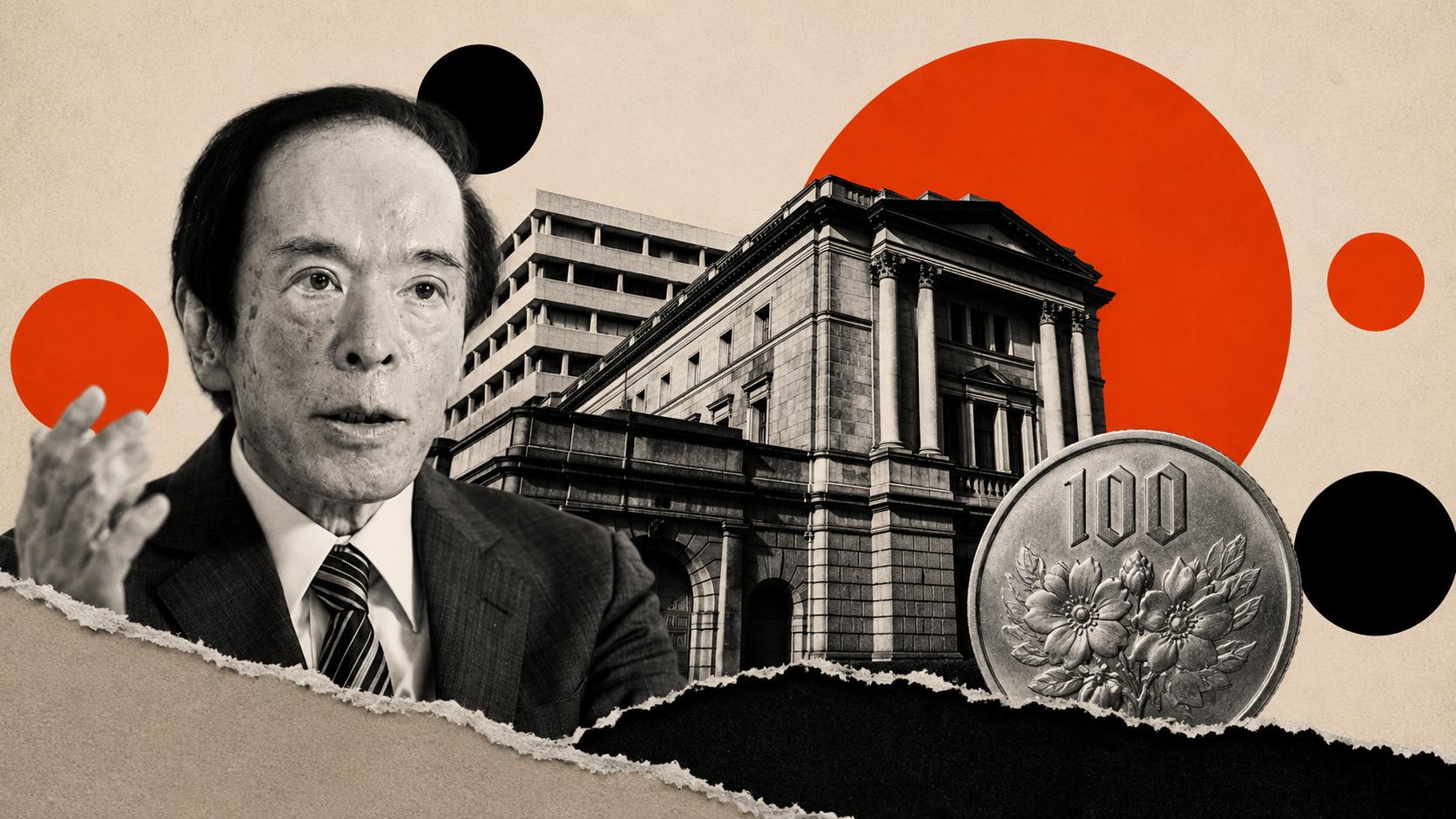
The Euro (EUR) extends gains against the Japanese Yen (JPY) on Friday, after some hesitation, amid the Bank of Japan (BoJ) Governor Ueda's hawkish rhetoric at the post-meeting press conference. The EUR/JPY pair trades at 180.85 at the early European session, on track for a 1.5% weekly gain, as the details of the BoJ rate hike have failed to convince investors.
Ueda provided some support to the Yen, stating that Japan’s economy is recovering moderately and showing confidence that it will maintain its growing pace in the near term. He also warned about the impact of the Middle East conflict and the firm wage increases on price pressures and on economic activity.
Ueda vows further rate hikes
Against this backdrop, the BoJ chief stated that Japan’s financial conditions have been accommodative and that the “stage for policy conduct has changed”, before bowing to “keep raising rates in response to economy, prices."
These comments have provided some support to the Yen, which had dropped across the board despite the BoJ’s decision to hike interest rates to 1.25%, its highest level in 31 years.
Previously, the bank met market expectations by tightening its monetary policy and breaking the semi-annual rate hike pace, as the previous tightening move was in June. The decision, however, faced the opposition of three committee members, which cast doubt about the BoJ’s ability to keep the monetary tightening pace much longer.
Analysts at Deutsche Bank point out that the BoJ delivered “a more dovish hike than expected,” with Ayano Sato and Toichiro Asada arguing for a hold “on the grounds that Japan’s economic outlook was uncertain.” Deutsche Bank notes that both dissenters were appointed by Prime Minister Sanae Takaichi, suggesting “that this may infer less political support for the rate hike than has perhaps been indicated by US Treasury Secretary Bessent, who has been quite firm on the fact that the US and Japan are aligned.”
Deutsche Bank also highlights that August inflation data showed price pressures “remaining broadly stable and close to the central bank’s target,” providing additional reasons to BoJ doves to hold further monetary tightening.
Finally, it is worth recalling that the monetary policy decisions of the European Central Bank (ECB) and the Federal Reserve (Fed) earlier this week have watered down JPY’s competitive advantage from the BoJ’s hawkishness. This has raised the stakes for the BoJ to provide any further impulse to the Yen.
Bank of Japan FAQs
The Bank of Japan (BoJ) is the Japanese central bank, which sets monetary policy in the country. Its mandate is to issue banknotes and carry out currency and monetary control to ensure price stability, which means an inflation target of around 2%.
The Bank of Japan embarked in an ultra-loose monetary policy in 2013 in order to stimulate the economy and fuel inflation amid a low-inflationary environment. The bank’s policy is based on Quantitative and Qualitative Easing (QQE), or printing notes to buy assets such as government or corporate bonds to provide liquidity. In 2016, the bank doubled down on its strategy and further loosened policy by first introducing negative interest rates and then directly controlling the yield of its 10-year government bonds. In March 2024, the BoJ lifted interest rates, effectively retreating from the ultra-loose monetary policy stance.
The Bank’s massive stimulus caused the Yen to depreciate against its main currency peers. This process exacerbated in 2022 and 2023 due to an increasing policy divergence between the Bank of Japan and other main central banks, which opted to increase interest rates sharply to fight decades-high levels of inflation. The BoJ’s policy led to a widening differential with other currencies, dragging down the value of the Yen. This trend partly reversed in 2024, when the BoJ decided to abandon its ultra-loose policy stance.
A weaker Yen and the spike in global energy prices led to an increase in Japanese inflation, which exceeded the BoJ’s 2% target. The prospect of rising salaries in the country – a key element fuelling inflation – also contributed to the move.
Author

Guillermo Alcala
FXStreet
Graduated in Communication Sciences at the Universidad del Pais Vasco and Universiteit van Amsterdam, Guillermo has been working as financial news editor and copywriter in diverse Forex-related firms, like FXStreet and Kantox.