|

EUR/USD: EUR may break below 1.1040 in the longer run – UOB Group

Euro (EUR) is likely to trade in a 1.1050/1.1125 range. In the longer run, upward momentum has largely dissipated, and EUR is expected to trade in a range between 1.1040 and 1.1200, UOB Group FX analysts Quek Ser Leang and Lee Sue Ann notes.

The 1.1040 support may become a magnet for EUR

24-HOUR VIEW: “After EUR fell sharply two days ago, we indicated yesterday that 'the sharp and swift drop seems to be overextended.' However, we were of the view that 'there is room for EUR to decline further to 1.1095 before stabilization is likely.' We highlighted that 'the major support at 1.1040 is unlikely to come under threat.' Although our view of a lower EUR was not wrong, it fell more than expected, reaching a low of 1.1054 before recovering. Conditions are severely oversold now, and EUR is unlikely to weaken much further. Today, EUR is more likely to trade in a 1.1050/1.1125 range.”

1-3 WEEKS VIEW: “We highlighted yesterday (29 Aug, spot at 1.1125) that upward momentum has largely dissipated. We expected EUR to trade in a range between 1.1040 and 1.1200. There is no change in our view. Looking ahead, as long as EUR does not break clearly below 1.1040, there is still chance for EUR to rise to 1.1200 later on. Conversely, if EUR breaks clearly below 1.1040, it could trigger a deeper pullback to 1.0890.”

Author

FXStreet Insights Team

The FXStreet Insights Team is a group of journalists that handpicks selected market observations published by renowned experts. The content includes notes by commercial as well as additional insights by internal and external analysts.


More from FXStreet Insights Team
Share:

Editor's Picks

AUD/USD sits at two-month lows near 0.6950 after Australian CPI data

AUD/USD is sitting at two-month lows near 0.6950 in the Asian session on Wednesday, as below-expectations August Australian underlying CPI data pours cold water on expectations for further RBA interest rate hikes. Chinese PMI data also fail to inspire the Australian Dollar, despite a pause in the US Dollar advance.

USD/JPY stays weak below 157.00 amid Japanese intervention risks

USD/JPY keeps losses below 157.00 in the Asian session on Wednesday, as hawkish BoJ expectations, along with intervention risks, underpin the Japanese Yen, countering dismal domestic factory output and retail sales data. Meanwhile, a broad US Dollar retreat also collaborates to the pair's downside.

Gold flat lines below $4,200 as traders await US PCE data for Fed rate cues

Gold extends its consolidative price move heading into the European session, trading below the $4,200 mark amid mixed fundamental cues. Falling US bond yields drag the US Dollar away from the two-month high, touched on Tuesday, and act as a tailwind for the commodity. However, hawkish US Federal Reserve expectations cap the upside as traders await important US macro data before placing fresh directional bets on the non-yielding bullion.

Aave Price consolidates below $161 as profit-taking emerges after 10% surge

Aave slips below $161 on Wednesday after surging more than 10% the previous day, with on-chain data suggesting increased profit-taking. Meanwhile, Aave founder Stani Kulechov is considering an AAVE token-burn mechanism under Aavenomics 3.0, adding a potential catalyst for AAVE.

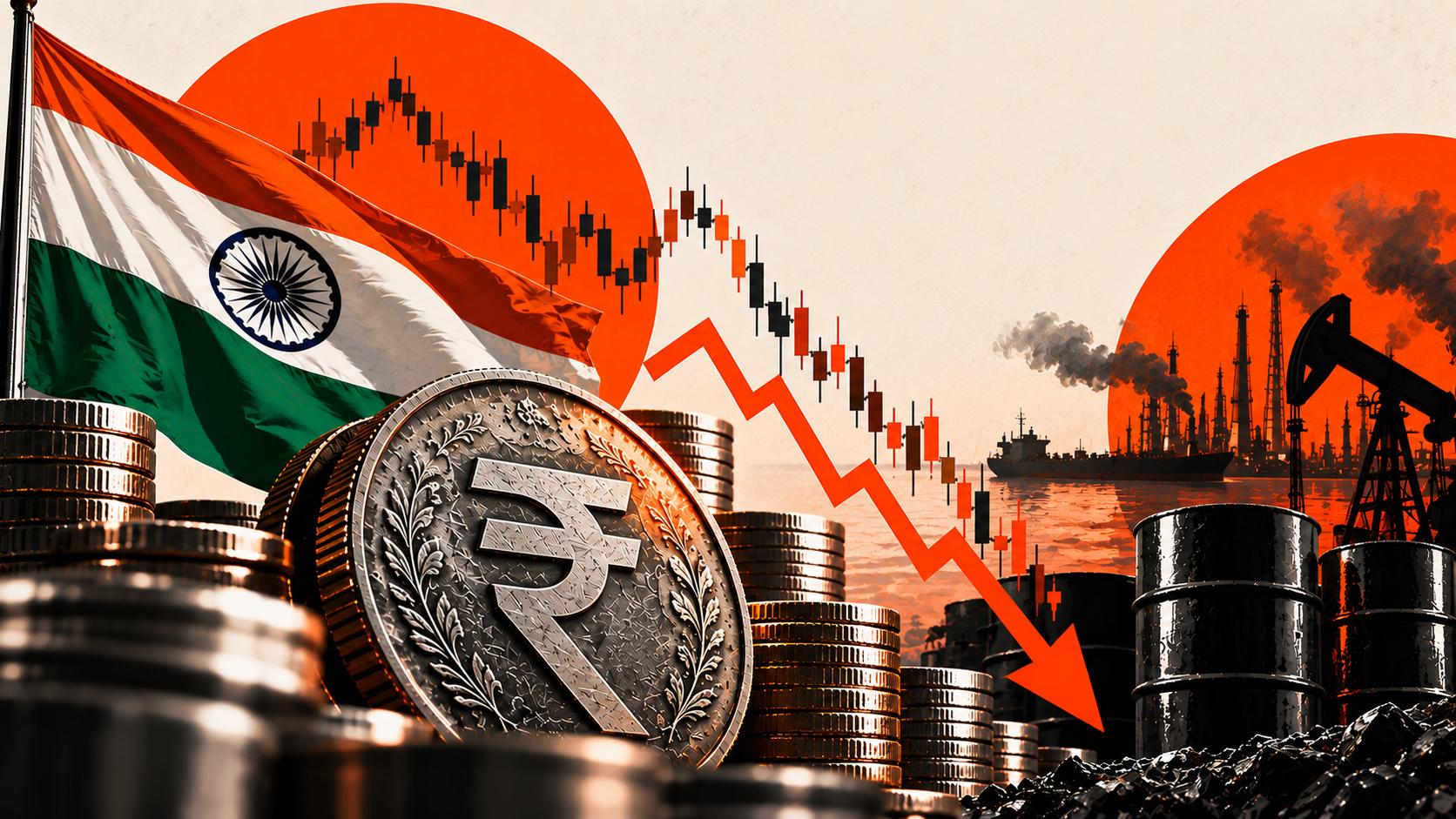
Warning: The RBI's October rate hike may be too late as oil risks mount
The Indian Rupee (INR) is one of the worst-performing Asian currencies in 2026, down about 6.5% year-to-date against the US Dollar (USD) and trading near historic lows ahead of the October 5–7 Reserve Bank of India (RBI) meeting. Economists expect the RBI to raise its repo rate by 25 basis points (bps) next month and follow up with another increase in December to counter rising retail inflation.
Silver is more volatile than Gold ahead of PCE and NFP. This chart shows the positioning gap
The market’s attention is focused on American data this week, but there’s something only those with a trained eye may be looking at: Gold and Silver positioning gap. Financial markets are moving on fears, mostly related to persistently high energy prices driven by the Middle East war. Sure, the US Dollar (USD) is strong, but at what cost?