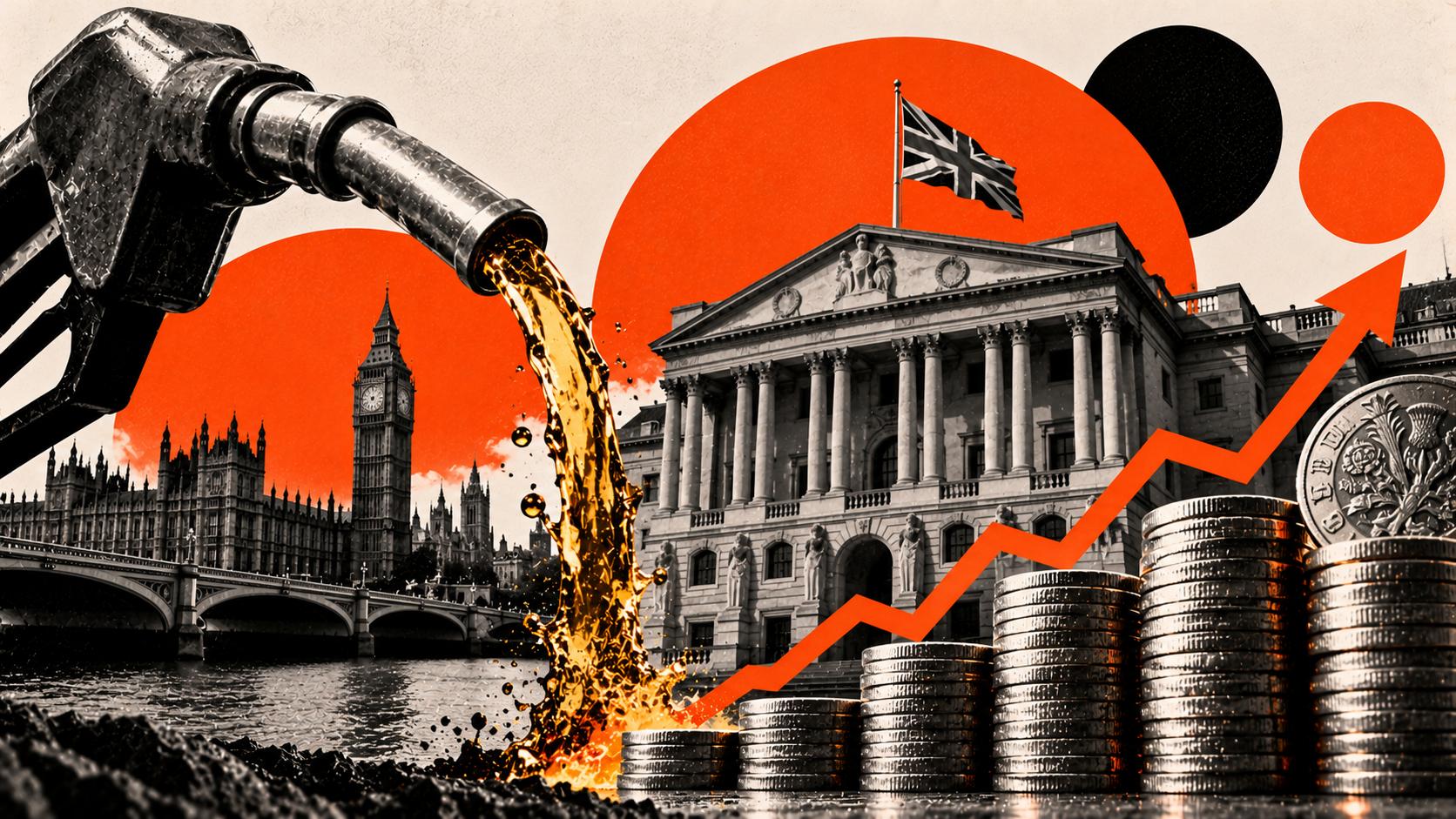
Economists Agree: Bank of England to stay on hold amid easing inflation outlook
- All 70 economists surveyed by Reuters expect the Bank of England to leave its interest rate unchanged at 3.75% on July 30.
- The median forecast sees the interest rate remaining at 3.75% through the middle of next year.
- UK inflation is expected to average 3.1% in 2026, while economic growth is forecast to remain at 1%.
The Bank of England (BoE) is expected to keep its interest rate unchanged at 3.75% at its July 30 monetary policy meeting, according to a Reuters poll of 70 economists. None of the respondents expects a change in interest rates at next week's meeting.
The Reuters survey also showed that the median forecast sees the interest rate remaining at 3.75% through the middle of next year, highlighting expectations that the BoE will maintain a steady policy stance.
Economists revised down their inflation forecast for the year to an average of 3.1%, compared with 3.3% in Reuters' June poll. Meanwhile, the outlook for economic growth was left unchanged, with the UK economy expected to expand by 1% this year.
Market reaction
The British Pound (GBP) showed little reaction to the release, with GBP/USD hovering around 1.3315 at the time of writing on Friday, lacking a clear intraday direction.
BoE FAQs
The Bank of England (BoE) decides monetary policy for the United Kingdom. Its primary goal is to achieve ‘price stability’, or a steady inflation rate of 2%. Its tool for achieving this is via the adjustment of base lending rates. The BoE sets the rate at which it lends to commercial banks and banks lend to each other, determining the level of interest rates in the economy overall. This also impacts the value of the Pound Sterling (GBP).
When inflation is above the Bank of England’s target it responds by raising interest rates, making it more expensive for people and businesses to access credit. This is positive for the Pound Sterling because higher interest rates make the UK a more attractive place for global investors to park their money. When inflation falls below target, it is a sign economic growth is slowing, and the BoE will consider lowering interest rates to cheapen credit in the hope businesses will borrow to invest in growth-generating projects – a negative for the Pound Sterling.
In extreme situations, the Bank of England can enact a policy called Quantitative Easing (QE). QE is the process by which the BoE substantially increases the flow of credit in a stuck financial system. QE is a last resort policy when lowering interest rates will not achieve the necessary result. The process of QE involves the BoE printing money to buy assets – usually government or AAA-rated corporate bonds – from banks and other financial institutions. QE usually results in a weaker Pound Sterling.
Quantitative tightening (QT) is the reverse of QE, enacted when the economy is strengthening and inflation starts rising. Whilst in QE the Bank of England (BoE) purchases government and corporate bonds from financial institutions to encourage them to lend; in QT, the BoE stops buying more bonds, and stops reinvesting the principal maturing on the bonds it already holds. It is usually positive for the Pound Sterling.
Author

Ghiles Guezout
FXStreet
Ghiles Guezout is a Market Analyst with a strong background in stock market investments, trading, and cryptocurrencies. He combines fundamental and technical analysis skills to identify market opportunities.