Consumer Cyclical Stocks Analysis: BBIG, ATER, HYLN all lose ground, while CPNG flatlines and BROS rallies
- BBIG stock suffers again as the TYDE goes out.
- BROS stock closes higher as recovery continues from earnings sell-off.
- HYLN stock loses ground after Holcim order gains evaporate.

Equity markets remained cautious on Wednesday with most indices closing modestly lower. All the main indices closed down less than one percent, but the consumer sector fared worse. Consumer Discretionary (XLY) closed down just over 1%, while consumer durables (XLP) were down nearly 1.5%. Recent consumer spending data is holding up quite well despite sentiment being low. It appears consumers are spending now rather than later and using savings to do so as savings rates have plummeted.
BBIG Stock: Waiting for clarity on TYDE spin-off
Vinco Ventures (BBIG) stock has now fallen back to one of our support levels at $2.11. The disappointment felt by investors who were waiting for the spin-off of Cryptyde (TYDE) continues to hang on the stock. This will not diminish until an exact date has been set. We remain bearish on BBIG, but another short-term rally is likely if and when a firm date for the spin-off and bonus shares are given. BBIG closed down 6.5% on Wednesday.
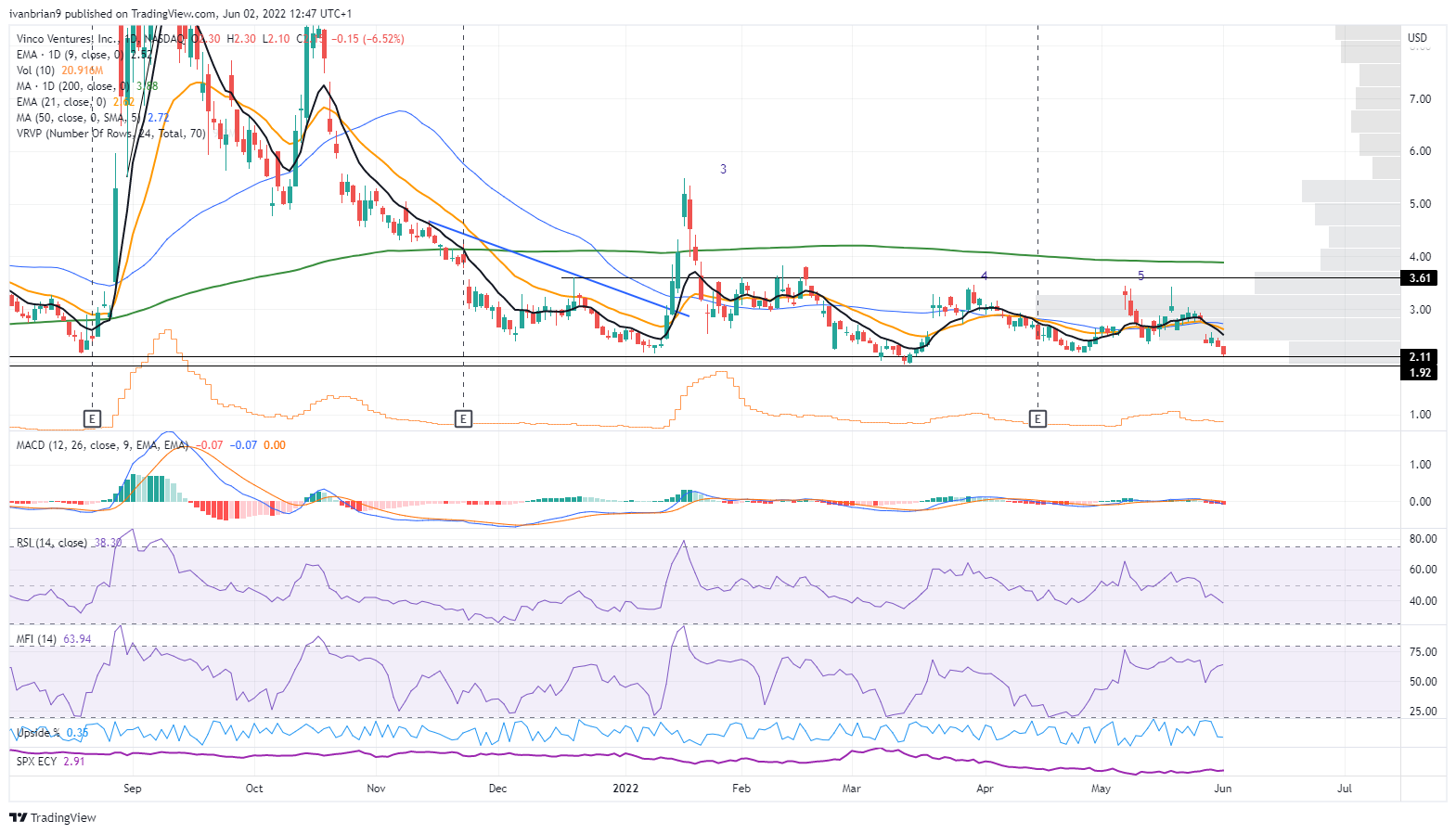
BBIG chart, daily
ATER Stock: Loses ground on little news flow
Aterian (ATER) shares also lost ground on Wednesday as ATER closed at $3.04 for a loss of nearly 6%. A host of SEC Form 4 filings were released on Wednesday showing stock compensation awards to various executives. Apart from that, news flow in the name was relatively calm despite the sell-off. ATER has been struggling since reporting earnings on May 9, which showed a larger than expected loss despite revenue being more or less in line with estimates.
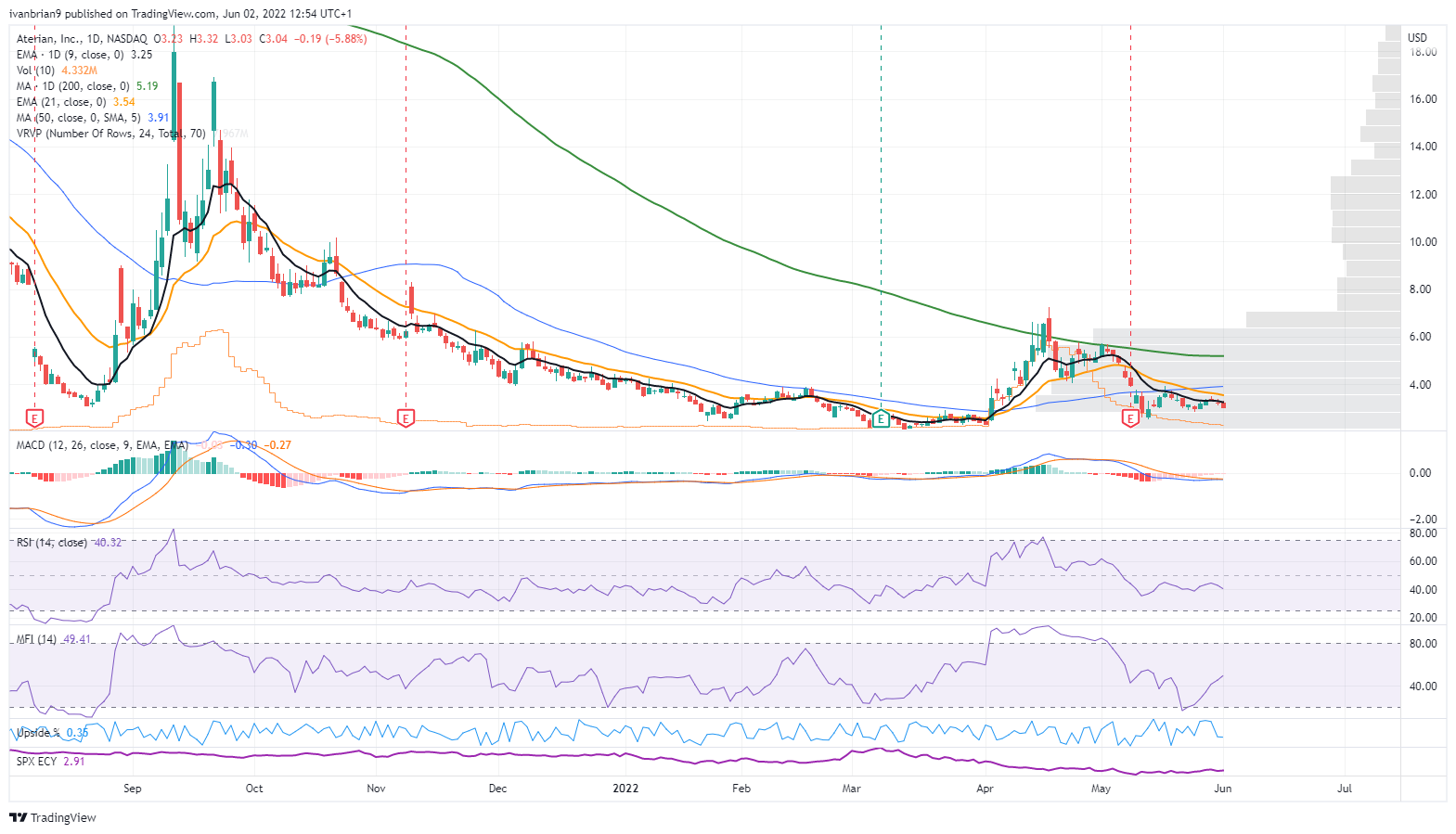
ATER chart, daily
HYLN Stock: Giving up Holcim gains
Hyliion (HYLN) stock fell back on Wednesday after some impressive gains last week. HYLN stock has ticked higher as a result of a deal with Holcim USA for its Hypertruck ERX electric powertrain. This allows diesel trucks to be changed into gas-charged electric transmissions with an onboard gas generator. HYLN stock moved from $3.10 to $3.76 in the days following the order but has since fallen back to close Wednesday at $3.49.
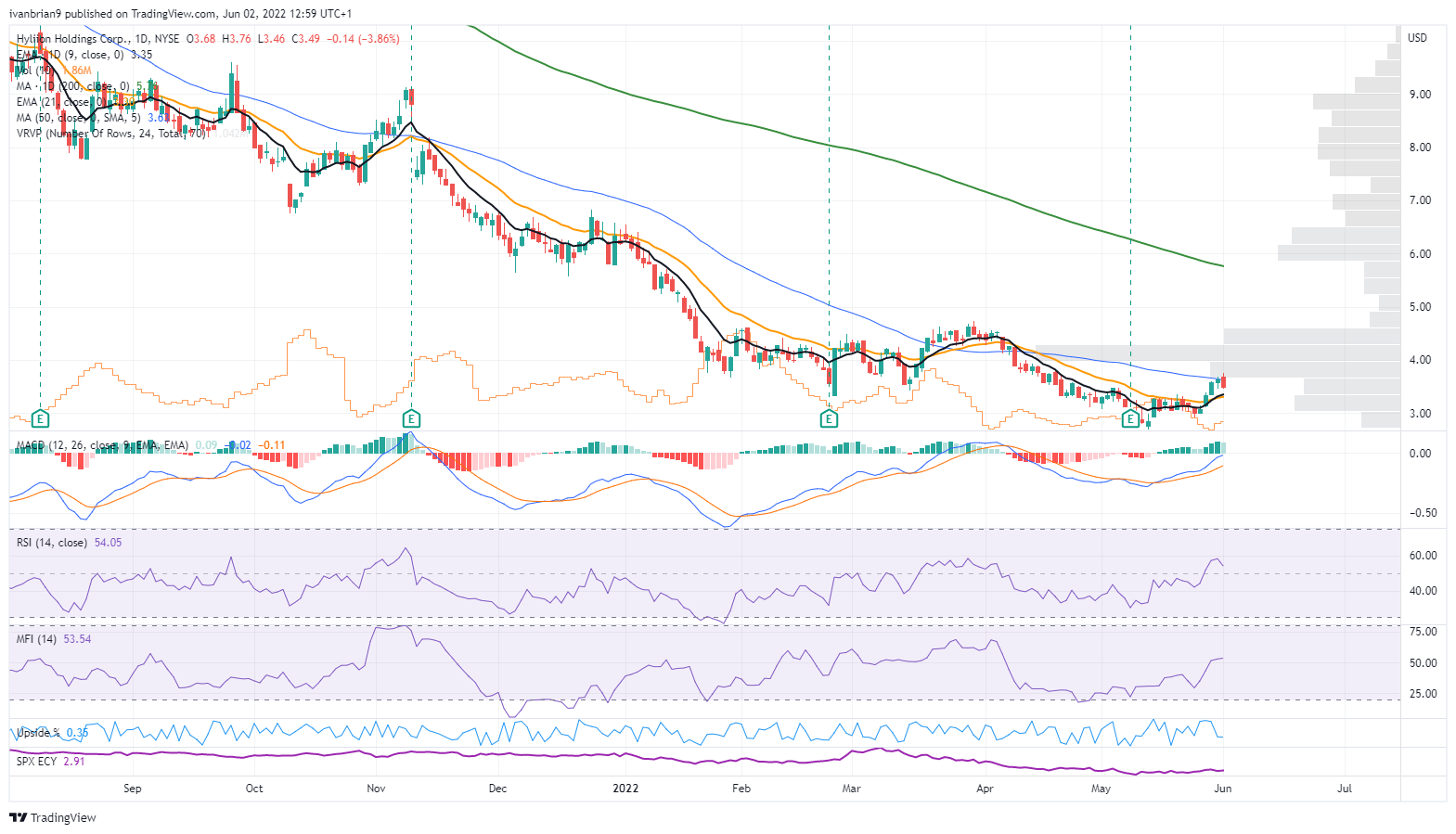
HYLN chart, daily
CPNG Stock: Flatlining but holding onto earnings gains
Coupang (CPNG) cannot shake off the bears as it lost another 4.5% on Wednesday, closing at $12.90. The downtrend has remained in place despite a strong earnings beat as recently as May 11. Post-May 11, CPNG rose 20% to $13.65 but since then has largely traded flat. Recent news that director Benjamin Sun sold over $3 million worth of shares has probably not helped, and the retail and consumer sector has been struggling. A break of $14.40 would be technically significant for bulls.
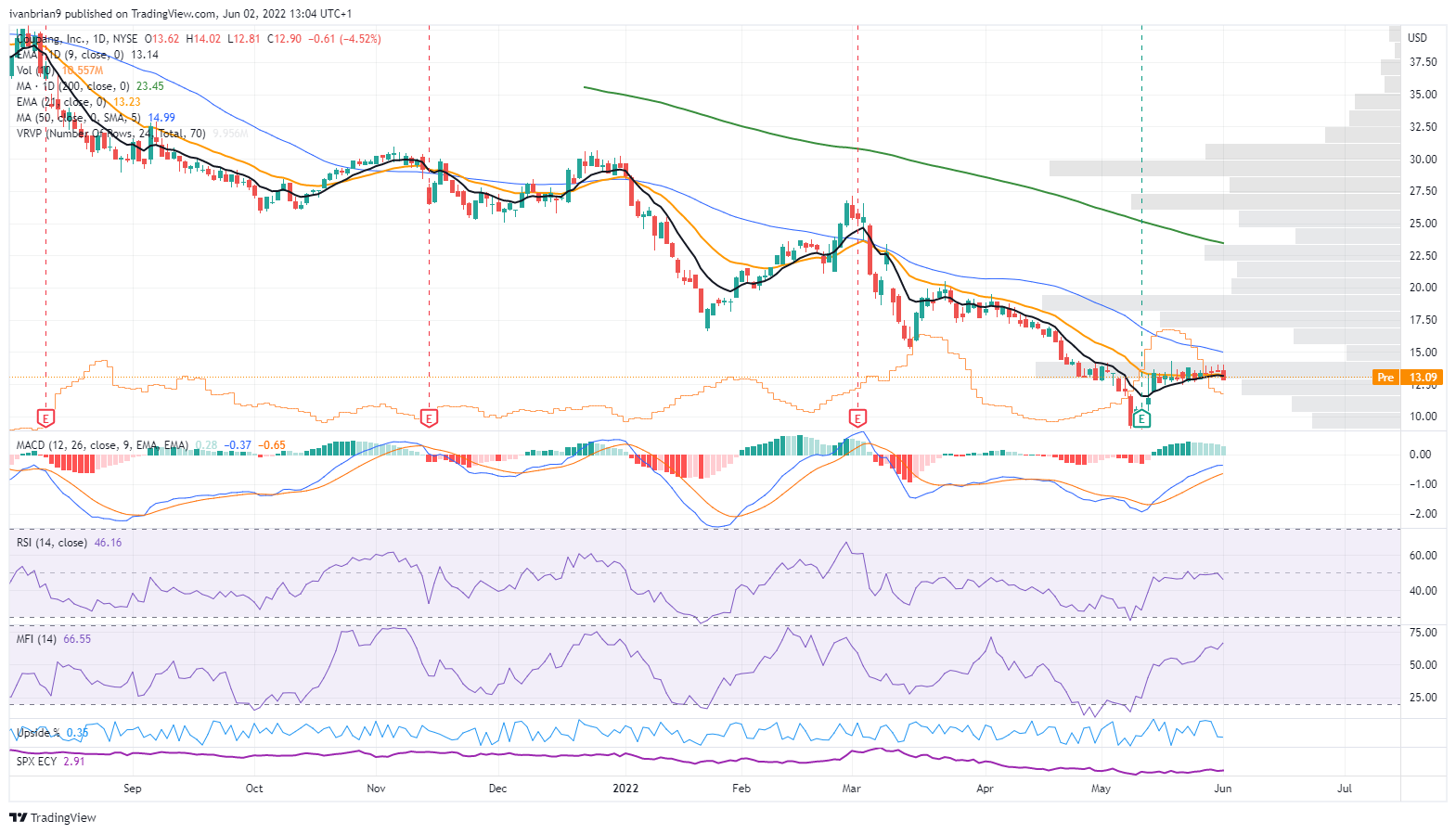
CPNG chart, daily
BROS Stock: Rises 6% as conference season kicks off
Dutch Bros (BROS) stock has continued its impressive recovery from the earnings sell-off. Wednesday saw another 6% added to the BROS stock price as it closed at $39.85. Earnings on May 11 had seen BROS nearly halve in value as it dropped from $40 to $21. A impressive recovery has continued to gather pace on Wednesday though. BROS is now doing the investor circuit as it participates in four upcoming conferences to sell its story to investors. So far, it seems to be working. The company has upcoming conferences at Baird, Jefferies, William Blair and Piper Sandler.
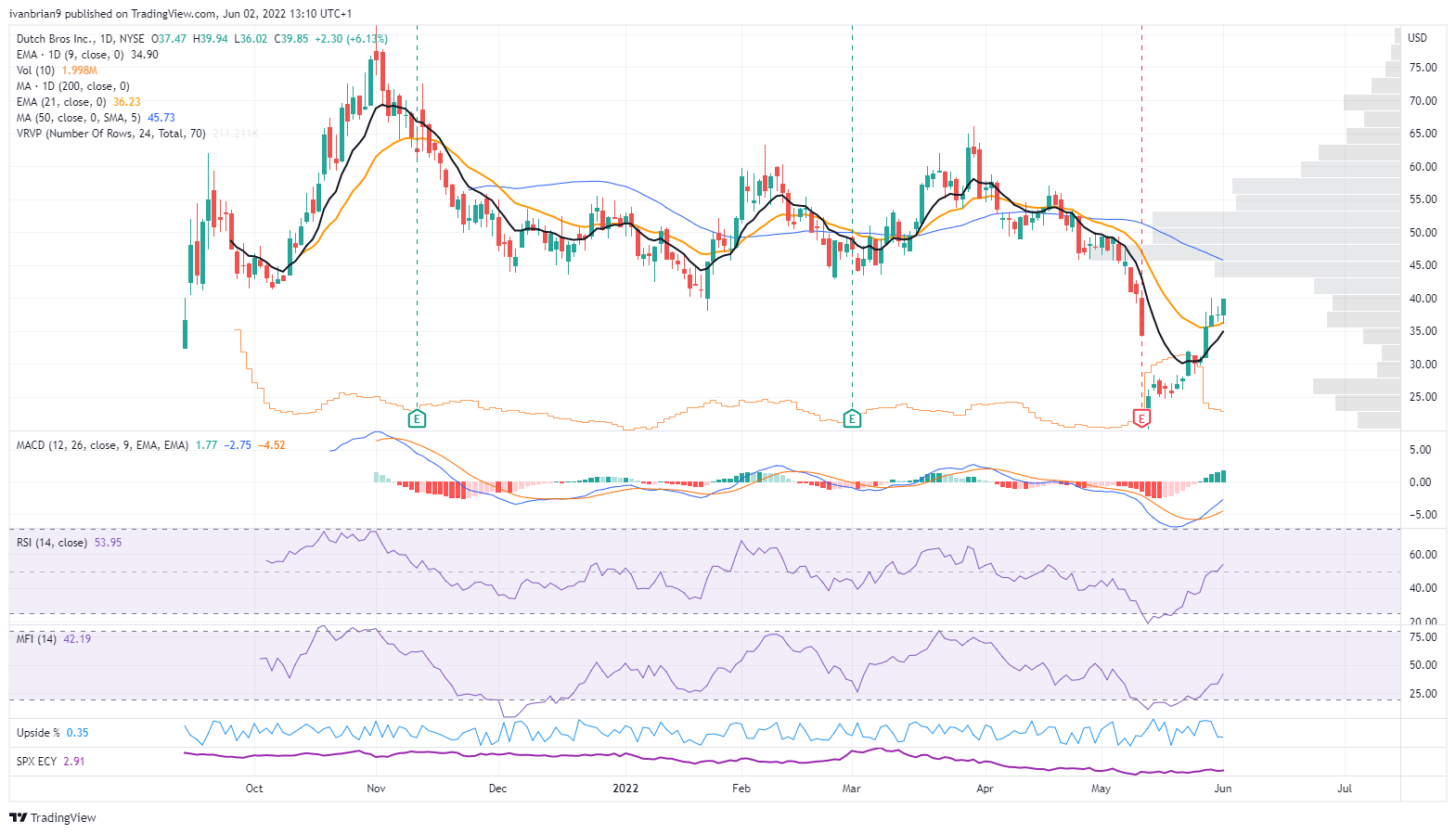
BROS chart, daily
Like this article? Help us with some feedback by answering this survey:
Author

Ivan Brian
FXStreet
Ivan Brian started his career with AIB Bank in corporate finance and then worked for seven years at Baxter. He started as a macro analyst before becoming Head of Research and then CFO.

















