BP shares take a beating after it loses its chairman

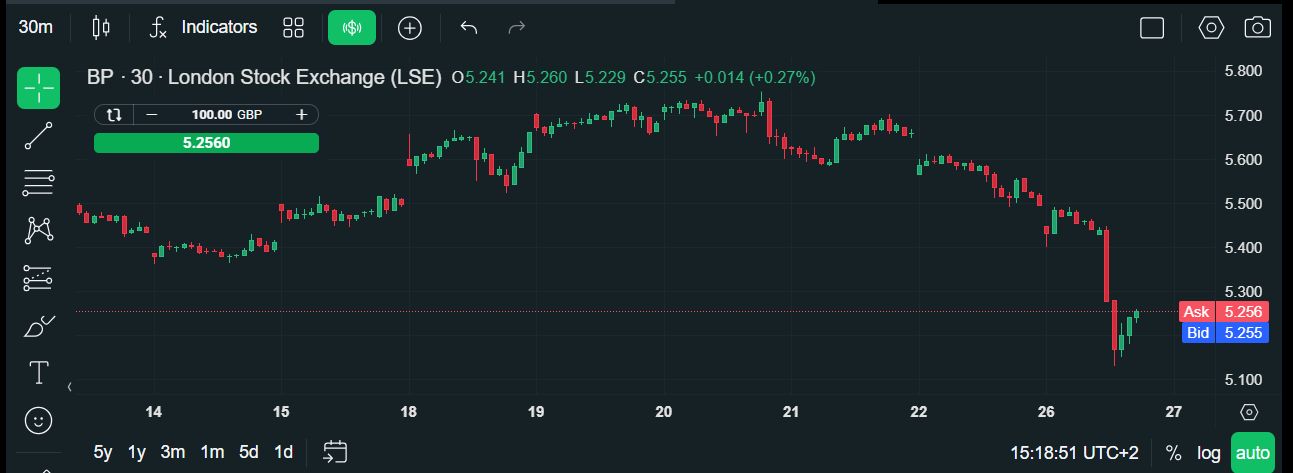
BP is the worst performer on the FTSE 100 this afternoon, after news broke earlier that chairman Albert Manifold was stepping down from the position that he has held since October. The company stated that Manifold was ousted over serious concerns with his conduct, oversight, and governance standards. There was no detail as to what these breaches were, or when they occurred, and it leaves investors wondering how they weren’t unearthed during the hiring process.
The share price initially sunk 9% on the news, but it has since pulled back and is currently lower by just over 5%. The news raises two questions for BP shareholders. Firstly, Manifold was brought in to spearhead the transition back to oil and gas, after a disastrous foray into renewables. Will his removal threaten his transition or delay this process? He was considered a hands on and controversial chair, and managed to survive a shareholder rebellion last month. He reportedly clashed with new CEO Meg O’Neil, so this could be a win for her, but it comes at a high price and a lurch lower in for the shares.
Added to this, Manifold’s ousting is the second major executive replacement at BP for conduct reasons in 3 years. Former CEO Bernard Looney was replaced in 2023 due to failings in his personal conduct. The fact that Manifold has left so soon raises genuine concerns about HR policies at BP, and the corporate culture. It also suggests a lack of stability at the firm, which is bad news for shareholders.
In the longer term, the share price may recover since Meg O’Neil now has a chance to use Manifold’s ousting as a way to accelerate her own agenda. She has a track record in the oil and gas field, and there is a lot resting on her strategic shift at the firm. However, in the short term, it derails the progress that BP’s shares have made this year to play catch up with its peers in the oil and gas sector. BP’s share price is down more than 9% in the past month, and there could be further losses if there is a deal to reopen the Strait of Hormuz, that causes the oil price to sink, in the coming weeks.
While O’Neil’s appointment as CEO corresponded with an astounding Q1 trading report and a 20% plus gain in the share price YTD, things could get trickier for her from here.
Elsewhere, the oil price rise is not impacting US stocks, which are poised to open higher today. Likewise, the FTSE 100 is also brushing off the decline in BP’s share price and is managing to post a gain, even though its European peers are lower.
Ferrari’s share price is extending declines as we move into the US session. It is down 7% today after the company released its EUR550,000 EV model. Uber’s share price is flat after Monday’s 2.5% decline, after it announced an offer for German rival Delivery Hero.
Overall, markets remain sensitive to any headlines from the US and Iran about the prospect of a peace deal. For now, there is hope that a deal will be reached, but if there is not progress in the coming hours, then investors could start to worry and risky assets may get jittery.
Chart 1: BP share price
Author

Kathleen Brooks
XTB UK
Kathleen has nearly 15 years’ experience working with some of the leading retail trading and investment companies in the City of London.

















