TRON now holds more USDT than Ethereum: What $85.3 billion in stablecoins means for TRX
In 2026, Tron (TRX) continues to strengthen its position as the primary infrastructure network for the leading stablecoin, Tether (USDT). The market capitalization of USDT on TRON has reached a new high of more than $85.3 billion.
At the same time, new developments in agentic payment systems could further increase demand for TRX.
$160 billion in weekly stablecoin transfers drives TRX demand
Recently, Tether minted an additional 1 billion USDT on the TRON network. This pushed the total circulating USDT supply on TRON to $85.3 billion, surpassing Ethereum. The milestone reinforces TRON’s dominant position in the stablecoin sector.
https://twitter.com/lookonchain/status/2031923236871770342
The total market capitalization of all stablecoins on TRON has now exceeded $86.6 billion, the highest level in history.
Data from Artemis Analytics shows a clear correlation between stablecoin transfer volume and TRX's price.
Over the past three years, weekly stablecoin transfer volume has grown significantly. It increased from below $80 billion to $160 billion per week. That represents a 100% increase.
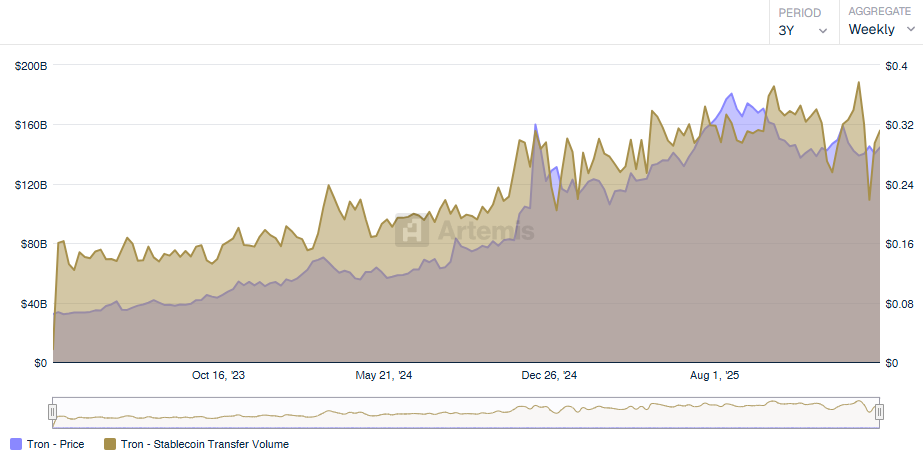
TRX price has also risen alongside the surge in stablecoin volume. The growth became especially clear from late 2024 through 2025–2026. During this period, TRON processed trillions of dollars in USDT transfers each year. In 2025 alone, the network handled $7.9 trillion in stablecoin transaction volume.
TRON does not use a gas model like Ethereum. Instead, the network applies a system based on Bandwidth and Energy to measure and allocate resources.
Users must burn TRX to obtain additional Bandwidth and Energy. They need these resources to execute transactions on the network, including stablecoin transfers.
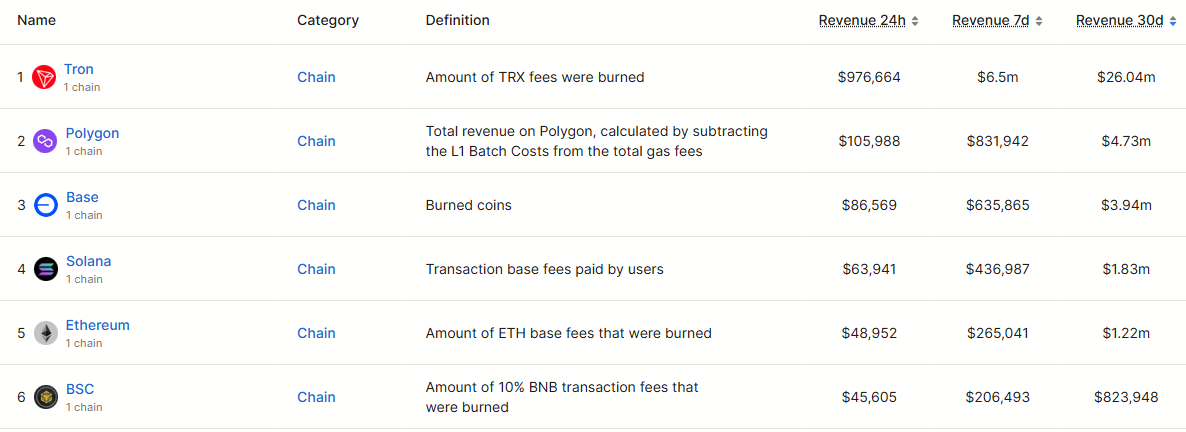
As a result, demand for stablecoin transactions directly affects demand for TRX. Data from DefiLlama shows that TRON’s revenue—measured by the amount of TRX burned as transaction fees—leads the market across the 24-hour, 7-day, and 30-day periods. It outpaces competitors such as Ethereum, Solana, BNB Chain, and Base.
In addition, TRON DAO recently announced its participation in the Agentic AI Foundation, a Linux Foundation project, as a Gold member and board representative. The organization focuses on building open infrastructure for autonomous AI systems, also known as agentic AI.
“AI needs real-time settlement. TRON is where stablecoins move at scale.” — Justin Sun, founder of TRON, stated.
The combination of massive stablecoin liquidity on TRON and emerging AI infrastructure could unlock a new wave of applications. This development may increase network demand and enhance TRX's value.
Another major development arrived in March. The lawsuit filed by the US Securities and Exchange Commission against Tron Foundation and Justin Sun has officially concluded. A judge approved the final ruling and permanently dismissed all allegations with prejudice.
The resolution removes a legal overhang that had persisted since 2023. It could restore investor confidence and potentially attract new capital into TRX.
Despite these positive factors, investors remain cautious about holding altcoins. According to data from BeInCrypto, the TRX price has declined about 20% since August last year. It currently trades around $0.29.
However, the strong growth in stablecoin activity, developments in AI infrastructure, and the removal of legal risks could help absorb selling pressure. These factors may also support a recovery in TRX price.
Author

BeInCrypto
BeInCrypto
Since 2018, BeInCrypto has grown into a leading global crypto news platform. Through our award-winning journalism and close ties with industry leaders, we deliver trusted insights into Web3, AI, and digital assets.