XRP climbs for fourth day as retail interest grows despite ETF outflows
- XRP edges higher for the fourth consecutive day, trading above $1.47 on Monday.
- Retail interest steadies with futures Open Interest expanding to $2.66 billion.
- XRP digital asset investment products recorded outflows of $76 million last week, with ETFs losing $28 million.

Ripple (XRP) is extending gains, trading above $1.47 at the time of writing on Monday. The remittance token appears to be tapping into positive market sentiment, as cryptocurrency prices have broadly risen, shrugging off the war in the Middle East.
Retail interest in XRP shows that risk appetite is gradually increasing. However, institutional investors are taking a step back, pulling resources from XRP digital asset investment products.
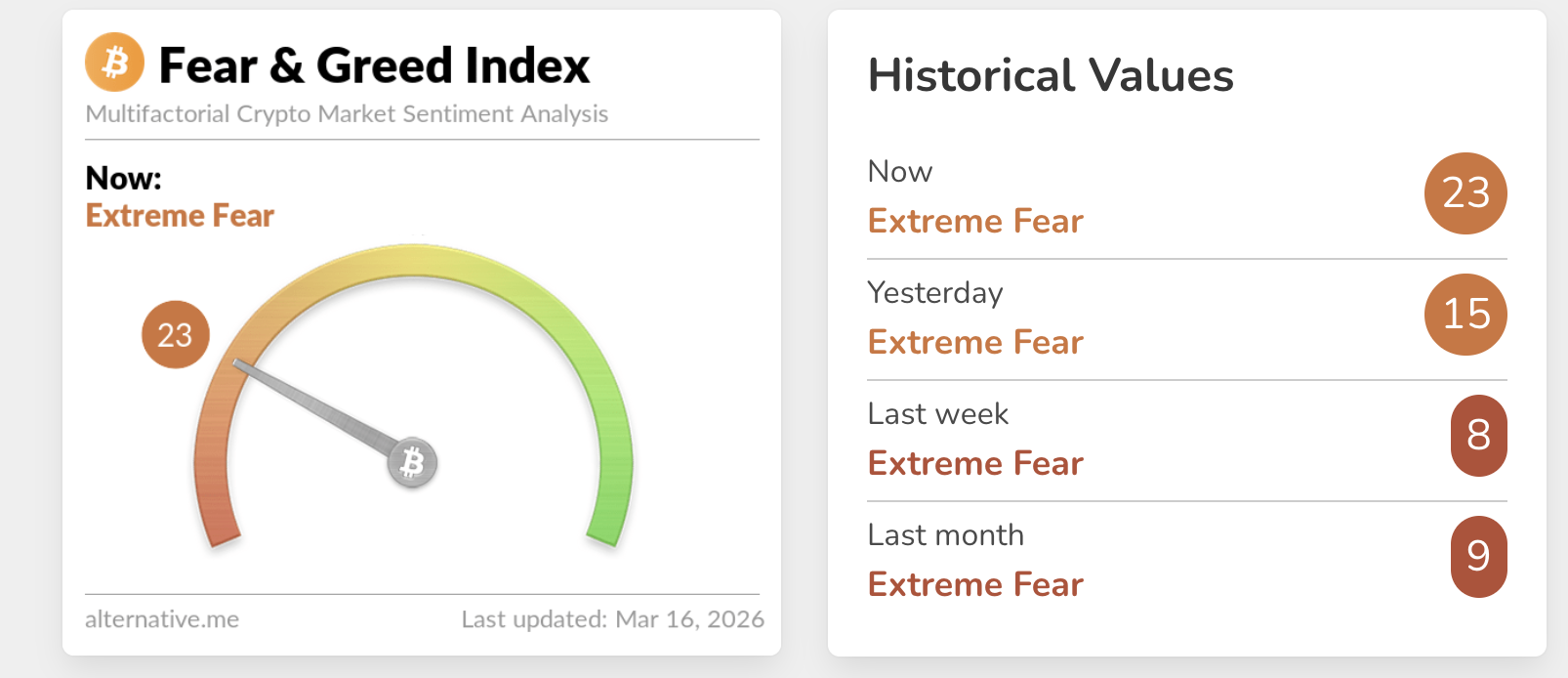
Sentiment has continued to improve despite the war in the Middle East, as shown by the Fear & Greed Index, which signals 23 on Monday, up from 15 the previous day and 8 last week.
Despite the increase, the index is still in extreme fear, which may limit XRP’s recovery potential if sentiment lags.
Renewed retail interest boosts XRP’s recovery potential
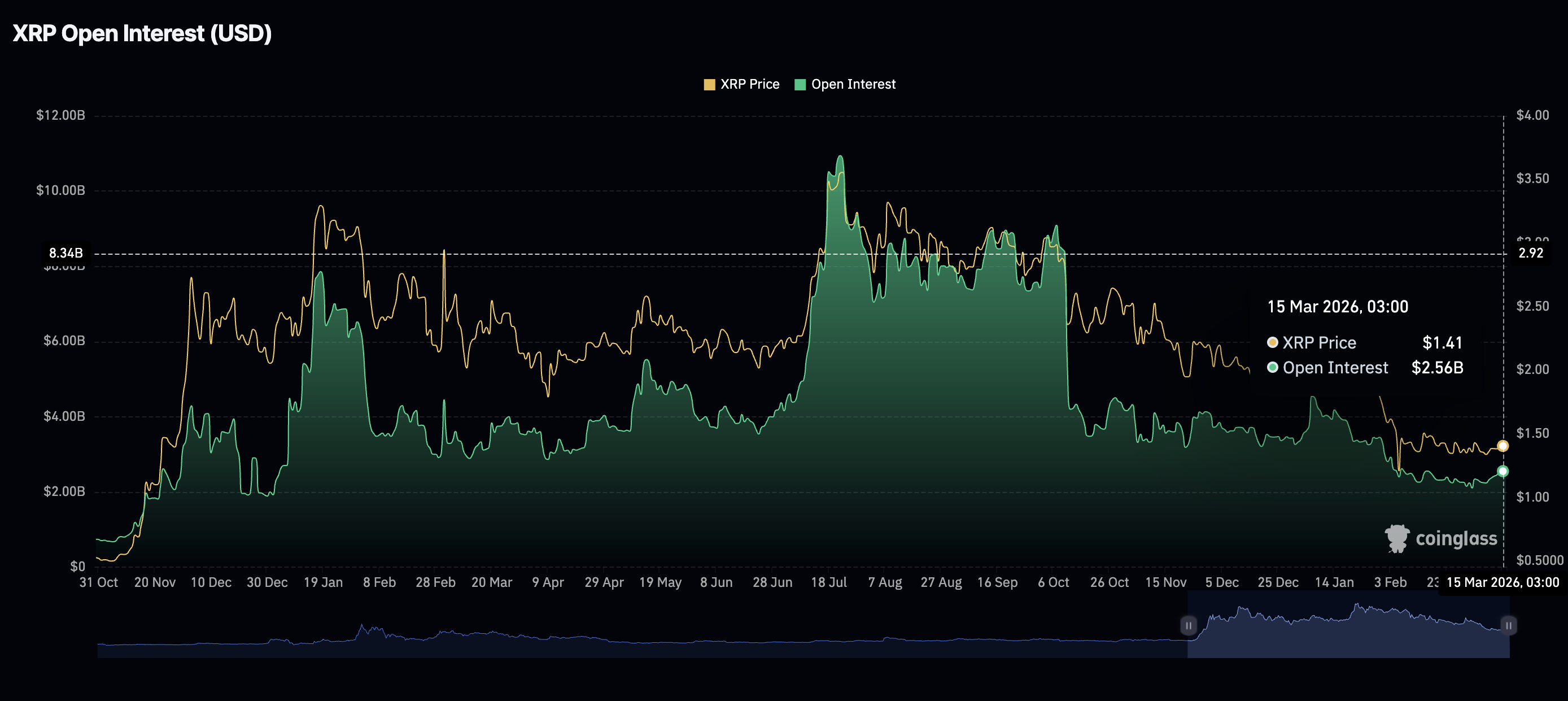
Retail traders appear to be making a steady comeback into the market, as seen in XRP futures Open Interest (OI) rising to $2.66 billion on Monday, from $$2.56 billion the previous day.
The OI narrowed to $2.11 billion on March 4, undermining retail interest, considering it peaked at $10.94 billion in July. For XRP to sustain the ongoing recovery, a robust derivatives market is required.
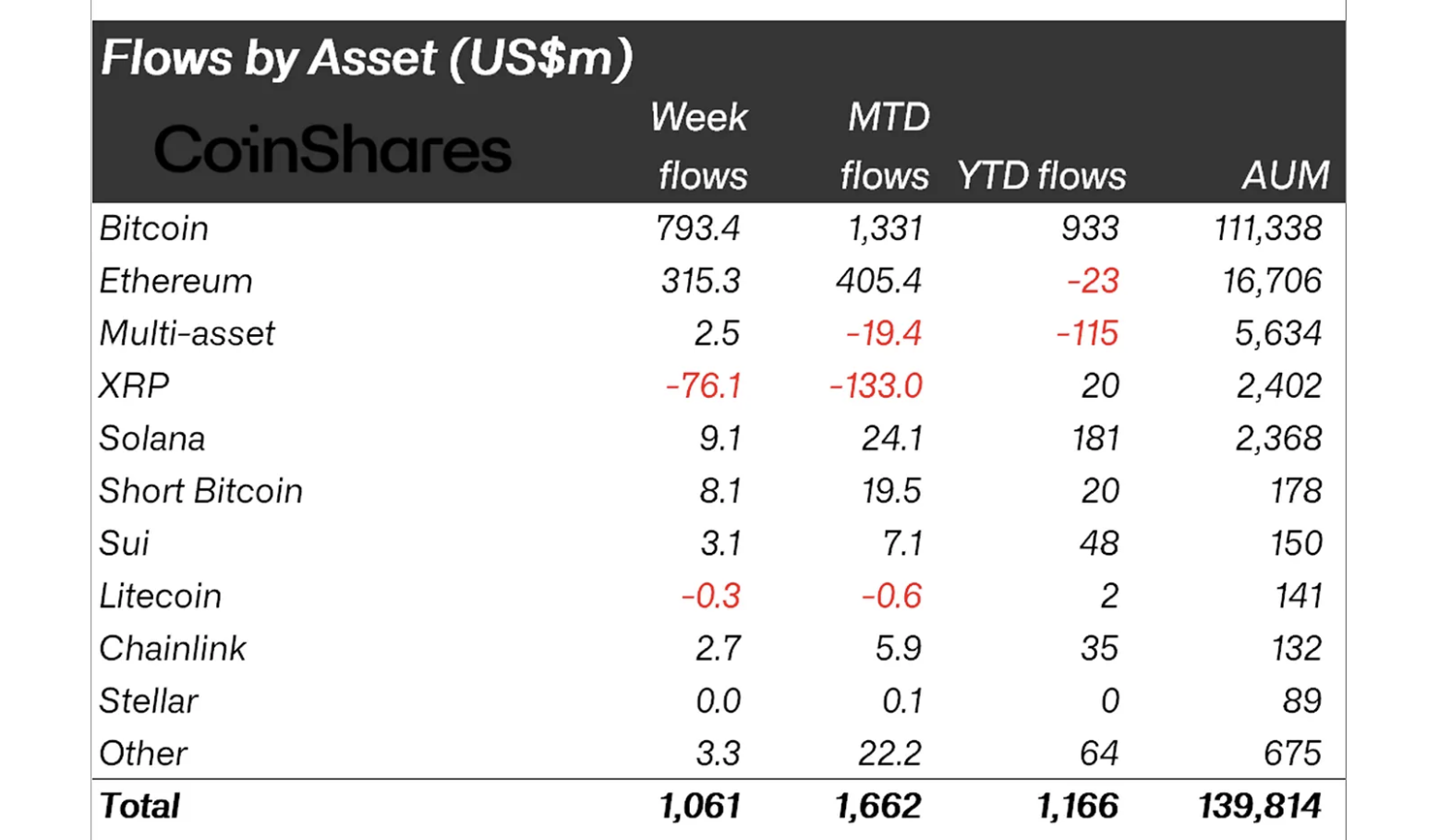
Meanwhile, institutional demand has taken a back seat, as XRP digital asset investment products experienced outflows of approximately $76 million last week, according to a CoinShares report. Month-to-date outflows total $133 million, bringing assets under management to $2.4 billion.
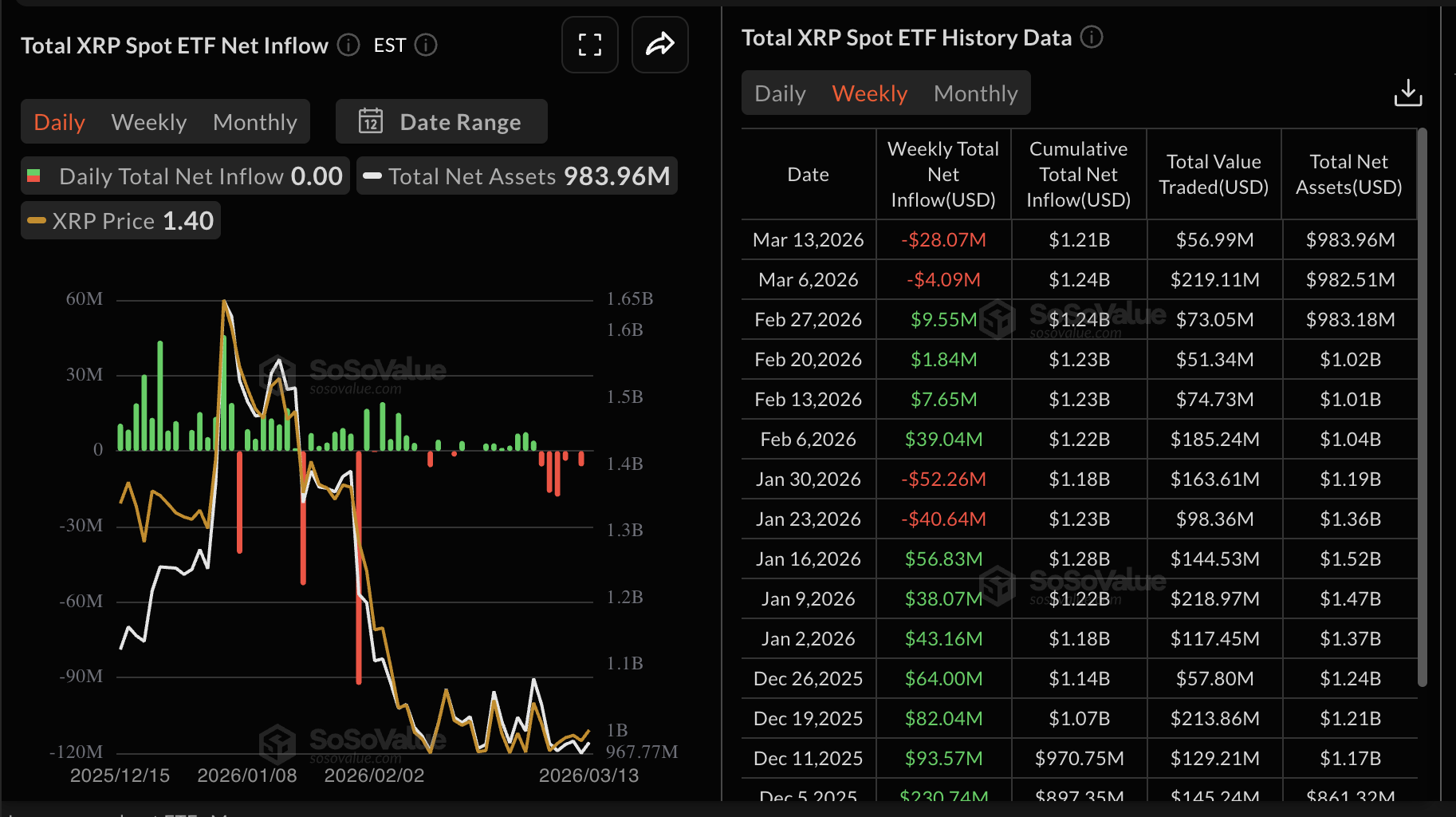
XRP spot Exchange-Traded Funds (ETFs) suffered their second week of outflows, totaling $28 million. The outflows increased from $4 million, recorded during the week ending March 6. Cumulative inflows currently stand at $1.21 billion, with net assets under management at $984 million.
Weak sentiment, as reflected in the Fear & Greed Index, and macroeconomic uncertainty amid the Middle East war are among the factors that continue to limit interest in XRP-related investment products.
Technical outlook: XRP gains momentum amid stronger technicals
XRP is trading above $1.47, with its near-term bias remaining mildly bullish. Momentum conditions have also improved, with the Relative Strength Index at 56, edging higher on the daily chart. A sustained rebound suggests that bulls have the upper hand. The Moving Average Convergence Divergence (MACD) indicator runs above its signal line on the same chart, suggesting only a modest recovery phase.
-1773671517241-1773671517244.png)
Initial resistance lies at the recent swing highs around $1.49–$1.50, where the 50-day Exponential Moving Average (EMA) converges with the SuperTrend indicator, forming a dynamic hurdle at $1.59. On the downside, immediate support lies at $1.40, with further downside levels near $1.35 and then the recent floor at $1.30, where previous lows cluster and where buyers last responded.
A daily close below $1.30 would reopen the broader bearish leg, while only a decisive break above $1.50 would start to erode the overall downside bias.
Open Interest, funding rate FAQs
Higher Open Interest is associated with higher liquidity and new capital inflow to the market. This is considered the equivalent of increase in efficiency and the ongoing trend continues. When Open Interest decreases, it is considered a sign of liquidation in the market, investors are leaving and the overall demand for an asset is on a decline, fueling a bearish sentiment among investors.
Funding fees bridge the difference between spot prices and prices of futures contracts of an asset by increasing liquidation risks faced by traders. A consistently high and positive funding rate implies there is a bullish sentiment among market participants and there is an expectation of a price hike. A consistently negative funding rate for an asset implies a bearish sentiment, indicating that traders expect the cryptocurrency’s price to fall and a bearish trend reversal is likely to occur.
(The technical analysis of this story was written with the help of an AI tool.)
Author

John Isige
FXStreet
John Isige is a seasoned cryptocurrency journalist and markets analyst committed to delivering high-quality, actionable insights tailored to traders, investors, and crypto enthusiasts. He enjoys deep dives into emerging Web3 tren