Crypto finds fresh momentum on clarity act hopes
- Bitcoin on a breakout, but not on a bull run yet.
- ETF inflows return, but are they meaningful?
- Crypto bill gets Bessent boost, though key hurdles remain.

Crypto markets stir as bill optimism builds
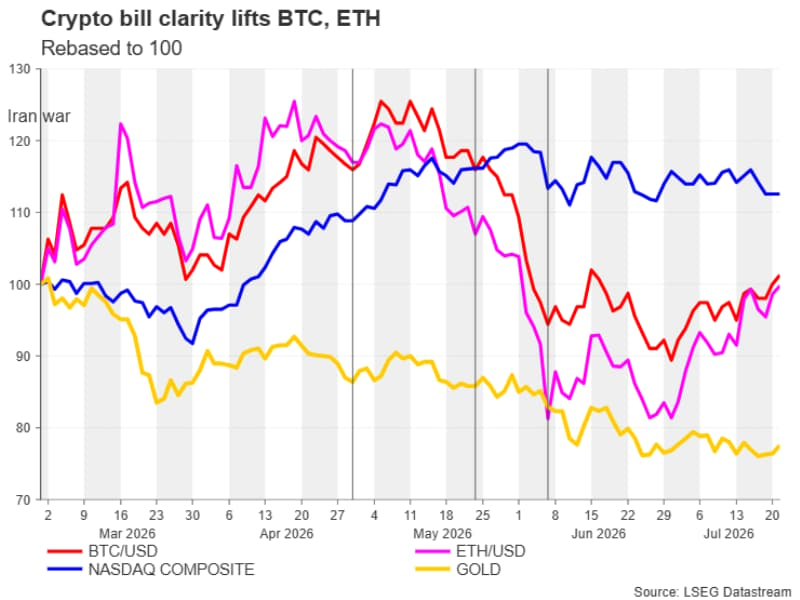
After weeks of shuffling sideways just above yearly lows, crypto markets are showing renewed signs of life and are on track to end the month in positive territory. Following two months of losses, the two largest cryptocurrencies, Bitcoin and Ether, are currently up more than 12% and 22% for the month, respectively.
Improving sentiment has been supported by the return of ETF inflows following months of selling pressure, softer US inflation data that has tempered Fed tightening expectations, a cooling in the AI- and IPO-driven frenzy that had diverted capital away from crypto markets, and growing optimism surrounding the long-awaited US crypto regulation, which could provide a much-needed framework for digital assets.
The Clarity Act returned to the spotlight after Treasury Secretary Scott Bessent signalled lawmakers were nearing the finish line on the legislation and urged Congress to pass the bill before the August 7 recess - that is in about two weeks time. While his comments added a fresh catalyst to signs that the sector's latest downturn may have run its course, key disagreements surrounding ethics provisions remain unresolved, suggesting regulatory clarity may be drawing closer but is not yet guaranteed.
Digital assets go from range-bound to breakout
Against this mixed backdrop, what has been most meaningful, is that Bitcoin and Ether have posted gains of more than 2.5% week-to-date, breaking out of the ranges that had contained prices since early June, and reaching a one-month high near $67,000 and a five-month high around $1,950, respectively.
That said, traders are increasingly looking for a break above more meaningful resistance levels before confidently calling a new bull run. For now, the rebound appears encouraging but remains fragile, with gains currently likely stalling amid profit-taking and mirroring the cautious tone in equity markets ahead of major technology earnings later on Wednesday, which could shape sentiment around the AI trade and broader risk appetite.
Further, the renewed US-Iran conflict also remains a headwind, as it carries inflation risks, which weigh on risk assets – with the market shedding $424.7 million from ETF BTC funds last Monday when fighting commenced.
Institutional backdrop quietly improves
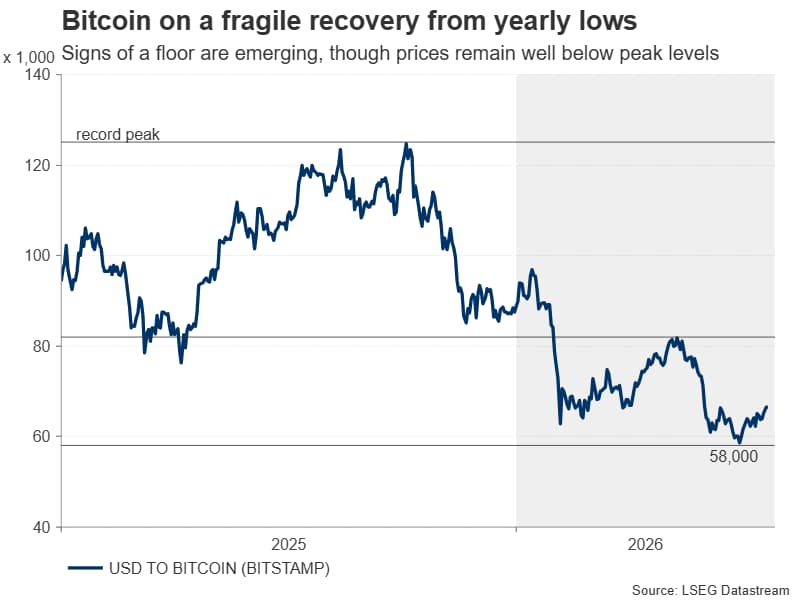
Broadly though, ETF flows appear to be turning a corner, with US-listed spot Bitcoin ETFs recording a second consecutive week of net inflows after nearly two months of capital flight, attracting roughly $930 million over the last six sessions. However, traders should not confuse modest inflows with meaningful inflows. The recovery follows more than $8 billion of outflows over the previous eight weeks, suggesting the severe selling pressure seen earlier in the summer may be easing, but inflows remain relatively thin. A sustained multi-week inflow trend is still needed to confirm a broader re-entry of capital into the sector.
Technically, Bitcoin remains between a rock and a hard place
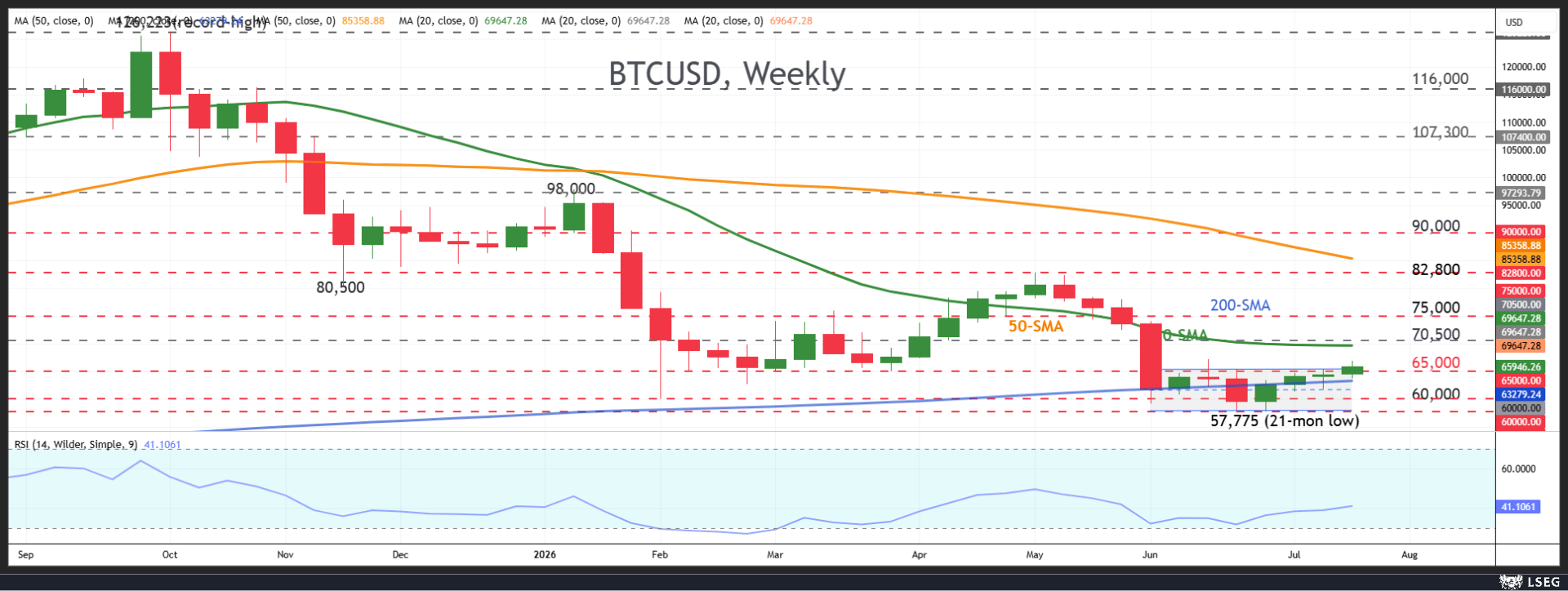
BTCUSD has exited its range and reclaimed its 200-week moving average, yet it still sits around 5% below the key $70,000 area, where the 20-week SMA presents a major hurdle. Meanwhile, the weekly RSI is climbing towards 41, having avoided oversold territory since February, suggesting that downside momentum may be gradually fading after five months of base-building. Still, a move back toward $60,000 would challenge the view that the latest correction has largely run its course.
All in all - A recovery, but take it with a pinch of salt?
Technical momentum, improving market structure and stabilising ETF flows suggest the worst of the selloff may be behind us. Yet the path to a sustained bull market remains far from assured, as macro shocks and the risk of further delays to the Clarity Act, which has repeatedly fallen short of key legislative milestones since passing the House last July, could still trigger fresh volatility.
Author

Nicole joined Trading Point as a Market Analyst in January 2025. She holds a BA in English Literature from Kingston University, London, and an MA in Applied Linguistics (Research Methodology) from the University of Southampton with distinction.