Bitcoin, Gold, and the confidence that now drives both (BTC vs XAU)


Bitcoin spent much of 2026 looking for its category. The Bitcoin vs. gold relationship shifted as geopolitical risk and inflation expectations pulled the two markets in different directions. Then August arrived, and both rallied because a weaker dollar revived demand for alternatives to fiat currencies. The old Bitcoin vs. gold comparison doesn't explain Bitcoin by itself anymore.
Confidence in funds and regulators can pull capital into Bitcoin quickly. When it fades, scarcity alone rarely keeps the price stable.
BTC vs XAU: One macro theme, two different trades
Gold has a long record and broad liquidity, with demand from central banks and households. Bitcoin has fixed supply and far greater volatility. That divide keeps the bitcoin vs gold store of value debate open.
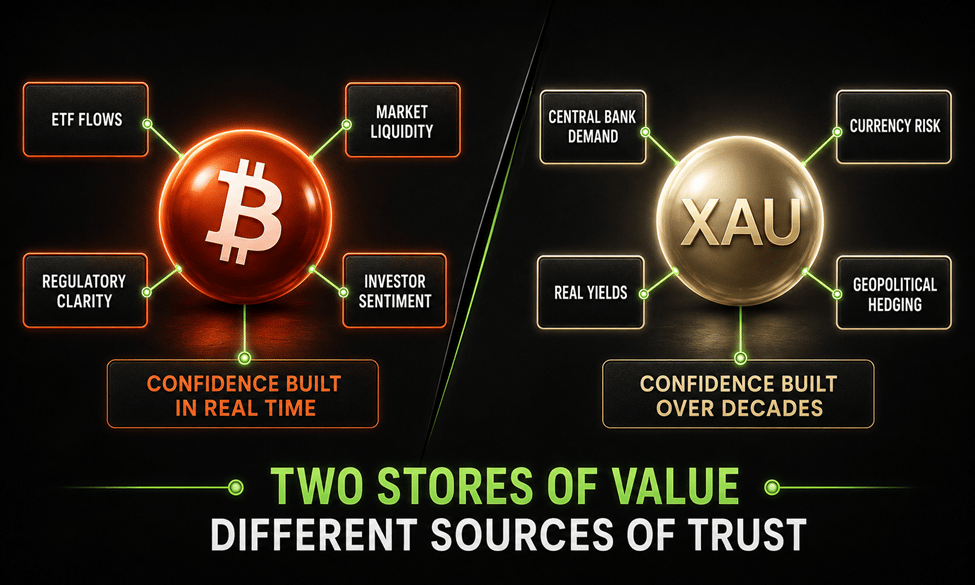
Recent performance shows the gap. Bitcoin rose above $80,000 on 25 August after gaining 28% during the month. Gold reached a three-month high, according to Reuters. Both benefited from dollar weakness, but Bitcoin delivered the higher-beta version of the same trade.
That makes the bitcoin-gold correlation unstable. The two assets converge when currency debasement dominates, then drift apart when liquidity or crypto-specific news takes over. A BTC vs XAU correlation reading captures one regime. The recent bitcoin decoupling from gold shows these aren't automatic equivalents.
ETF flows have become Bitcoin's daily vote of confidence
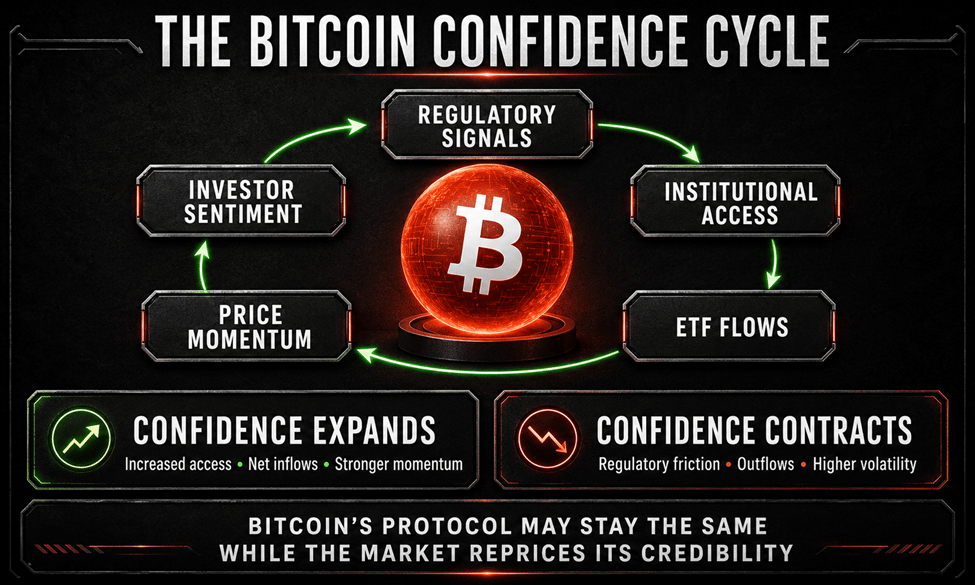
The strongest bitcoin price drivers now sit closer to market structure than to macro conditions. US spot funds recorded about $1.92 billion of net inflows in the week through 21 August, while cumulative net inflows since launch hit roughly $54.1 billion through 24 August, according to Farside Investors. These bitcoin etf flows turn portfolio demand into a visible daily signal.
That transparency has expanded regulated access and supported bitcoin institutional adoption. But aggregate ETF data includes both institutional and retail activity. So the flows measure demand through regulated products, including both institutional and retail money. Even so, bitcoin institutional flows reported through fund holdings and regulatory filings can reinforce or weaken the broader market signal without any change to the protocol.
Gold faces fund flows too, on a much broader demand base. Global physically backed gold ETFs drew $3 billion in July, lifting holdings by 23 tonnes, per the World Gold Council. In BTC vs XAU investor sentiment, Bitcoin remains the more concentrated confidence trade. Gold can lean on buyers outside the ETF market.
Regulation now competes with macro data
The bitcoin regulatory outlook is another source of repricing. In August, the US Securities and Exchange Commission proposed a tailored framework for certain crypto-asset investment contracts. Clearer rules lower institutional friction. Delays can reverse bitcoin investor sentiment quickly.
That sensitivity complicates the bitcoin digital gold narrative. Gold needs no new securities framework to validate its place in a portfolio. Bitcoin still relies in part on confidence that access and custody will keep improving.
Is Bitcoin still digital Gold?
If bitcoin, digital gold, implies stable defensive behaviour during every shock, the evidence remains weak. In a strict bitcoin vs gold safe haven test, gold is the more established option. Bitcoin can act like a risk asset when leverage unwinds, then behave like scarce money when confidence in fiat currencies deteriorates.
That makes the Bitcoin risk asset or safe haven regime question. The versus pair BTC vs XAU view is useful because it exposes the distinction: gold trades on accumulated trust, while Bitcoin trades on trust still being built. For a versus trade, BTC vs XAU, short-term price co-movement matters less than ETF demand and market liquidity. The real test is if bitcoin investor confidence holds when volatility returns.
Bitcoin's claim hasn't disappeared. The answer to "is bitcoin digital gold" and "is bitcoin still digital gold" is less absolute than the slogan suggests. The narrative has shifted to a higher-volatility monetary thesis whose credibility the market must renew.
Author