Solana Price Forecast: SOL extends losses amid mounting ETF outflows
- Solana extends losses on Thursday after retreating over 2% from its 50-day EMA at $107.13 the previous day.
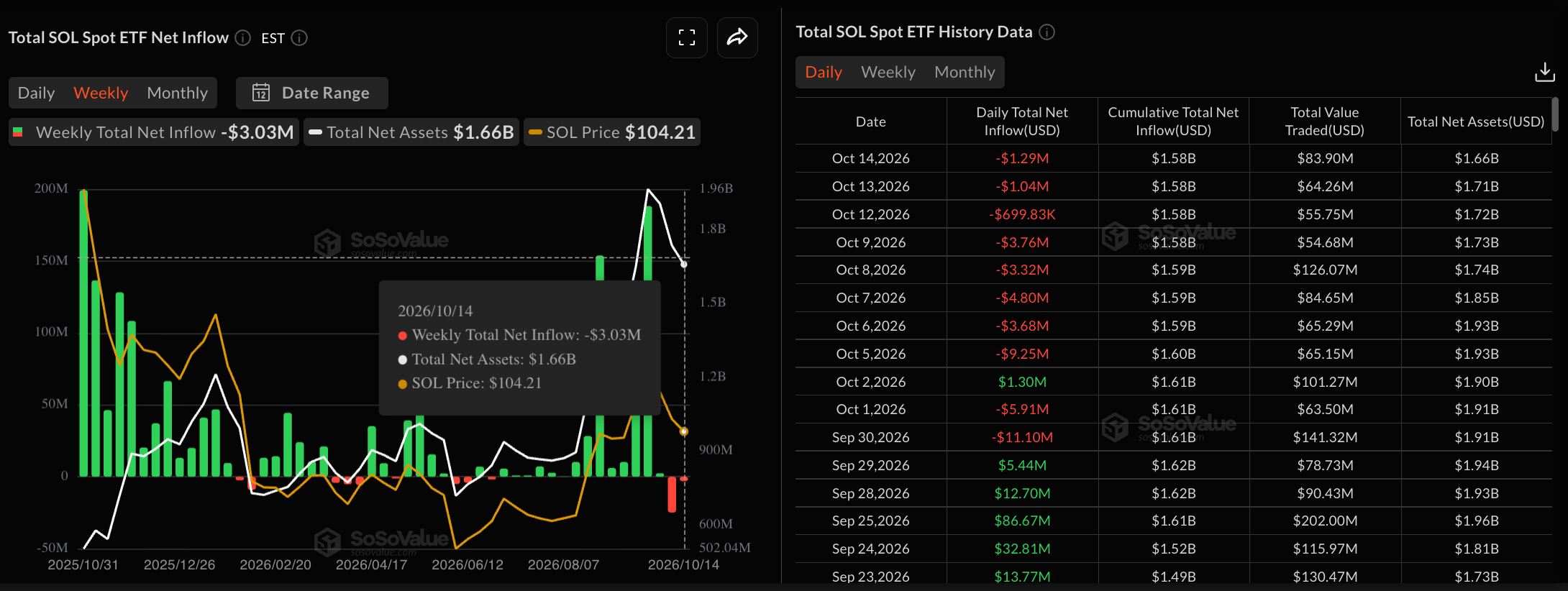
- SOL-focused ETFs recorded over $1 million in redemptions, marking their eighth consecutive day of outflows.
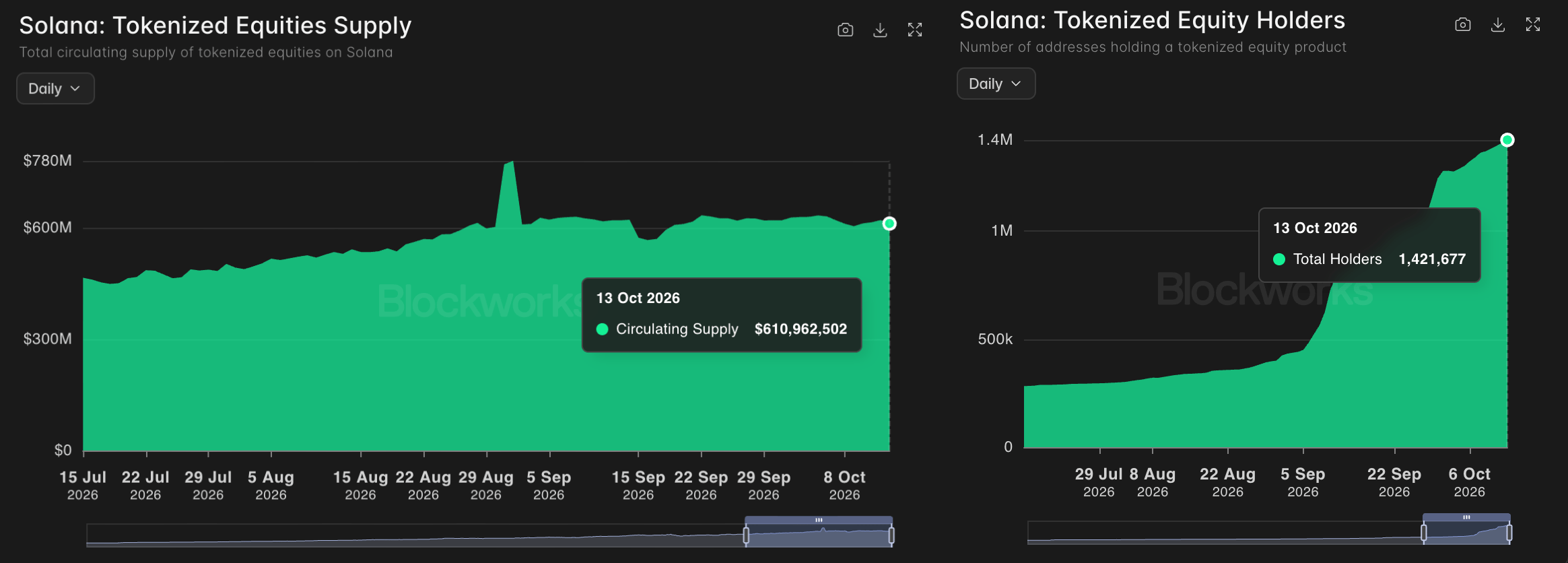
- Solana sees steady growth in tokenized assets, with over $600 million in tokenized equity supply across 1.4 million holders.

Solana (SOL) price extends losses on Thursday, inching lower to the $100 mark after a 2% retreat from the 50-day Exponential Moving Average (EMA) at $107.13 the previous day. The institutional demand remains weak, with eight consecutive days of outflows from SOL-focused Exchange Traded Funds (ETFs). Tokenized assets rise on Solana, with over $600 million in tokenized equity supply across 1.4 million holders.
The technical outlook for Solana indicates a downside bias as bearish pressure mounts.
Solana ETFs face consistent selling pressure
Solana-focused ETFs are experiencing an extended selloff, driven by consistent investor redemptions over the last week. SoSoValue data shows SOL ETFs marked their eighth consecutive day of outflows, with $1.29 million on Wednesday and extending last week’s $24.81 million.
On the other hand, the tokenized assets on Solana are rising. Blockworks data shows tokenized equity supply rising to nearly $611 million on Tuesday, distributed across 1.42 million holders.
Technical outlook: Could Solana's price fall below $100?
Solana trades around $102.50 at press time on Thursday, maintaining a bearish near-term bias after a double-top reversal from $122 in early October. The SOL price is down over 13% so far in October, crossing below the 50-day EMA at $107.13. Still, SOL remains above the 200-day EMA at $97.95, suggesting a corrective phase within a broader uptrend.
Downside pressure remains firm on the daily chart, with the Moving Average Convergence Divergence (MACD) below its signal and zero line, while the Relative Strength Index (RSI) near 35 suggests that sellers remain in control.
Looking down, the 200-day EMA at $97.95 offers the first meaningful support zone. A clear drop through this level would likely expose deeper losses, aligning with the May 17 high at $83.50.
On the flip side, initial resistance is located at the 50-day EMA around $107.13. A sustained break above this barrier would be needed to ease the current bearish tone before the more distant horizontal cap near the September 25 high at $122.94 comes into view.
(The technical analysis of this story was written with the help of an AI tool. Know more.)
Crypto ETF FAQs
An Exchange-Traded Fund (ETF) is an investment vehicle or an index that tracks the price of an underlying asset. ETFs can not only track a single asset, but a group of assets and sectors. For example, a Bitcoin ETF tracks Bitcoin’s price. ETF is a tool used by investors to gain exposure to a certain asset.
Yes. The first Bitcoin futures ETF in the US was approved by the US Securities & Exchange Commission in October 2021. A total of seven Bitcoin futures ETFs have been approved, with more than 20 still waiting for the regulator’s permission. The SEC says that the cryptocurrency industry is new and subject to manipulation, which is why it has been delaying crypto-related futures ETFs for the last few years.
Yes. The SEC approved in January 2024 the listing and trading of several Bitcoin spot Exchange-Traded Funds, opening the door to institutional capital and mainstream investors to trade the main crypto currency. The decision was hailed by the industry as a game changer.
The main advantage of crypto ETFs is the possibility of gaining exposure to a cryptocurrency without ownership, reducing the risk and cost of holding the asset. Other pros are a lower learning curve and higher security for investors since ETFs take charge of securing the underlying asset holdings. As for the main drawbacks, the main one is that as an investor you can’t have direct ownership of the asset, or, as they say in crypto, “not your keys, not your coins.” Other disadvantages are higher costs associated with holding crypto since ETFs charge fees for active management. Finally, even though investing in ETFs reduces the risk of holding an asset, price swings in the underlying cryptocurrency are likely to be reflected in the investment vehicle too.
Author

Vishal Dixit
FXStreet
Vishal Dixit holds a B.Sc. in Chemistry from Wilson College but found his true calling in the world of crypto.