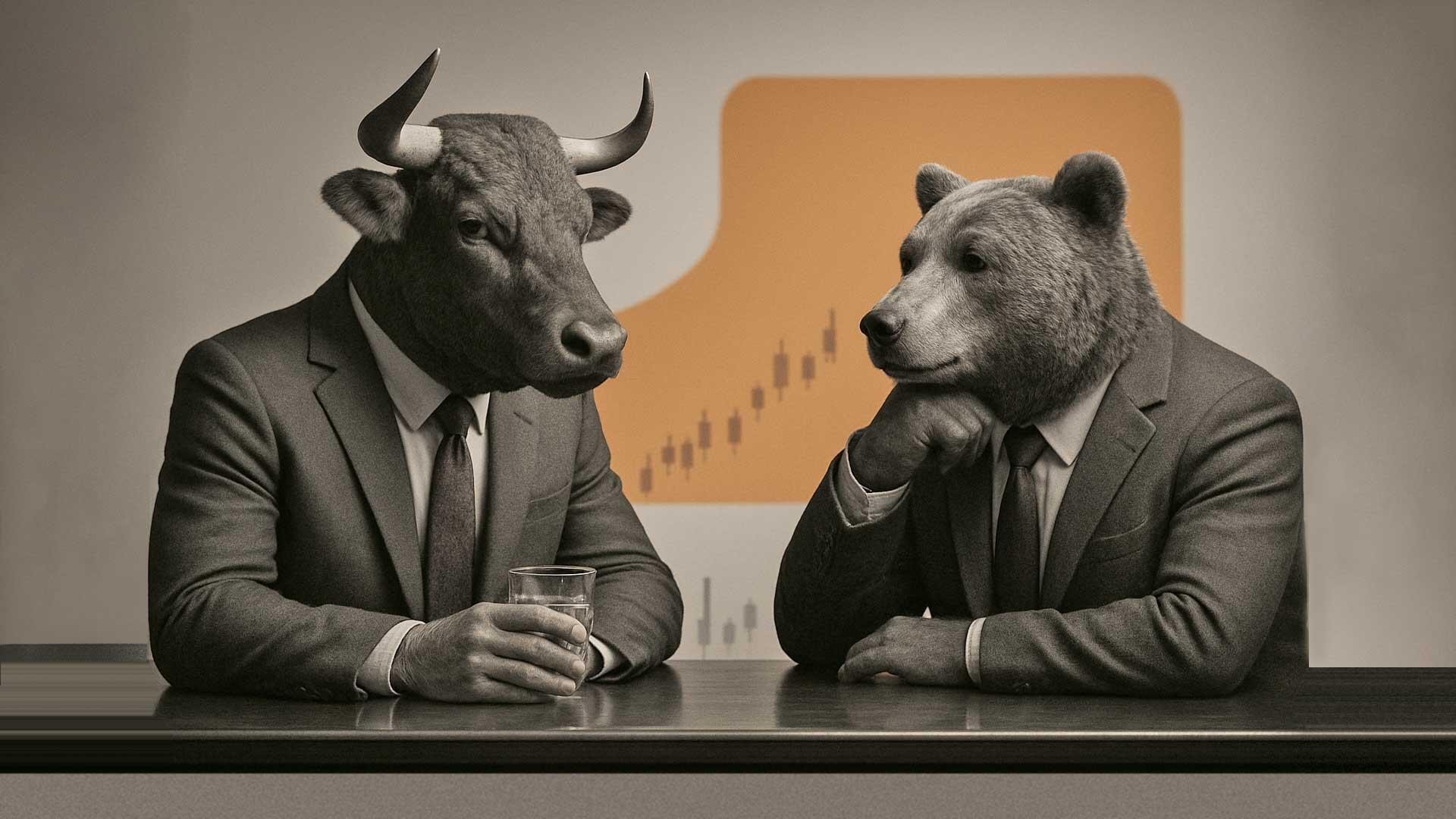
Why markets are entering a harder phase
Financial markets are entering a harder phase, where optimism alone is no longer enough to support risk appetite.
Investors and traders are now facing a more demanding environment shaped by labour-market uncertainty, renewed inflation pressure, geopolitical risks, central-bank caution, weakness in technology stocks, and pressure across crypto assets.
This is not simply another period of volatility. It is a phase in which markets are being forced to reassess the strength of the global economy, the limits of monetary policy, and the real quality of investor confidence.
The pressure is coming from several directions at the same time.
- The U.S. labour market remains a key signal for the Federal Reserve.
- Oil prices are again influencing inflation expectations.
- Technology and AI-related stocks are being tested after a strong period of investor enthusiasm.
- Crypto markets are reflecting weaker liquidity appetite.
- Gold is moving between its role as a safe haven and its sensitivity to yields and the U.S. dollar.
Together, these forces explain why markets are becoming harder to trade, harder to predict, and harder to manage without discipline.
The US jobs report becomes a market test
U.S. employment report is not just another economic release. It is a test of the market’s main assumption: that the U.S. economy can slow down without breaking.
If the labour market remains stable, the Federal Reserve will have less reason to rush into a more supportive policy stance. A stronger-than-expected jobs report could support the U.S. dollar, push Treasury yields higher, and create pressure on gold, equities, and risk-sensitive assets. In that case, traders may conclude that inflation risk remains more important than growth risk.
However, if the jobs report is weaker than expected, the market reaction may be more complex. At first, weaker employment data could reduce yields and support gold or rate-sensitive assets. But if the weakness is interpreted as the beginning of a deeper economic slowdown, risk appetite could deteriorate quickly.
This is the key point: bad news is not always good news anymore.
For a long time, markets treated weaker economic data as positive because it increased expectations of easier monetary policy. Today, that logic is less reliable. When inflation remains sticky and oil prices are elevated, weak growth does not automatically produce easier policy. It can also produce stagflation fears.
That is why traders should focus not only on the headline payroll number, but also on wages, participation, revisions, and unemployment. These details will help determine whether the labour market is cooling in an orderly way or sending a more serious warning.
Oil is again becoming a macroeconomic force
Energy prices are once again at the centre of the market story. Rising oil prices do more than affect energy companies; they influence inflation expectations, consumer spending, corporate margins, bond yields, and central-bank decisions.
For investors, oil is not only a commodity. It is a tax on the global economy.
When oil rises because of stronger demand, markets can often absorb it. But when oil rises because of geopolitical disruption, the interpretation is different. Higher energy prices caused by supply risks can hurt growth and inflation at the same time. This creates a difficult environment for both central banks and traders.
The Federal Reserve may not want to tighten aggressively if growth is slowing. But it also cannot ignore renewed inflation pressure. The European Central Bank faces a similar problem, especially as Europe remains more sensitive to energy shocks.
For currency traders, this means that the U.S. dollar may continue to receive support from safe-haven demand and yield expectations. For euro traders, the focus shifts to whether the ECB can defend credibility without damaging already fragile growth. For commodity traders, oil volatility may remain one of the most important signals to monitor.
The AI rally is facing its first serious confidence test
Another important development is the pause in the AI-driven equity rally. Over the past year, artificial intelligence has been one of the strongest narratives supporting technology stocks and broader equity sentiment. Investors were not only buying earnings; they were buying a future.
But when market confidence becomes fragile, even powerful stories are tested.
The current weakness in technology shares reminds us that AI is not immune to valuation risk. A strong long-term trend can still experience sharp short-term corrections when expectations become too optimistic. This matters because many portfolios have become highly dependent on a narrow group of technology and AI-related companies.
If this leadership group weakens, broader indices may lose momentum even if the rest of the economy remains stable. That is why traders should watch not only the major index levels, but also market breadth, earnings revisions, and whether capital starts moving from growth sectors into defensive assets.
The AI story is not over. In my view, it is still one of the most important long-term investment themes of this decade. But the market is now separating the structural AI opportunity from the short-term valuation risk. That distinction is essential.
Crypto is sending a warning about liquidity appetite
The weakness in Bitcoin and other cryptocurrencies also deserves attention. Crypto markets often behave as a real-time indicator of liquidity appetite and speculative confidence. When crypto assets fall sharply while macro uncertainty is rising, the message is clear: investors are reducing exposure to risk.
This does not mean that the long-term crypto thesis has disappeared. On-chain finance, tokenization, stablecoins, and digital liquidity remain major structural themes. However, in the short term, crypto assets are still highly sensitive to liquidity conditions, regulation, leverage, and investor psychology.
For traders, the lesson is simple. Crypto cannot be analysed only as a technological revolution. It must also be analysed as a risk asset. When yields rise, the dollar strengthens, and geopolitical uncertainty increases, crypto markets can face pressure even if the long-term adoption story remains intact.
This is especially important for investors who confuse innovation with immediate price appreciation. Innovation can create long-term value, but markets do not move in a straight line. The future may be digital, but the present is still governed by liquidity, positioning, and risk management.
Gold remains a strategic signal, not just a safe haven
Gold is also at an interesting point. In a traditional risk-off environment, gold usually benefits. But when the U.S. dollar strengthens and yields remain elevated, gold can struggle even during periods of uncertainty.
This creates a more complicated trading environment. Gold is no longer moving only as a fear asset. It is also reacting to real yields, central-bank expectations, dollar strength, and inflation credibility.
For longer-term investors, gold continues to represent protection against monetary uncertainty, geopolitical risk, and the erosion of trust in traditional systems. But for short-term traders, gold requires discipline. A geopolitical headline may support the price, while a strong jobs report or higher yields may pressure it.
Therefore, gold should be treated as both a strategic hedge and a tactical instrument. The difference matters.
Why this phase is harder for traders and investors
The main reason this market phase is harder is that there is no single dominant signal. Traders are not dealing with one clear story. They are dealing with several conflicting forces at the same time.
Stronger U.S. data may support the dollar but pressure risk assets. Weaker U.S. data may support rate-cut expectations but raise growth concerns. Higher oil prices may support energy-related assets but damage inflation expectations. AI remains a long-term opportunity, but technology valuations may still correct. Crypto remains structurally important, but liquidity conditions can create sharp short-term pressure.
This is why traders should be careful with simple conclusions.
The market is not only asking whether data is strong or weak. It is asking what kind of strength or weakness exists.
- Is the economy resilient, or is it overheating?
- Is inflation falling, or is it being revived by energy prices?
- Are investors confident, or are they overexposed to crowded trades?
- Are central banks preparing to support growth, or are they still constrained by inflation?
These questions define the harder phase markets are now entering.
What should traders and investors do now?
In this environment, prediction is not enough. Risk management becomes central.
Traders should avoid oversized positions, emotional entries, and excessive dependence on one market narrative. Volatility can change direction quickly when markets are influenced by jobs data, oil prices, central-bank expectations, geopolitical headlines, and liquidity conditions at the same time.
Position sizing, stop-loss discipline, diversification, and scenario analysis become more important than trying to be right on every move. The objective is not only to capture opportunity. It is also to stay alive when the market moves against expectations.
For investors, the key is to distinguish between structural opportunities and cyclical risks. AI, crypto, tokenization, energy security, and real assets may remain important long-term themes. But even strong long-term themes can experience short-term corrections when valuations, liquidity, or sentiment shift.
The harder phase does not mean investors should abandon markets. It means they must be more selective, more disciplined, and more aware of the relationship between macroeconomic data and market psychology.
Markets need more than optimism
Markets are entering a harder phase because optimism is no longer enough. Investors and traders must now assess resilience, inflation pressure, central-bank limits, geopolitical risk, liquidity conditions, and valuation risk at the same time.
The next major moves will not depend only on whether economic data is strong or weak. They will depend on how investors interpret the relationship between growth, inflation, policy, and risk appetite.
In this environment, the best traders will not be those who chase every headline. They will be those who understand the structure behind the headlines.
Hope can lift markets for a while. But discipline, resilience, and risk management determine whether investors and traders can survive when pressure returns.
Author

Nikolaos Akkizidis
Independent Analyst
Nikolaos Akkizidis is an Independent Financial Writer, Economist, Author, and Speaker with more than two decades of experience in financial services, capital markets, investment advisory, portfolio management, trading, risk manage