Weekly column: US debt tops forty trillion as treasury buybacks spark precious metals rally

Review
Gross U.S. debt has surpassed $40 trillion, a new milestone in the country’s struggle to control its finances. Reaching that threshold carries symbolic weight, but isn’t, by itself, economically significant. Most investors and economists care less about raw figures than other measures, like the ratio of debt to gross domestic product, which provides a better sense of an economy’s borrowing capacity.
—Sam Goldfarb and Matt Grossman, “U.S. Debt Just Topped $40 Trillion: How We Got Here,” The Wall Street Journal, August 20, 2026.
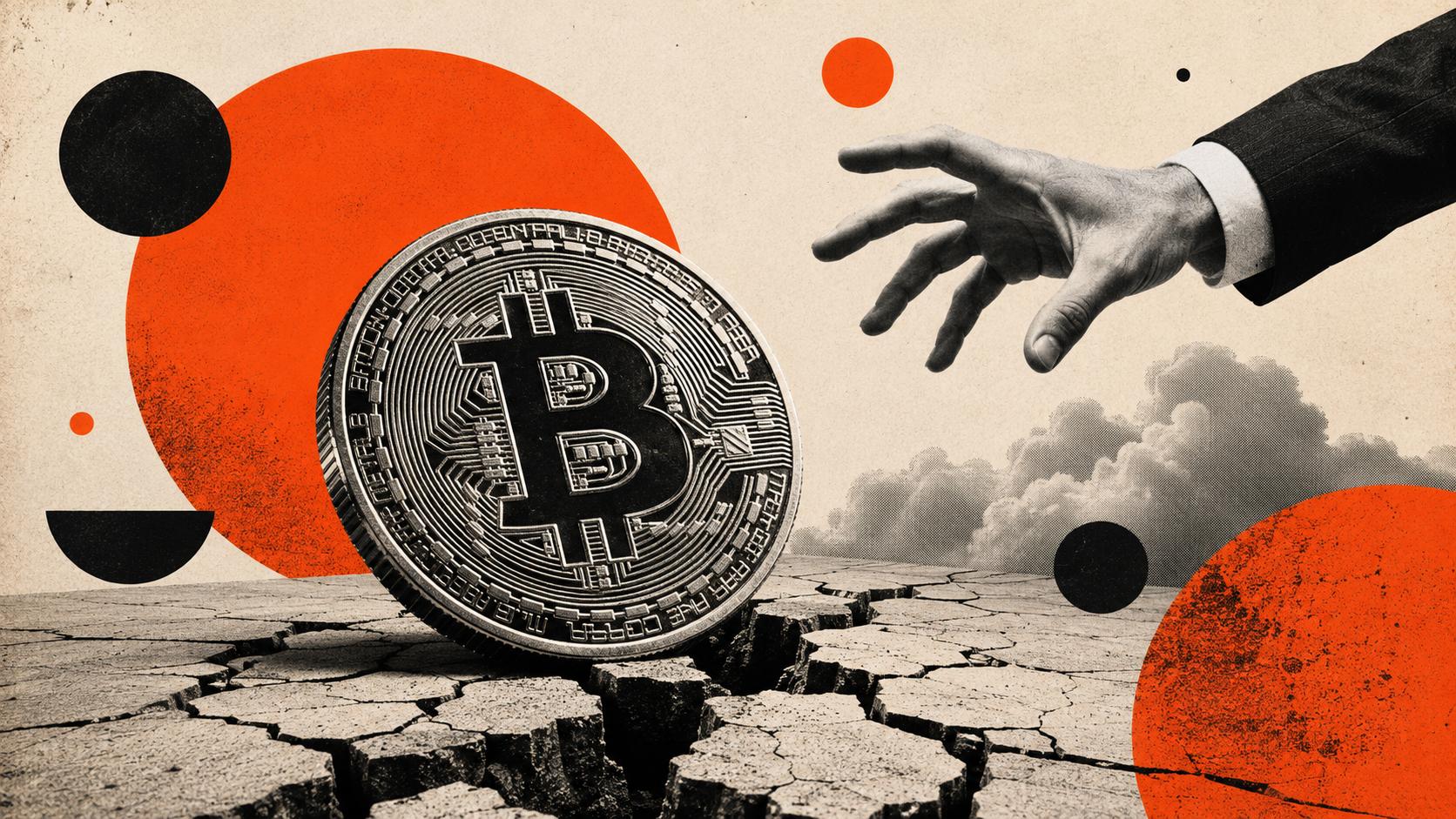
It was another remarkable week for financial markets as the U.S. Treasury announced an unexpected expansion of its debt buyback policy. On that announcement, Bitcoin, Ethereum, precious metals, and foreign currencies shot straight upward through multi-month resistance levels.
Strangely enough, longer-term Treasuries rallied for only one day after the buyback announcement, and stock indices were mostly down for the week across the globe. Maybe this strange disconnect was related to the passive-aggressive nature of the Mars square Neptune aspect that started the week, probably correlating with the rally in Crude Oil. Maybe the decline of stocks and bonds into early Friday was related to Venus in opposition to Saturn, a signature that we like to use as a buy signal for markets that decline into it. Maybe it’s part of the eclipse season (August 12–27) during which the Lunar North Node changed signs from Pisces to Aquarius, signaling the renewed highlight on the principles of Uranus, ruler of Aquarius. Uranus will come smack into view as it T-squares the lunar eclipse on Thursday, August 27. It’s the start of big surprises and unexpected developments that could climax into mid-September and even early October when Venus turns retrograde. In any event, it should be noted that the geocosmic cycles worked quite well last week, even if they didn’t line up as well with market cycles and trends as we usually like to witness.
The vast majority of world stock indices were in a corrective decline for most of last week, bottoming on Thursday or Friday, August 20–21, right in line with the Venus/Saturn opposition. But it was a completely opposite story with Gold, Silver, and Bitcoin, which just exploded higher into Friday. Bitcoin broke above an important downward trendline connecting the highs of January and May. This strongly suggests the 4-year cycle trough bottomed on July 1. It was due in October +/- 2 months, but a 4-year cycle can have an allowable orb of up to 8 months, even though it has historically unfolded over a range of 4 months. Gold and Silver also broke to their highest levels since May and June, respectively, suggesting Gold’s 47-month cycle may have also been completed with the double-bottoms of June 30 and July 16, around 3955.
Short-term geocosmics
Long-term Treasury yields fell on Wednesday after the Trump administration doubled down—at a minimum—on debt buyback operations. The move lit a fire under the Gold price. The signal that Treasury Secretary Scott Bessent is ready to step in to quell debt market pressures should keep the bond market from getting unruly at the long end. That’s in keeping with the dollar debasement theme that, along with central bank buying, is key to the bull case for Gold.
—Jed Graham, “Treasury Yields Fall, Gold Jumps on Bessent Buyback Plan,” Investor’s Business Daily, August 19, 2026.
It’s like déjà vu all over again.
—Yogi Berra.
Everything changes suddenly whenever Uranus is highlighted. And the planet of experimentation, invention, disruption, and chaos that brought us the radical quantitative easing and buyback programs for U.S. Treasuries and mortgage-backed securities during the Financial Panic of 2008–2010 appears to be having a comeback. It’s not exactly the same in form, but it is similar in terms of urgency of response.
So far, the biggest beneficiaries of this renewed “economic rescue” policy are foreign currencies and precious metals, as this redirection revives the dollar-debasement theory. When the U.S. Dollar goes down, currencies and precious metals go up. But the heavenly fireworks are just beginning.
We are in the eclipse season, starting with the Solar Eclipse of August 12 and ending with the Lunar Eclipse of August 27. Eclipses add extra drama to whatever else is happening in the cosmos. This period is especially dramatic because it coincides with 1) the Mean Lunar North Node in Aquarius (August 18, 2026 to March 7, 2028) and 2) a Lunar Eclipse forming a powerful T-square with Uranus in mutable (reversal and change-driven) signs. But Uranus influences don’t end there. In fact, they extend to September 10 when the god of electricity, earthquakes, and high winds changes direction. And right in the middle of all are several aspects such as Jupiter trine Saturn (usually an omen of stability) and Mars square Saturn (hardly an omen of stability, but more often one of hostility and war threats). This reversal of trend may even continue into early October, when Venus turns retrograde, which we will address in future columns as we get closer.
These crosscurrents over the next two to three weeks can make forecasting and trading very challenging. It’s also a period we have referred to in the past as TUMDI—the “Trump Uranus Market Disruption Indicator.” That’s because the president is such a strong Uranian type of personality, given to sudden bouts of unexpected and disruptive announcements (i.e., social media posts) that lead to equally sudden reversals in financial markets. With Mars square Saturn right in the middle as well on September 1, the frustration of not getting what one wants can also lead to aggressive outbursts. Mars square Saturn is also a weather-related signature, usually associated with hot temperatures and droughts, which in turn can correlate with rising grain prices +/- two weeks. This is something already underway. Temperatures are hot, both in nature and within one’s own nature.
In summary, buckle up over the next two to three weeks because the roller-coaster ride is about to begin its steepest descent from the highest point of the climb. Enjoy the thrill, if you can. Or step aside and watch from a safe distance—but don’t stand in front of a train that may have lost its brakes. Watch the VIX.
Longer-term, this might also start to play out in line with the history of the 19-month Lunar North Node in Aquarius, when the economies and stock markets of the world often hemorrhage. The declines can happen suddenly, and be very sharp and brief, or stretch out over much of the entire period. The last time this passage occurred was–guess what?—January 7, 2008, through July 26, 2009, during the Great Recession, when the Federal Reserve Board began QE and ZIRP policies. It created the climate for radical central bank and political responses. Here we go again, 18 years later.
So, as Yogi Berra said: “It’s like déjà vu all over again.”
Author
Raymond Merriman, CTA
The Merriman Market Analyst
Raymond A. Merriman is the President of the Merriman Market Analyst, Inc and founder of the Merriman Market Timing Academy.