USD/COP breaks to seven-year lows as everything that should have hurt the peso happens
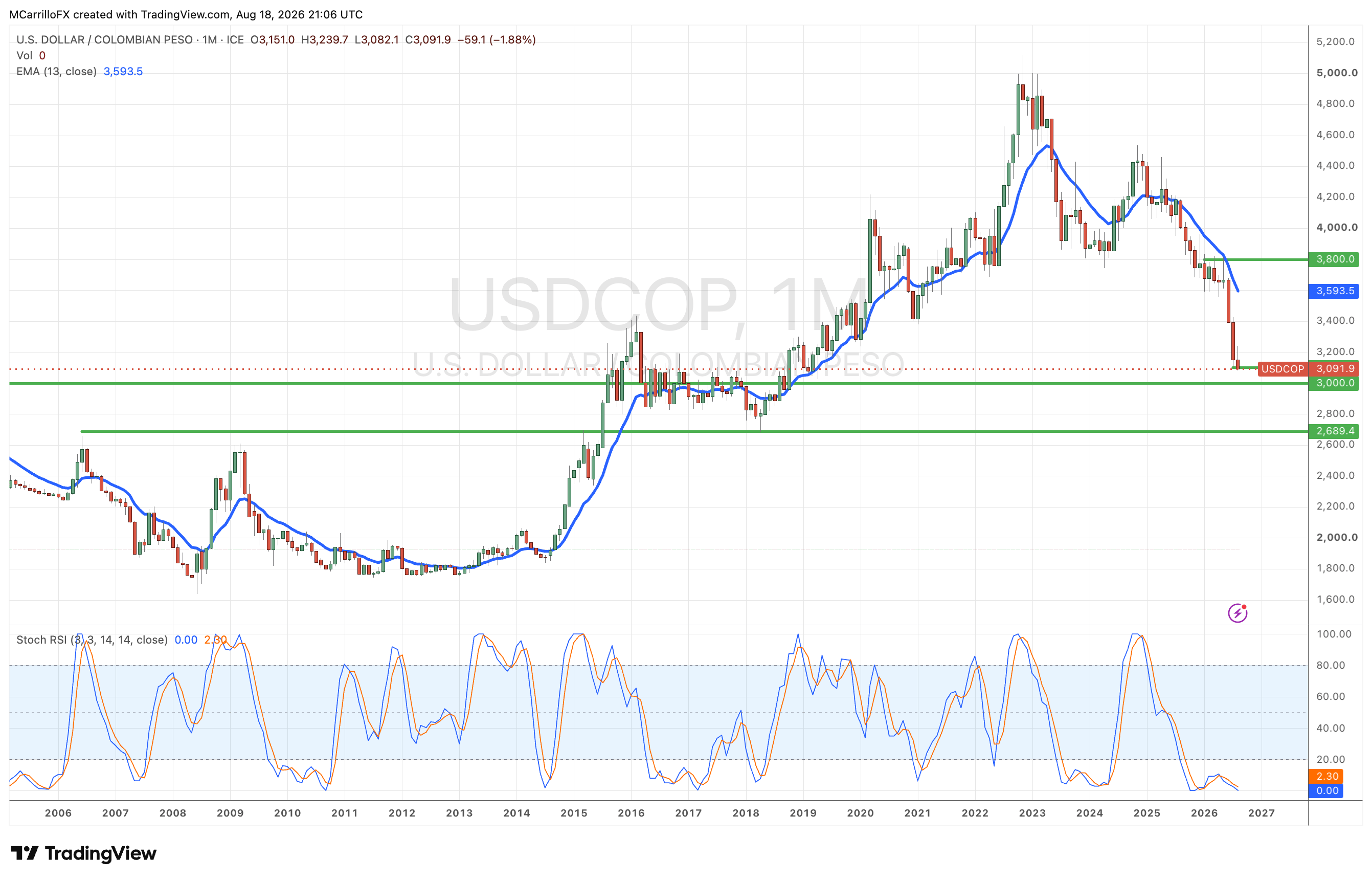
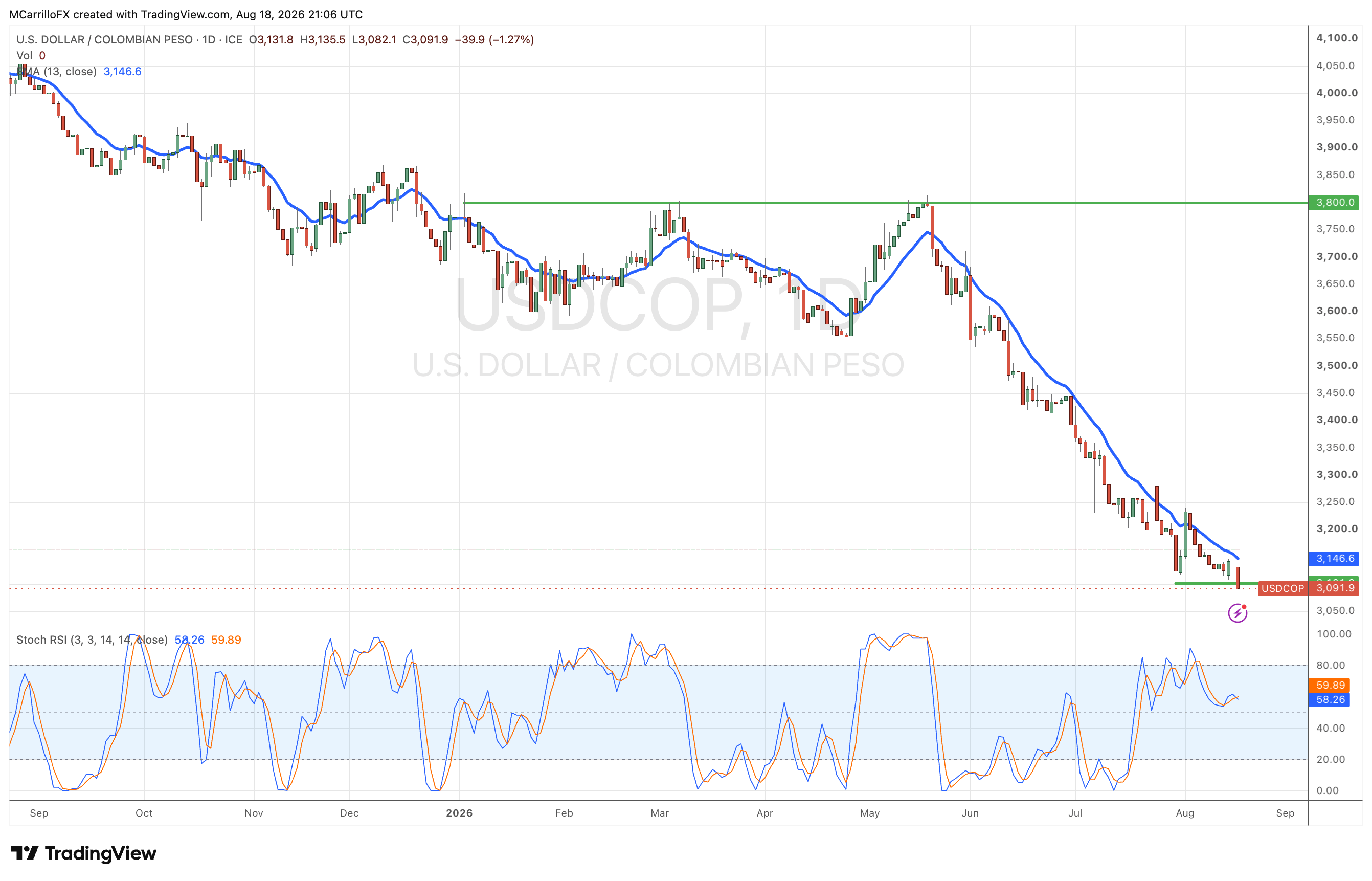
The pair closed at 3,091.9 on Tuesday, down 1.27%, through the 3,101.9 floor and at levels last seen in 2019. Three separate Colombian negatives landed in three weeks and the currency ignored all of them.
Let's start with a correction.
Last month I argued that Colombian inflation was a domestic services story rather than an energy one, and that this made a BanRep hold unlikely. The board held at 12.0% on 31 July, four votes to three, with the minority wanting a 50-basis-point hike.
The minutes read June differently. They attributed the rise from 5.8% to 6.1% largely to food and regulated items, while core inflation excluding both held at 6.0%. July's data supports them.
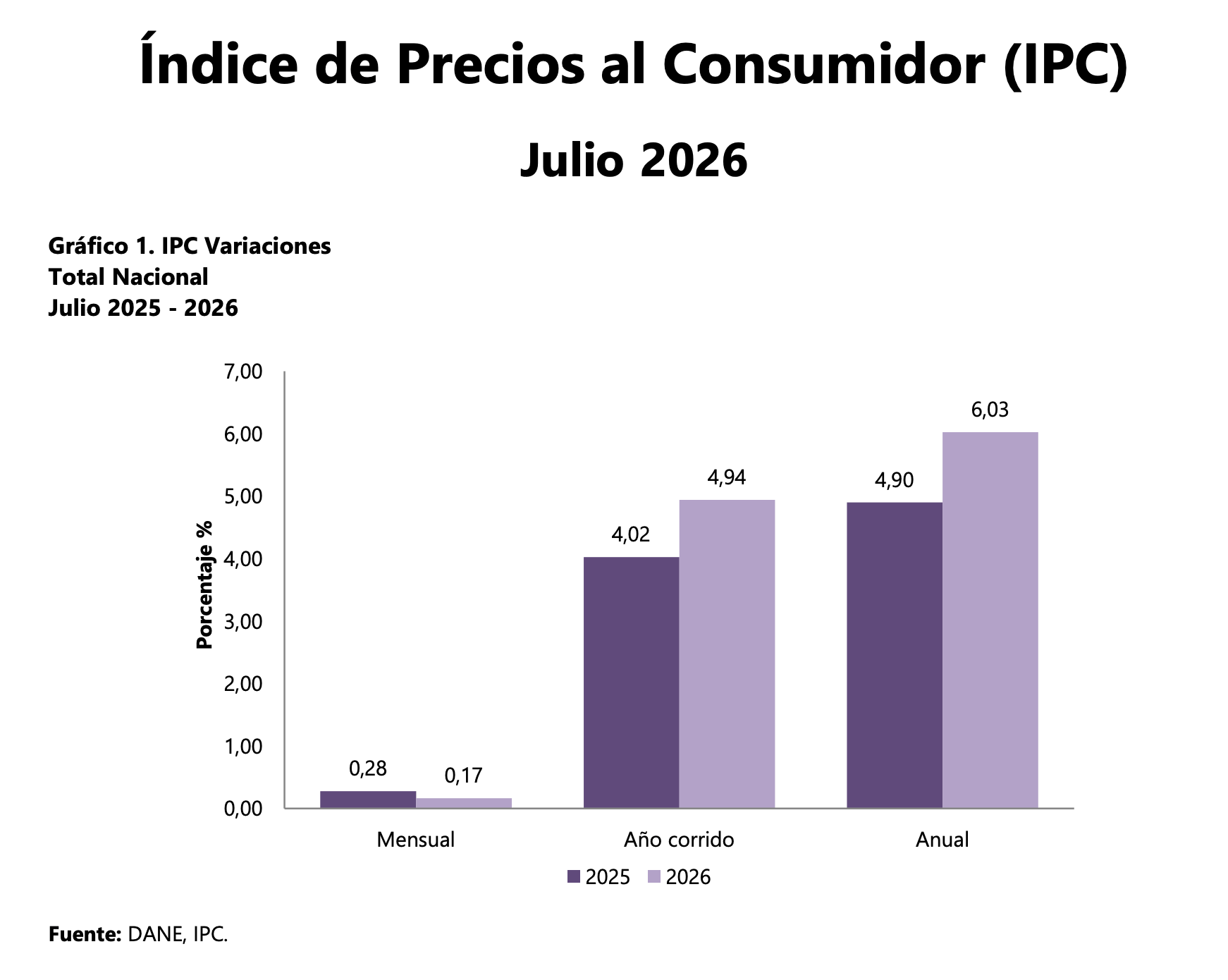
Food fell 0.13% on the month and transport fell 0.24%, while alojamiento, agua, electricidad y gas rose 0.55% and contributed the entire 0.17% monthly print on its own. Electricity alone rose 2.29%.
My observation still holds when looking at the annual figures, with restaurants at 9.53% and health at 8.37%.
The monthly direction was theirs.
Three negatives, no reaction
BanRep declined to hike against a consensus 50-basis-point move. That should have taken some of the widening out of the carry trade.
Inflation surprised lower. July annual printed 6.03% against roughly 6.22% expected, down from 6.14%. A softer print weakens the case for further tightening.
And a magnitude 7.4 earthquake struck western Colombia on 10 August, felt in many areas of the country, killing at least 294 people and injuring more than 3,900.
Oxford Economics puts direct damage between $990 million and $1.98 billion, and left its 3% growth forecast for 2026 unchanged on the view that reconstruction spending offsets the hit to private demand.
The bill lands on an administration three days into office, with a tax reform due in September.
The peso appreciated through all three.
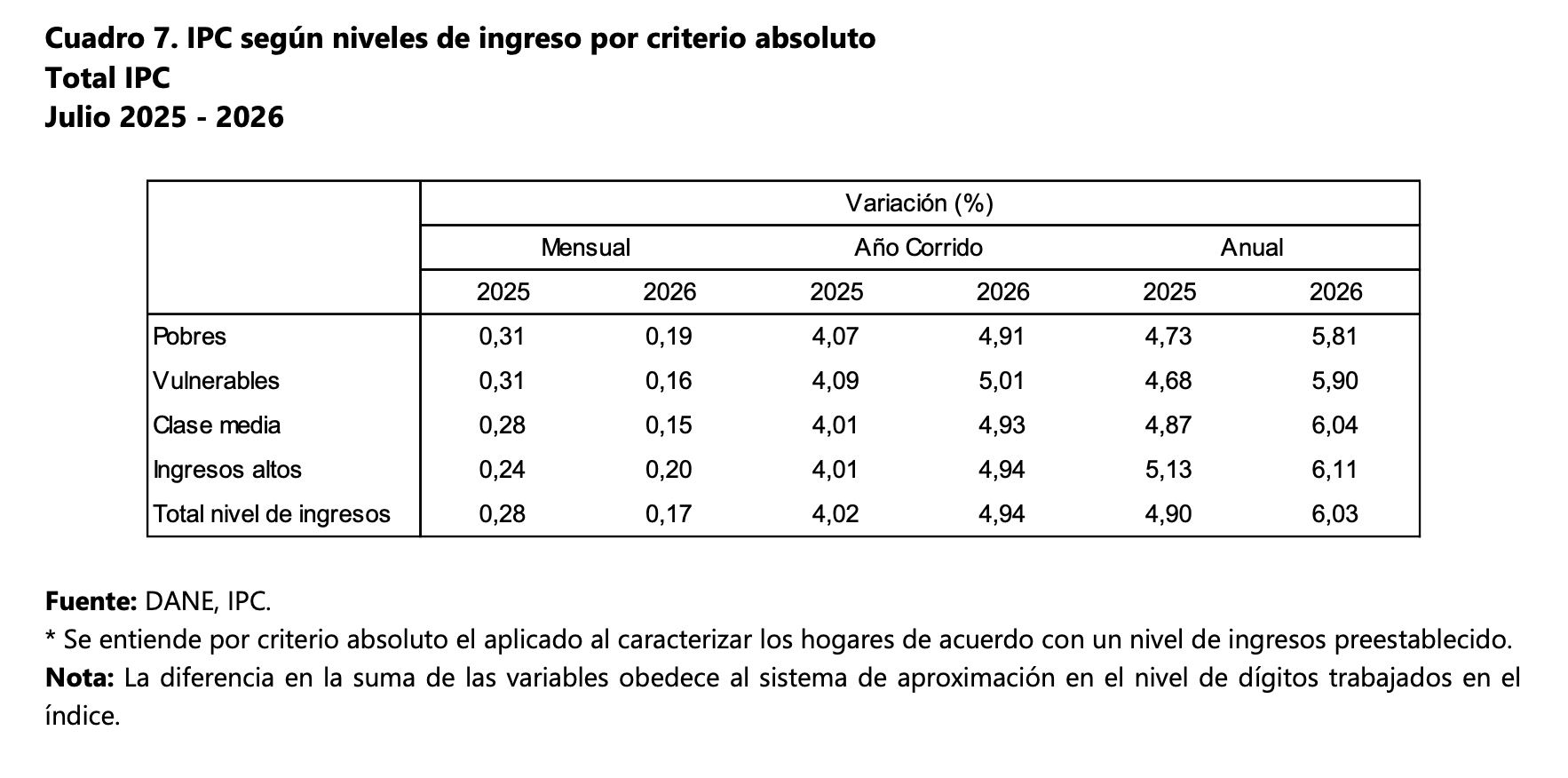
One detail from the release worth flagging. DANE breaks the annual figure by income group, and the burden runs heavier at the top: 5.81% for poor households, 5.90% for vulnerable ones, 6.04% for the middle class and 6.11% for high income households.
That follows from what drove the year. Restaurants and health ran hot, education too, while food and transport did not, and the first three weigh more in higher-income baskets.
Why the peso doesn't care
Because the peso has been trading the dollar, not Colombia.
Commerzbank's Volkmar Baur laid out the mechanism this week. In December the market priced 60 basis points of Fed cuts against a G10 average of 10 basis points of hikes. That gap closed steadily, particularly after the Iran conflict began, until the market was pricing a US hike.
Since the last Fed meeting, expectations for the Fed have been scaled back while those for other developed markets have not. Commerzbank forecasts three US cuts next year, against a FedWatch curve that still carries a hike.
Meanwhile the softer inflation print raised Colombia's real policy rate to 5.97% from 5.86%, without BanRep lifting a finger.
The spread held from both ends. That is the whole trade.
Levels
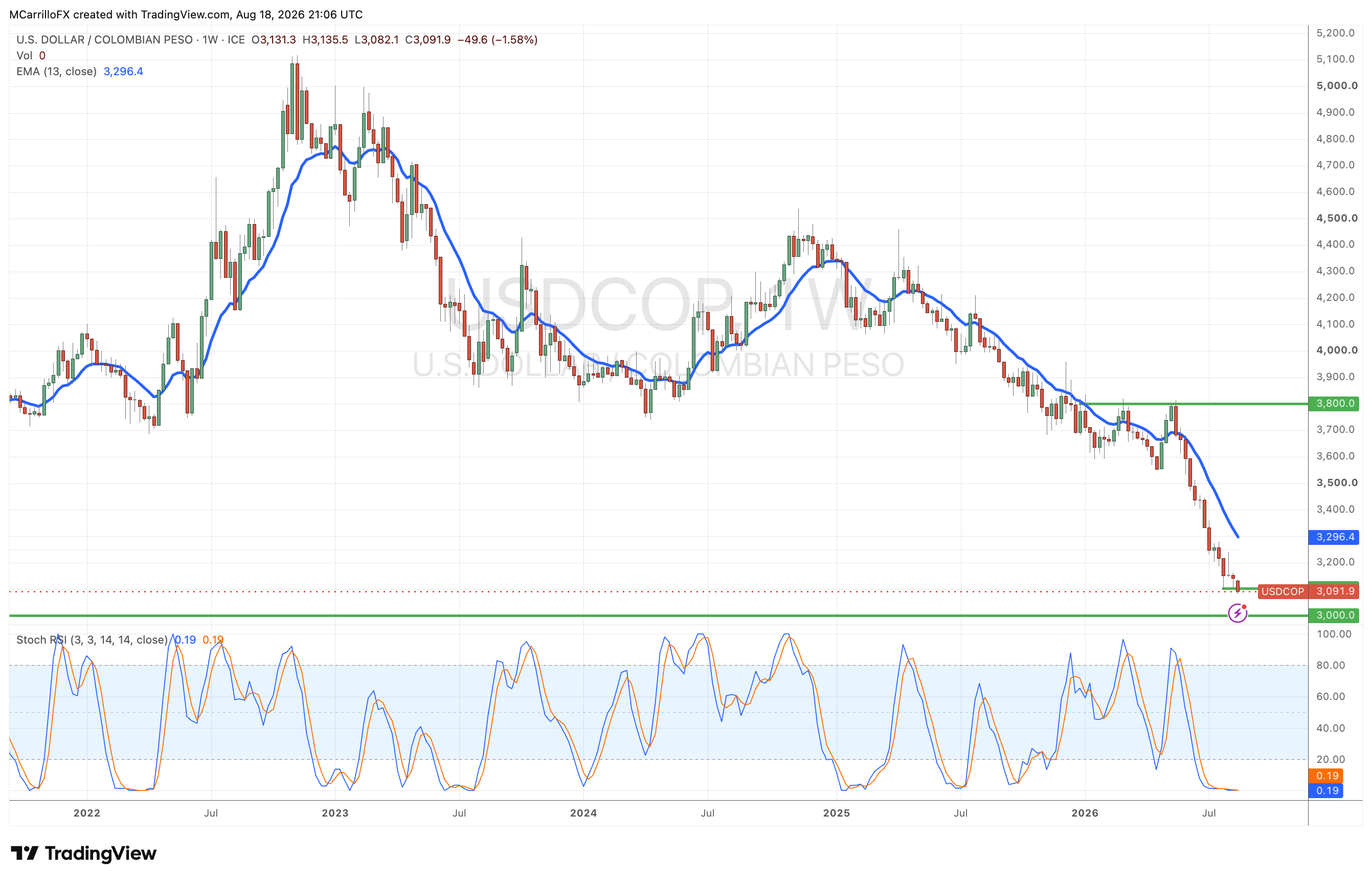
Tuesday broke 3,101.9 and closed at 3,091.9, having reached 3,082.1. Price sits 1.7% below the daily 13-period EMA at 3,146.6, 6.2% below the weekly at 3,296.4, and 14.0% below the monthly at 3,593.5.
The 3,000 handle is 3.0% away and remains my second-half target, with 2,689.4 a further 13.0% beneath it. From the 19 May high at 3,800.73 the pair has fallen 18.7%, in thirteen weeks.
The caution is momentum, and it has not changed. Monthly stochastic RSI reads 0.00 against 2.30, weekly 0.19 and 0.19. The pair has stayed oversold for two months. It will not do so indefinitely.
Resistance now starts at 3,101.9, the floor that broke on Tuesday, then the daily 13-period average at 3,146.6. Above that the chart is thin until the weekly average at 3,296.4. Further out, 3,800 marks the shelf that broke in the spring. The trend stays lower while the pair holds beneath it.
Author

Mauricio Carrillo
Witbrew
Mauricio Carrillo is a financial journalist, fintech executive, and inter-markets analyst with fifteen years of experience at the intersection of traditional finance and digital asset infrastructure.