The BoJ tempers hawkish message, as UK consumer spends through the price shock

There has been a remarkable turnaround for markets this week. At the start of the week, fears about oil price spikes, rate hikes and a bond market rout caused a surge in volatility. However, at the end of the week there has been a remarkable turnaround. The S&P 500 is poised to eke out a weekly gain and the Nasdaq 100 has brushed off AI fears. The FTSE 100 is lower on Friday, but that is a reaction to a falling oil price.
The brighter tone is down to three things:
1, The Fed rate hike on Wednesday has reinforced their inflation-fighting capability, which is calming fears in the bond market.
2, Saudi Arabia is expected to bring back 50% of production at the crucial East-West pipeline, after damage from Houthi attacks last week. Added to this, there are signs that ‘dark transits’ of oil are getting through the Strait of Hormuz without coming under attack.
3, Although there are concerns about the safeguarding of AI, chip stocks are recovering and the Philadelphia semiconductor index rose 3% on Thursday, as investors are reminded of the strength of demand for chips, which stretches many years into the future.
Rising chip stocks, a falling oil price, Brent crude is lower by another 2% today and is trading just above $102 per barrel, a drop of nearly 7% this week, and declining bond yields are a risk-positive backdrop as we end the week.
BoJ hikes but the future is unclear
Central banks have dominated this week, and the Bank of Japan was the latest to hike rates on Friday morning to 1.25%. However, USD/JPY is lower by nearly 1% on Friday and is trading above 157.40, the highest level since early September, after 2 committee members voted against the hike, which suggests the BOJ will not be able to embark on a fast pace of rate hikes.
BOJ Governor Ueda has just finished his press conference, and the yen is falling versus the dollar, which suggests that the market has not seen as much hawkishness as expected in his remarks. The next level to watch in USD/JPY is 158, as the market unwinds some of the post intervention yen strength from earlier this month.
Ueda has confused the market today with both hawkish and dovish signals, he has said that Japan is entering a new policy-making stage, but has also warned against rapid rate hikes that trigger asset price volatility. This highlights the BOJ’s dilemma, on the one hand they need to raise rates to stabilize inflation, but Japan has a huge government debt load and they cannot upset the bond market for fear of triggering global financial market instability.
Anyone looking for Japanese funds and individuals to embark on mass capital repatriation on the back of this rate hike have been proved wrong, the yen is weaker today and Japanese bond yields are lower across the curve.
No consensus where Oil will go next
Elsewhere, there is consensus in the market that no one knows where the oil price will go next. The situation in the Middle East is very opaque, so the next key level to watch is whether Brent crude can get back below $100 per barrel.
The UK consumer spends through the Oil price shock
In the UK, stronger retail sales rose unexpectedly in August, suggesting that the consumer remains resilient in the face of rising energy prices. The total volume of goods sold rose by 0.5%, defying economist fears of a decline last month. So far, the energy price shock has not halted consumer spending in the UK, which is positive for the Q3 growth outlook. However, the bigger question is how the consumer reacts in the coming months as a potential rate hike and Budget speculation coils all hurt the consumer.
The pound is stable on the back of this data after bouncing off support at $1.3350, long bond yields are continuing to fall after the BOE suspended its QT programme on Thursday, although short end yields are slightly higher, the 2-year is up 2bps after the strong retail sales report.
USD/JPY
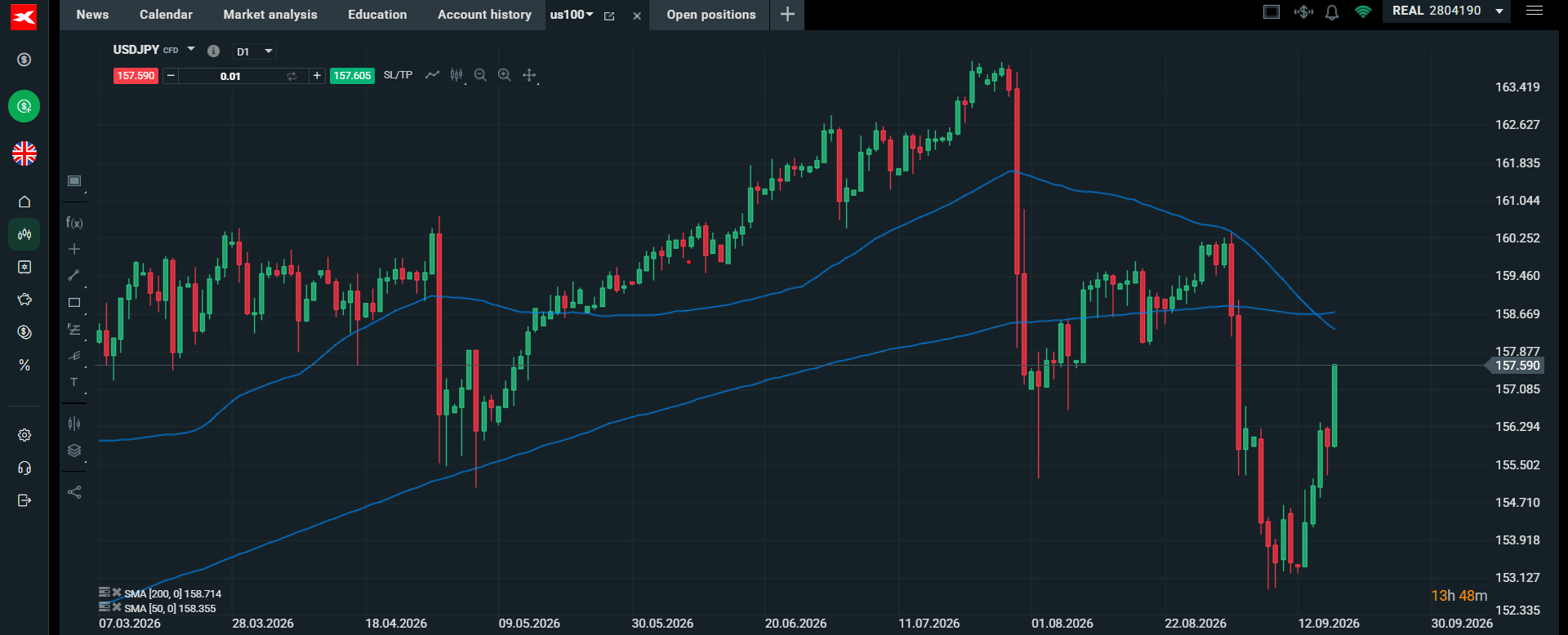
Source: XTB
Author

Kathleen Brooks
XTB UK
Kathleen has nearly 15 years’ experience working with some of the leading retail trading and investment companies in the City of London.