Silver forecast: XAG/USD holds at ATH as bullish structure persists
- Silver remains structurally strong, consolidating near all-time highs while maintaining a clear bullish daily trend.
- Dual demand from industrial usage and monetary hedging continues to support silver more aggressively than gold.
- Technical bias favors continuation, with strength likely to resume if price holds above the 4-hour Fair Value Gap and resolves consolidation higher.

Silver market narrative – Strength rooted in structure, not speculation
Silver continues to trade near all-time highs, showing resilience even as other precious metals experience rotational pullbacks. Unlike gold, which is predominantly driven by monetary policy expectations and geopolitical hedging, silver benefits from a dual demand profile—acting both as a precious metal and a critical industrial input.
This unique positioning allows silver to sustain momentum during periods when gold consolidates. Current price behavior reflects acceptance at elevated levels, not rejection. Rather than sharply selling off from the highs, silver has transitioned into controlled consolidation, a hallmark of strong trending markets.
From a broader macro perspective, silver’s strength remains supported by:
- Persistent USD softness
- Elevated inflation uncertainty
- Expanding industrial demand, particularly from renewable energy, EVs, and electronics
As a result, silver has been able to hold premium pricing, keeping it near record levels while gold digests earlier gains.
Why Silver remains near all-time highs compared to gold
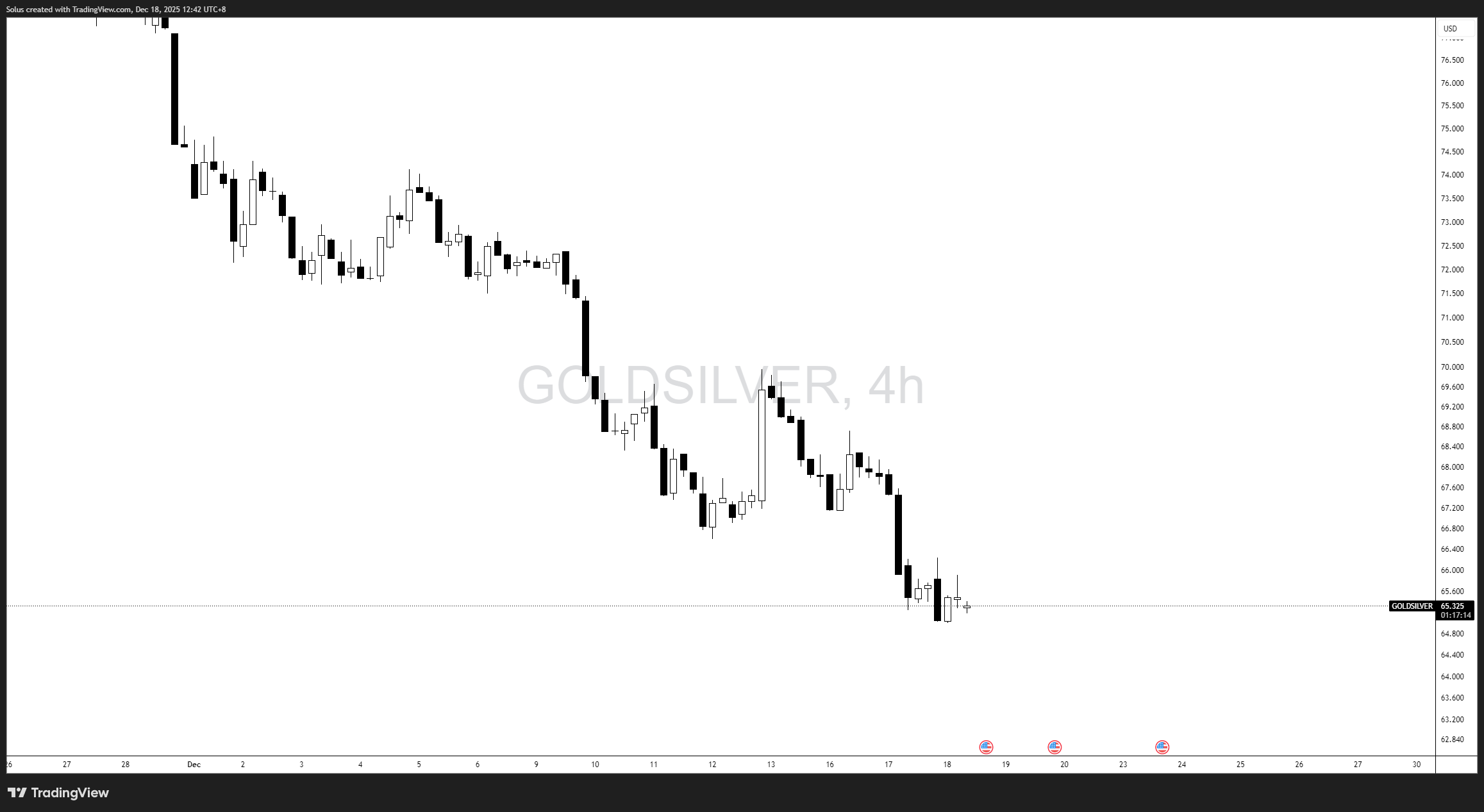
Silver’s outperformance relative to gold is structural, not coincidental.
1. Industrial demand adds a second layer of support
Silver plays a crucial role in:
- Solar panels
- Electric vehicles
- Semiconductors
- Medical and electronic components
This means silver demand persists even during periods of macro stabilization. Gold, by contrast, relies more heavily on fear-based or policy-driven flows.
2. Supply constraints are tighter in Silver
Silver supply growth remains structurally constrained, with mine output struggling to keep pace with demand. Gold markets are deeper and more liquid, making silver more responsive to demand shocks and allowing trends to persist longer once momentum builds.
3. Silver thrives in reflationary environments
While both metals respond to inflation expectations, silver tends to outperform when growth and inflation risks coexist. Gold typically leads during crisis hedging phases; silver leads during inflationary expansion phases, which better describes the current environment.
How the recent Silver forecast has played out
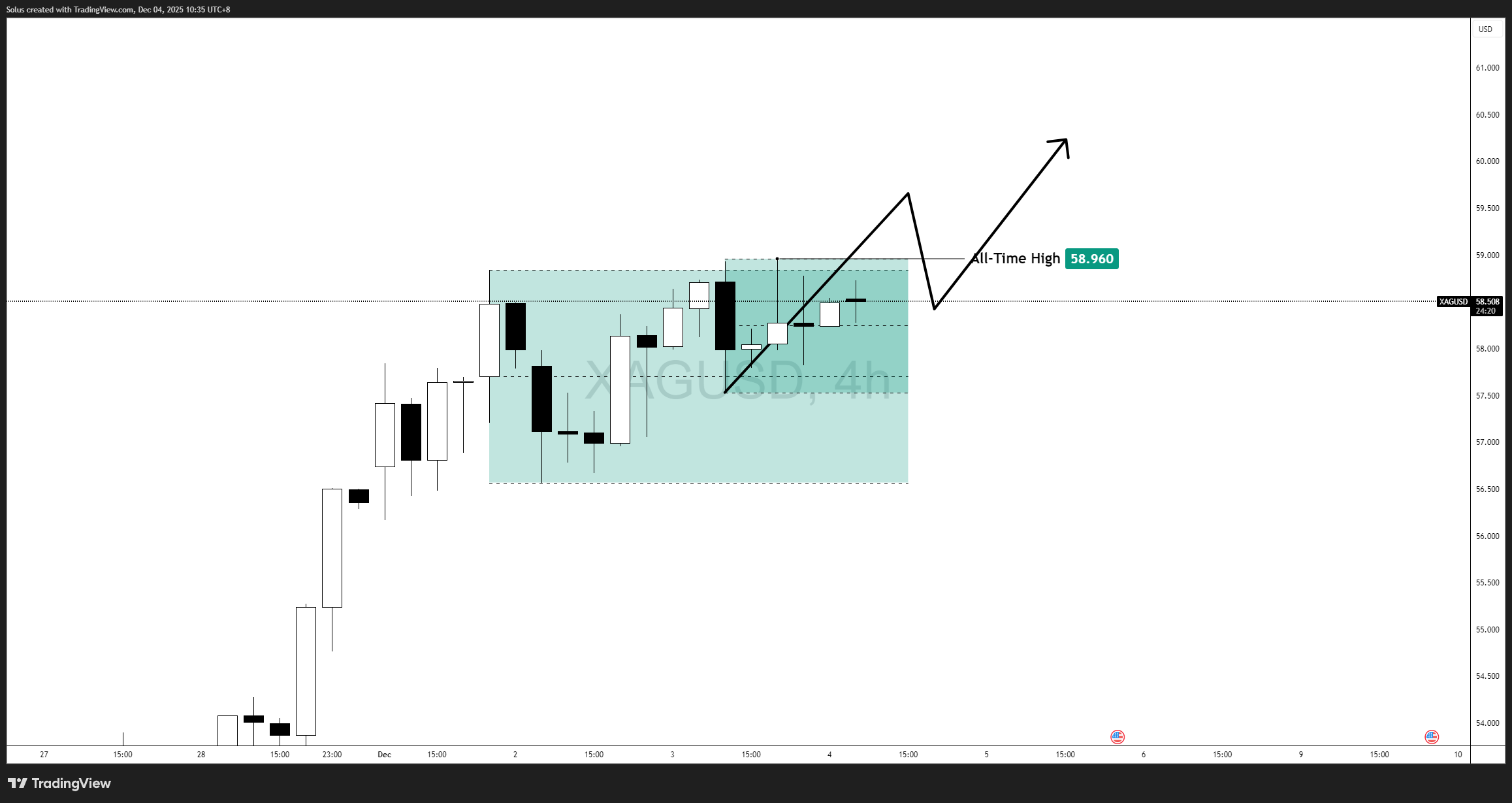
Previous expectations for silver emphasized continuation rather than reversal, with pullbacks expected to remain corrective as long as structure held.
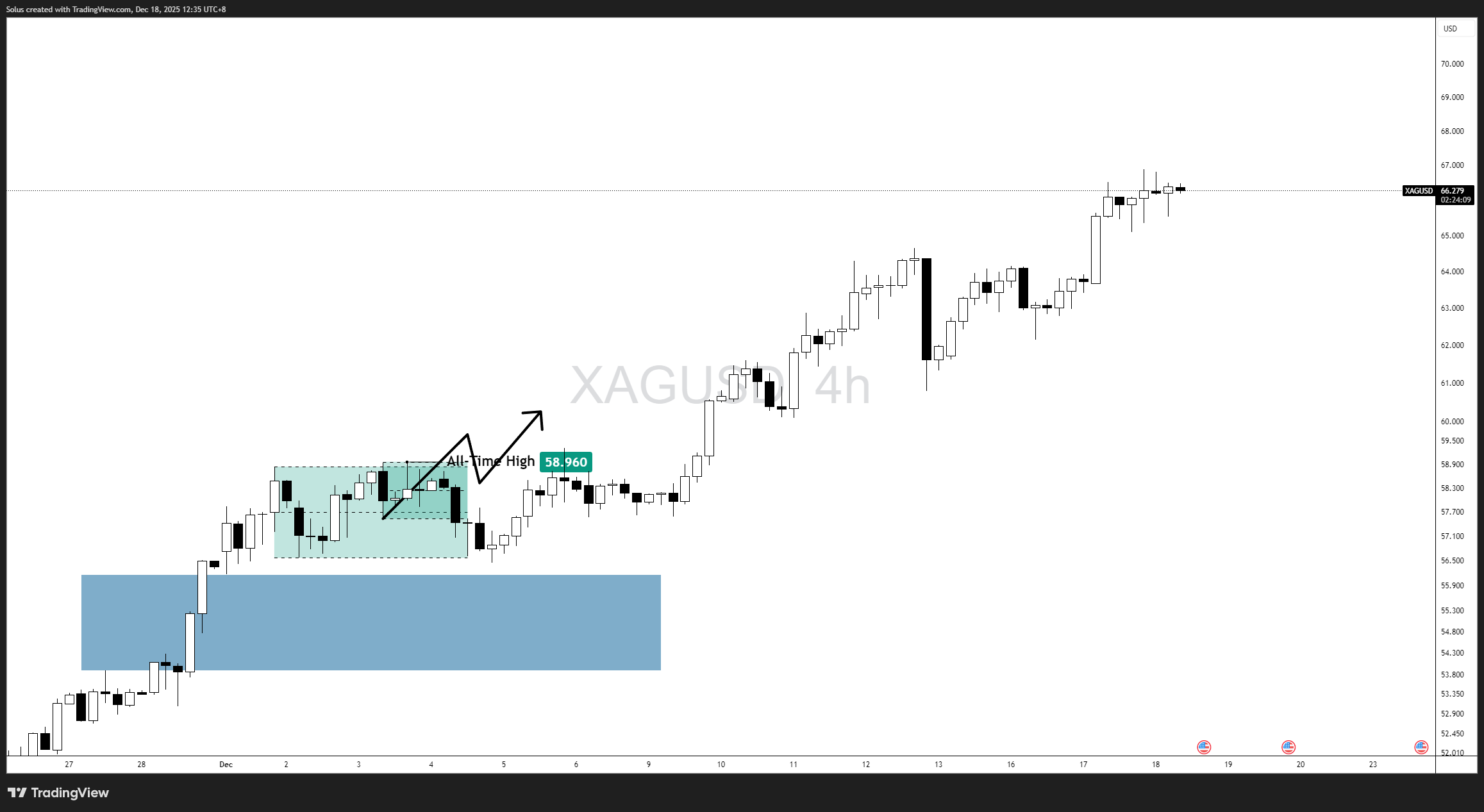
That view has been validated:
- Silver pushed into new highs
- Pullbacks remained shallow
- Price consolidated near the highs instead of rejecting them
- No higher-timeframe structural breakdown occurred
This confirms that recent price action reflects acceptance at higher value, not speculative excess.
Technical outlook – Silver respects 4-hour FVG and consolidates
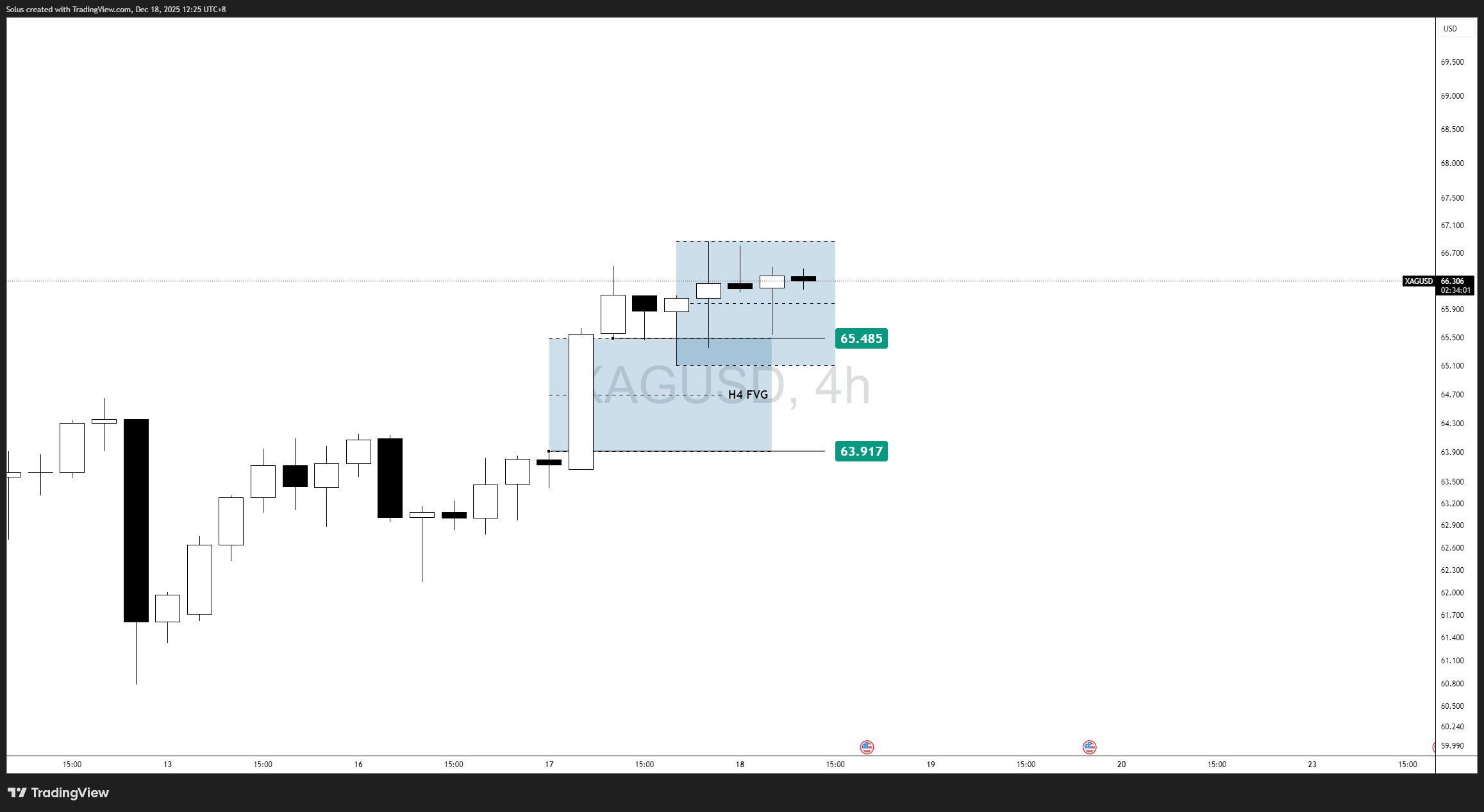
From a technical standpoint, silver continues to validate bullish structure.
After the most recent impulsive rally, XAG/USD retraced into a clearly defined 4-hour Fair Value Gap (FVG) and reacted precisely as expected. Buyers stepped in aggressively, rejecting lower prices and pushing the market back into balance above the FVG.
This reaction confirms that:
- The upside move was imbalanced and required re-pricing
- Buyers remain in control of value
- The pullback was corrective, not distributive
Following the bounce, silver entered a tight consolidation just below recent highs. Rather than breaking down, price is coiling—suggesting liquidity absorption and position building, not exit.
As long as silver continues to hold above the 4-hour FVG, the probability favors directional expansion, not deeper rotation.
Bullish scenario – Breakout from consolidation
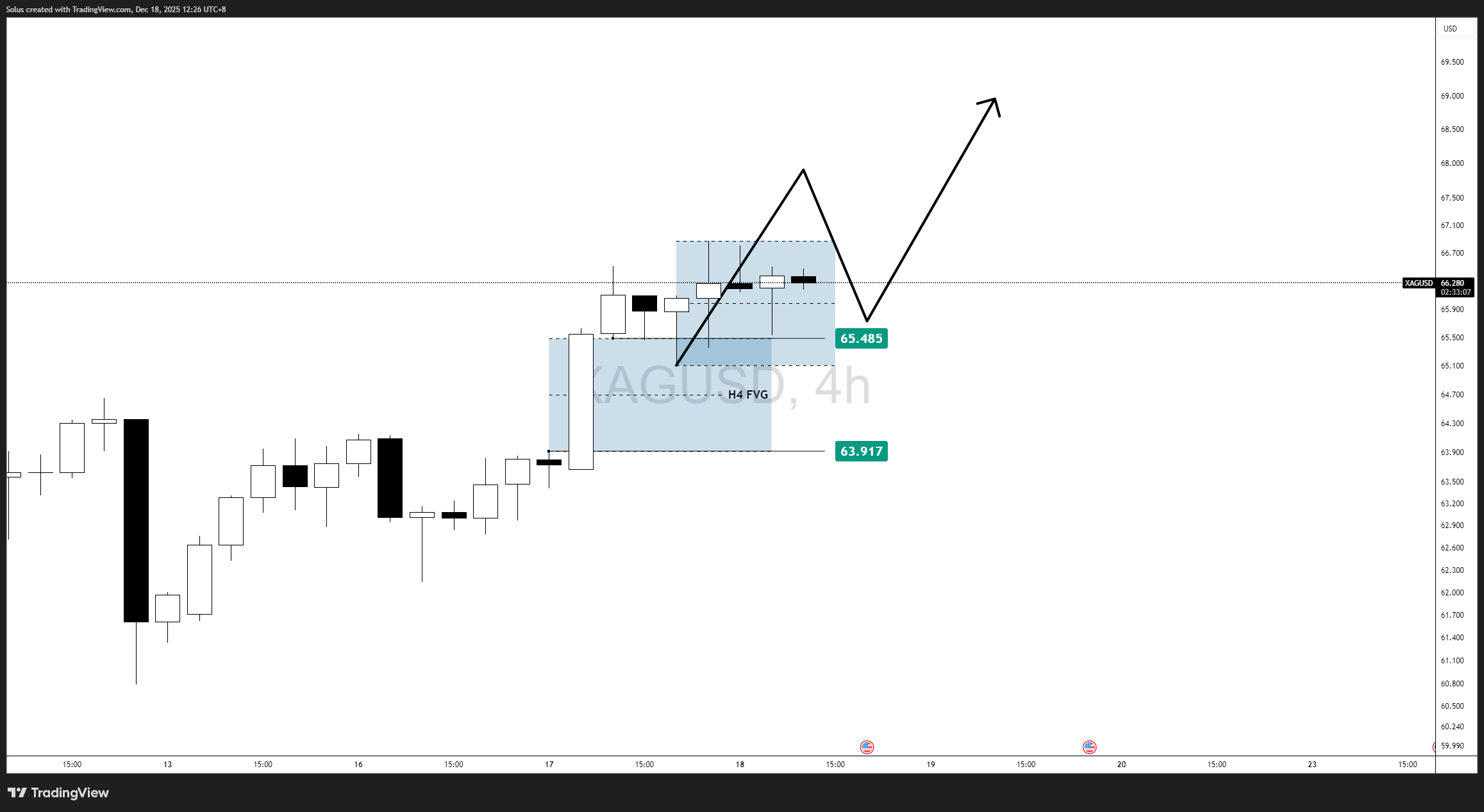
The bullish scenario remains favored if silver:
- Holds above the 4-hour FVG
- Maintains acceptance within the consolidation range
- Breaks and holds above the consolidation high
In this scenario:
- The FVG acts as a launchpad
- Momentum can re-expand without revisiting lower demand
- Silver can push toward fresh all-time highs
This outcome aligns with:
- Ongoing industrial demand
- Inflation-sensitive positioning
- Constrained supply dynamics
A clean upside resolution would reinforce silver’s role as the higher-beta expression of precious metals strength.
Bearish scenario – Deeper rebalancing below FVG
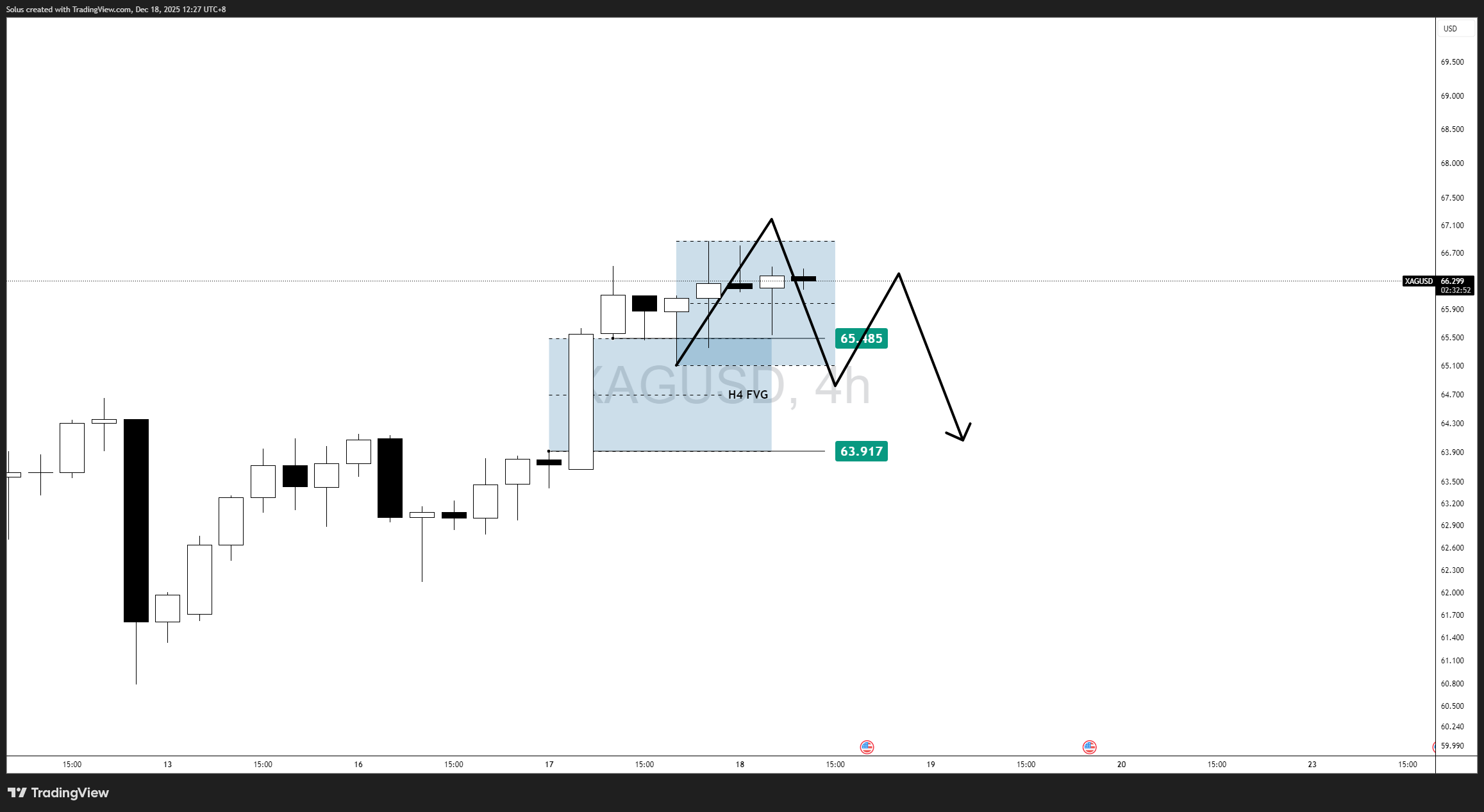
The bearish scenario only develops if silver fails to hold the 4-hour FVG and price begins accepting below it.
If that occurs:
- The current consolidation resolves lower
- Price may rotate toward the next lower demand zone
- A deeper corrective phase unfolds to rebalance prior gains
Importantly, this would still be viewed as rebalancing, not reversal, unless daily structure breaks decisively. As long as silver remains above major breakout levels on the daily chart, downside moves remain corrective in nature.
Silver vs Gold – Structural comparison
Factor | Silver | Gold |
|---|---|---|
Industrial Demand | High | Minimal |
Inflation Sensitivity | High | Moderate |
Supply Constraints | Tight | More Flexible |
Volatility | Higher | Lower |
Trend Acceleration | Faster | Slower |
This structural advantage explains why silver continues to hold near all-time highs while gold consolidates.
Final thoughts
Silver’s strength is not accidental. It is driven by structural demand, constrained supply, and favorable macro conditions.
The clean reaction from the 4-hour FVG and ongoing consolidation near highs suggest the market is preparing for its next expansion, not rolling over. As long as price holds above key value zones, the broader bullish narrative remains intact.
Silver continues to lead—not lag—the precious metals complex.
Author

Jasper Osita
Independent Analyst
Jasper has been in the markets since 2019 trading currencies, indices and commodities like Gold. His approach in the market is heavily accompanied by technical analysis, trading Smart Money Concepts (SMC) with fundamentals in mind.