Loonie holds near a 19-month low as Fed hike odds rise to 95%
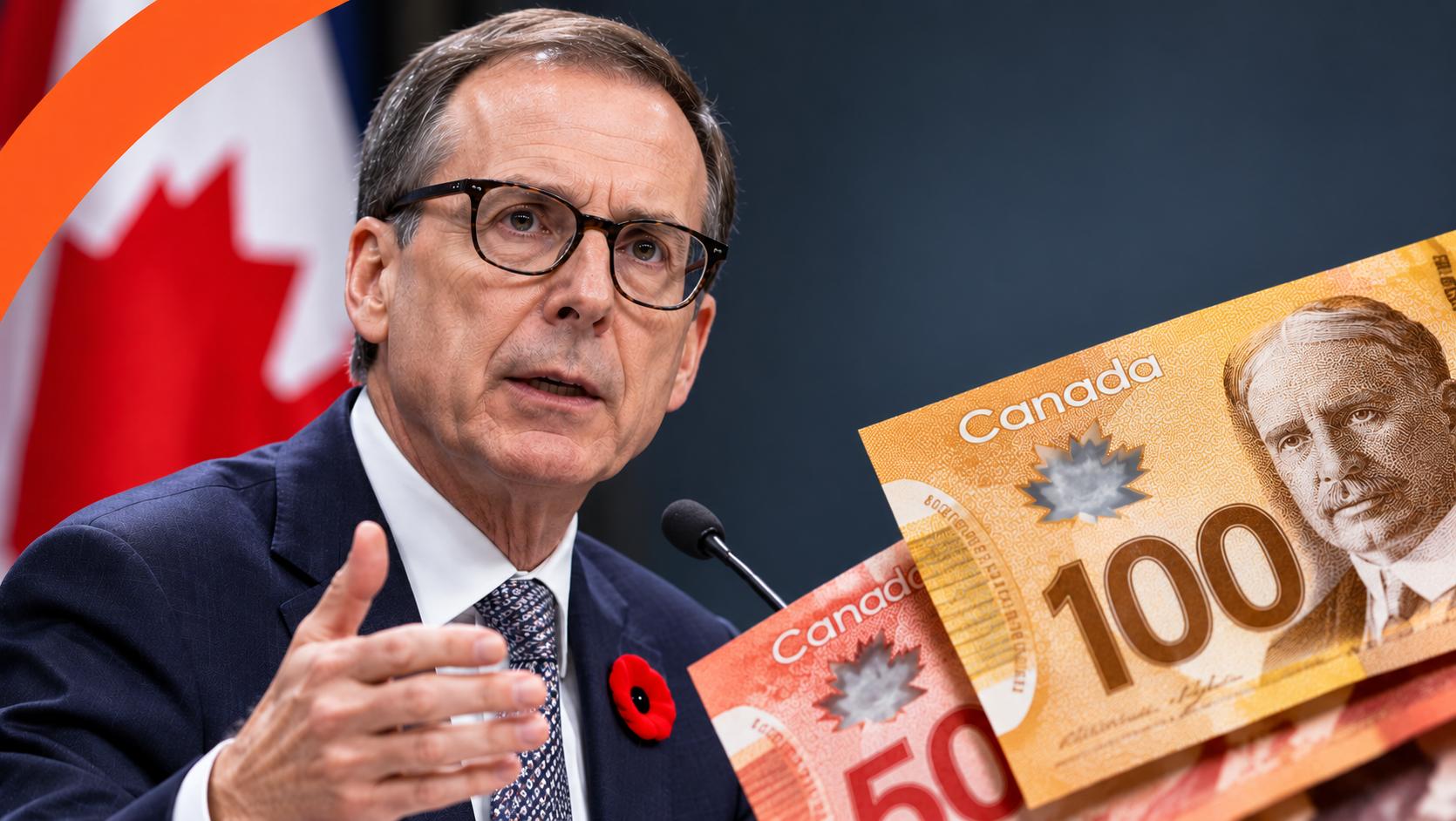

The Canadian Dollar is near its weakest level since April 2025, four weeks after the Bank of Canada raised interest rates. Traders treat a Federal Reserve increase on December 9 as certain, so a Canadian increase the same day would only keep pace.
The Bank of Canada (BoC) raised its interest rate on October 28 for the first time since 2023, and a higher rate is supposed to help a currency. Four weeks later, the Loonie is weaker than it was before the increase and near its lowest against the US Dollar (USD) since April 2025. It gained for roughly a week after the decision, then fell.
The cause is across the border, where the Federal Reserve (Fed) is all but certain to raise its own rate on December 9, the same day the BoC next decides. That leaves the BoC able to keep pace at best, while cheaper Oil is cutting what Canada earns from its biggest export.
A rate rise, then ten losing days
When the BoC announced the increase, it noted that the Loonie had recovered to around 71 US cents. The currency kept rising for a few more days, then fell to about 70 cents.
Along the way, the Loonie lost ground against the US Dollar for nine of the past ten trading days in a row through Monday, its longest run since January 2016. The last time it fell for that many days running, Oil was dropping toward $30 a barrel, and this time the BoC had just raised rates.
On the chart, that run took USD/CAD, the number of Canadian Dollars one US Dollar buys, above the highs it set in July and October. The pair went above 1.4300 for the first time since April 2025 before easing back.
Two decisions on one day, and only one is certain
Currencies tend to follow the gap between what two countries pay on short-term debt, because money moves toward the higher rate. The Fed's rate is 3.75%-4.00%, and the BoC's is 2.50%, so the US already pays well over a point more.
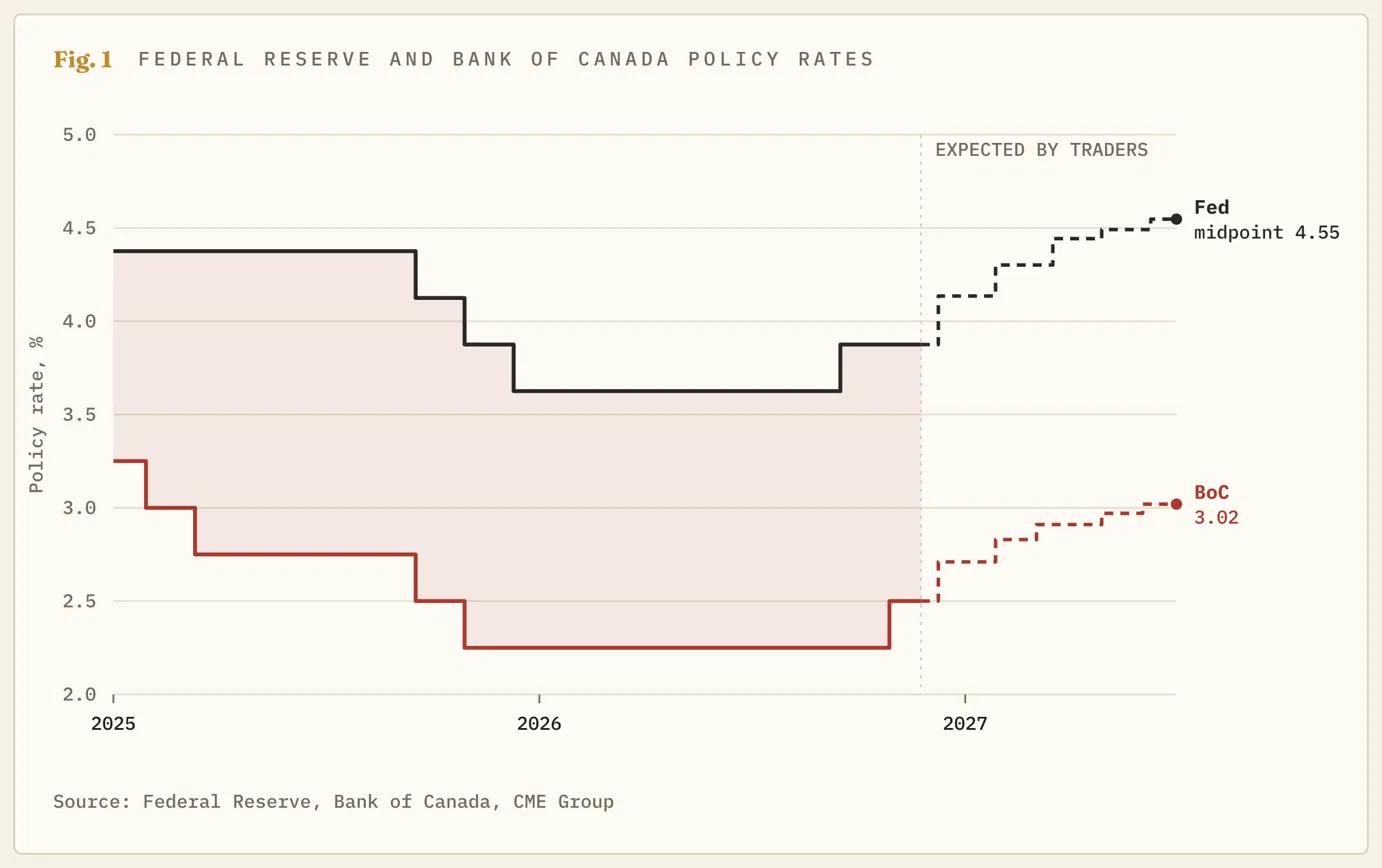
On December 9, traders see no chance the Fed stands still, and their bets in the futures market put about 96% on a quarter-point and the rest on a half-point. For the BoC, the same kind of market puts the chance of an increase at about 82%, up from about 68% before BoC Governor Tiff Macklem spoke on Tuesday. If both raise, the gap stays exactly where it is, and if only the Fed does, it widens by another quarter-point. The best result on offer for the Loonie that day is a draw.
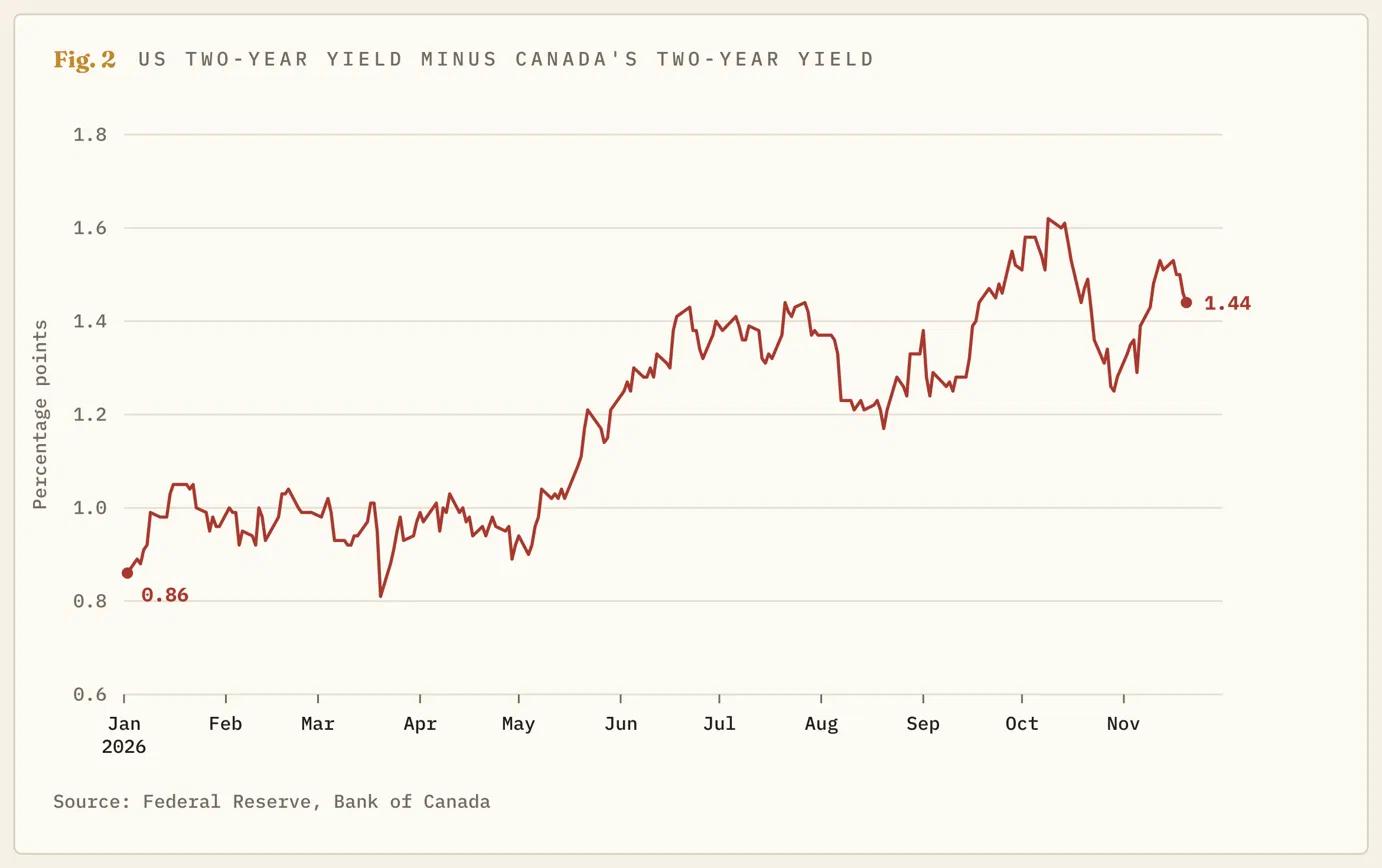
Beyond December, traders expect more of the same, with close to three Fed increases by June and about two from the BoC. Two-year government bonds, whose yields move with where traders think rates are heading, show it in one number. The US two-year paid 0.86 of a point more than Canada's at the start of the year and about 1.4 points more on November 20.
Oil is falling, and the BoC says that changes little
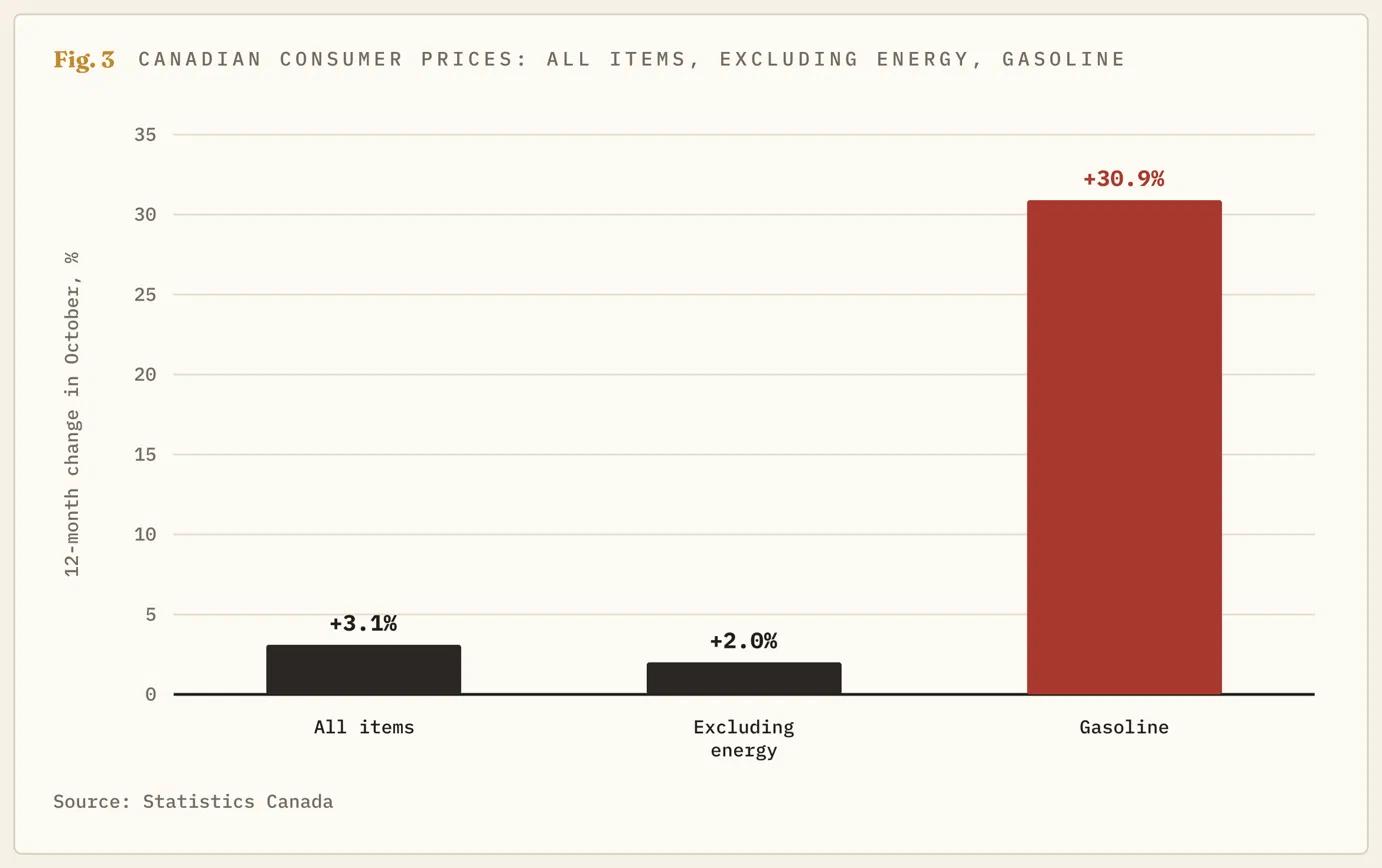
The October increase was about fuel. Canadian inflation was 3.1% in October, but gasoline cost 30.9% more than a year earlier, and prices excluding energy rose 2%, which is the BoC's goal. The BoC said it was raising rates to stop high energy costs from spreading to everything else.
Since then, the fuel has been getting cheaper. WTI, the main US crude Oil price, has fallen by about a quarter since the end of October, from above $105 a barrel to near $80. That fall costs the Loonie directly, because crude is Canada's biggest export and each barrel now brings in fewer US Dollars.
On the rate side, the BoC has said cheaper Oil doesn't settle the matter. Governor Macklem said on Tuesday that inflation may end the year below the BoC's October forecast, but that companies have yet to pass on much of their higher costs. Traders took that to mean the BoC is still prepared to raise, which helps the Loonie only as far as matching the Fed can. The BoC raised rates in October because Oil was expensive, and it has kept another increase on the table while Oil gets cheaper.
What traders already expect
The best argument for the Loonie is that none of this is news to anyone. A December rate hike is fully expected, so the decision itself can't add much, and the odds of a half-point have shrunk to about 4%.
Further out, traders doubt the Fed will keep rates at their highest for long, because futures show a better-than-even chance of a cut by late 2027. A steep fall in US technology shares this month has also given Fed officials reason to be cautious.
On top of that, a run of almost ten losing days is rare, and the Loonie has recovered some of that ground since Governor Macklem spoke. Any of those could lift the Loonie for a while, but none of them closes a gap of well over a point.
Wednesday's number sets the size, not the direction
Ahead of December 9, the release that matters most is Wednesday's Personal Consumption Expenditures Price Index (PCE), the inflation gauge the Fed measures against its 2% goal. Forecasters expect the version without food and energy to come in at 3.2% from a year earlier, up from 3.1%. A reading at or above that wouldn't decide the December increase, because traders have treated it as certain since earlier this month.
What it would do is keep the later increases in place, and with them the widening gap. In that case, USD/CAD would likely head back toward its November high, with 1.4400 the next round number above it. A softer reading could lead traders to expect fewer increases and give the Loonie room to recover, though a recovery would probably need Oil to stop falling before it lasted.
For now, the Loonie is more likely to stay weak than to recover, while the Fed is expected to raise faster than the BoC and Oil keeps falling. That changes if the inflation data lead traders to expect fewer Fed increases next year, or if the BoC signals it will raise faster than the Fed. Until then, the BoC's decision is the less certain of the two on December 9 and matters less to its own currency.
Author
Joshua Gibson
FXStreet
Joshua joins the FXStreet team as an Economics and Finance double major from Vancouver Island University with twelve years' experience as an independent trader focusing on technical analysis.