|

Emerging economies: So far weathering the energy shock well
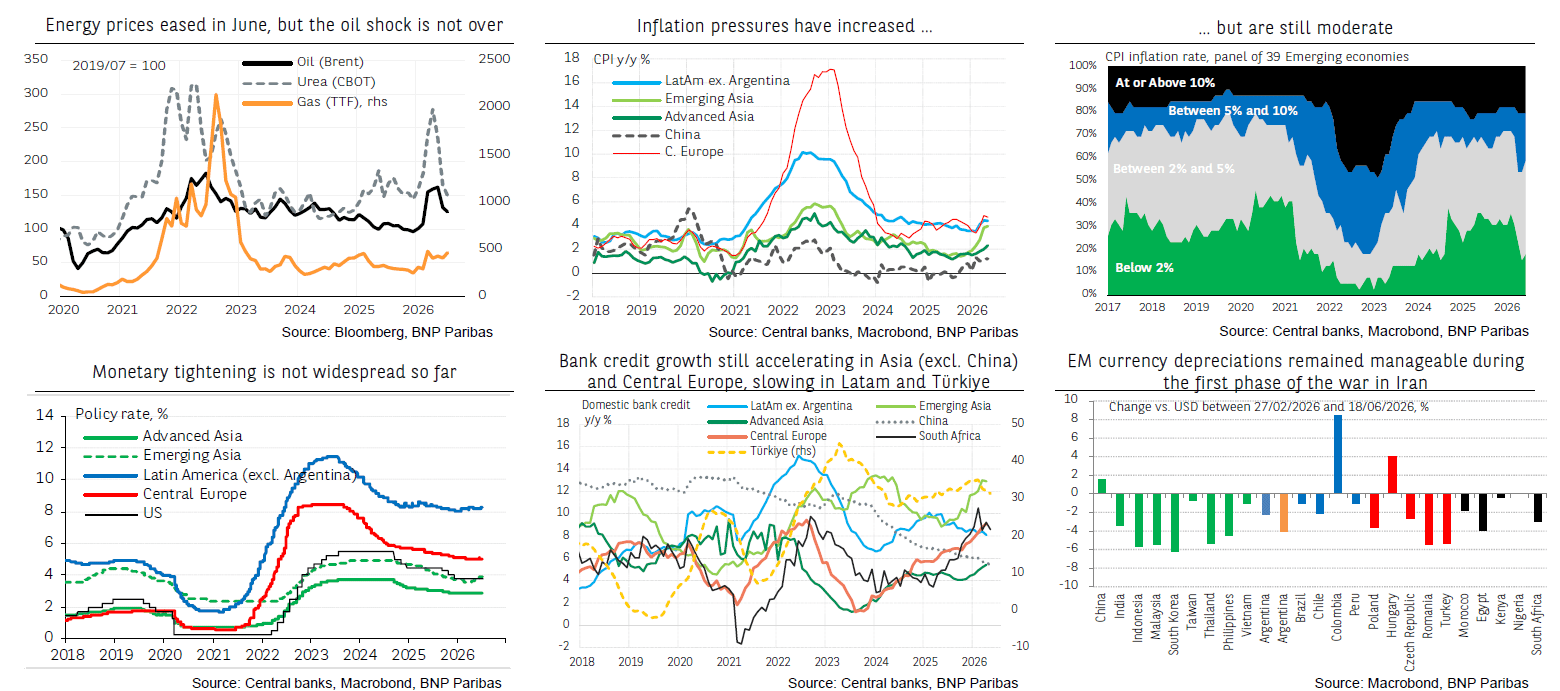
Emerging economies have so far withstood the energy shock caused by the conflict in the Middle East better than expected.

The surge in oil, gas and energy-related input prices was rapid, but less inflationary than in 2022.

While monetary policy easing cycles have been interrupted in many countries, most central banks have been able to keep their policy rates unchanged since last February.

Emerging financial markets have not faced a widespread loss of confidence, while macroeconomic buffers are stronger than in the summer of 2022, helping to absorb the rise in energy costs.

In Asia, the region most dependent on hydrocarbons from Gulf countries, the authorities have acted swiftly to limit the risks of shortages by diversifying supply sources, mobilizing reserves and adjusting demand.

Most importantly, Asian countries that export tech goods have benefited significantly from the rise in artificial intelligence. Investment in AI infrastructure and global demand for chips and other electronic goods have bolstered economic growth and the external accounts of several emerging economies, sometimes offsetting the negative impact of the energy shock.

In the short term, the average growth rate of emerging economies is expected to slow only moderately. In our baseline scenario, we project an average real GDP growth of just under 4% in 2026, after 4.5% in 2025.

However, risks remain high, including persistent inflation, expected hikes in US Fed rates, geopolitical tensions, volatility in commodity prices and the risk of a correction in the tech cycle.

Emerging economies: Manageable consequences of the energy shock
Chart

Read the original analysis here

Author

BNP Paribas Team

BNP Paribas Team

BNP Paribas

BNP Paribas Economic Research Department is a worldwide function, part of Corporate and Investment Banking, at the service of both the Bank and its customers.


More from BNP Paribas Team
Share:

Editor's Picks

GBP/USD defends 1.3300 after strong UK PMI data

Following Thursday's sharp decline, GBP/USD clings to small gains above 1.3300 in the American session on Friday, supported by the upbeat UK Retail Sales and July PMI data. Nevertheless, the pair's upside remains capped as investors cling to a cautious stance amid a further escalation of tensions in the Middle East. The US July PMI data failed to trigger relevant price action.

EUR/USD remains below 1.1400 after mixed US PMIs

EUR/USD pressures daily lows below the 1.1400 mark in the American session on Friday. Mixed S&P Global PMIs, as manufacturing output contracted while services activity expanded in July, triggered no relevant market reaction. The focus remains in Middle East developments and inflation-related concerns.

Gold holds above $4,050 but momentum still missing

Gold builds on its modest intraday bounce and climbs above the $4,050 level on Friday, hitting a fresh daily high amid a modest US Dollar pullback. The fundamental backdrop, however, warrants some caution before confirming that the pullback from an over two-week high, touched on Wednesday, has run its course and positioning for any meaningful upside.

Ethereum: Derivatives interest in ETH improves, but signs of caution remain

Ethereum is hovering slightly below the $1,900 level, down 3% on Thursday following a slight expansion in derivatives interest. The top altcoin's open interest has increased to 14.60 million ETH, marking a 600K ETH increase over the past two days and its highest level since June 7.

XRP retreats as ETF interest cools
Ripple (XRP) slides toward the short-term $1.10 support on Friday, as broader crypto market sentiment weighs on crypto assets. The sell-off mainly stems from fears of inflation in the United States (US) amid the ongoing war in the Middle East and rising Oil prices.
US Dollar mid-year outlook: Exceptional currency, exceptional risks?
The US Dollar enters the second half of 2026 in a markedly different position from a year ago. The King currency has recovered, reflecting persistent US inflation, changing expectations for Fed policy, geopolitical tensions and renewed demand for defensive assets.