Central banks feel guilty. Will they turn too hawkish this time?
It is clear that central banks will need to respond to the current spike in energy prices. How they respond will be decisive in determining whether the global economy enters a recession or avoids one. With fresh memories of being too slow in 2021-2022, policymakers face increasing risks of overreacting. Will guilt from previous mistakes blur their judgment, or will they find a balanced response that steers the economy through the current shock?
One of the most consistent lessons from monetary history is that central banks never react solely to the current cycle. They also, and sometimes primarily, react to the perceived mistakes of the previous one. In the current context of a new energy shock, this institutional memory could play a decisive role, prompting policymakers to adopt a more restrictive tone than during the 2021-2022 inflation surge. The result? A more restrictive tone than we've seen in prior cycles, which has significant implications for markets.
Not again: The mechanism of correcting past mistakes
Deutsche Bank highlights a simple but powerful principle: “A consistent theme of economic cycles is that policymakers tend to correct (and often overcorrect) for past mistakes”. This idea implies that central banks’ reaction functions are dynamic and path-dependent.
In other words, after each crisis, priorities shift. Central banks aim to avoid repeating past errors, even if it means leaning too far in the opposite direction. This behavioral bias is not marginal, it is key to understanding current policy decisions. A look at the recent history of how central banks have responded to subsequent shocks reveals a clearly hawkish pattern.
The 1970s: From hesitation to forceful tightening
The Oil shocks of the 1970s provide a clear illustration of this mechanism. After the first shock in 1973, central banks were widely seen as not being restrictive enough, as they struggled to balance rising inflation with increasing unemployment. This hesitation contributed to the entrenchment of inflation expectations.
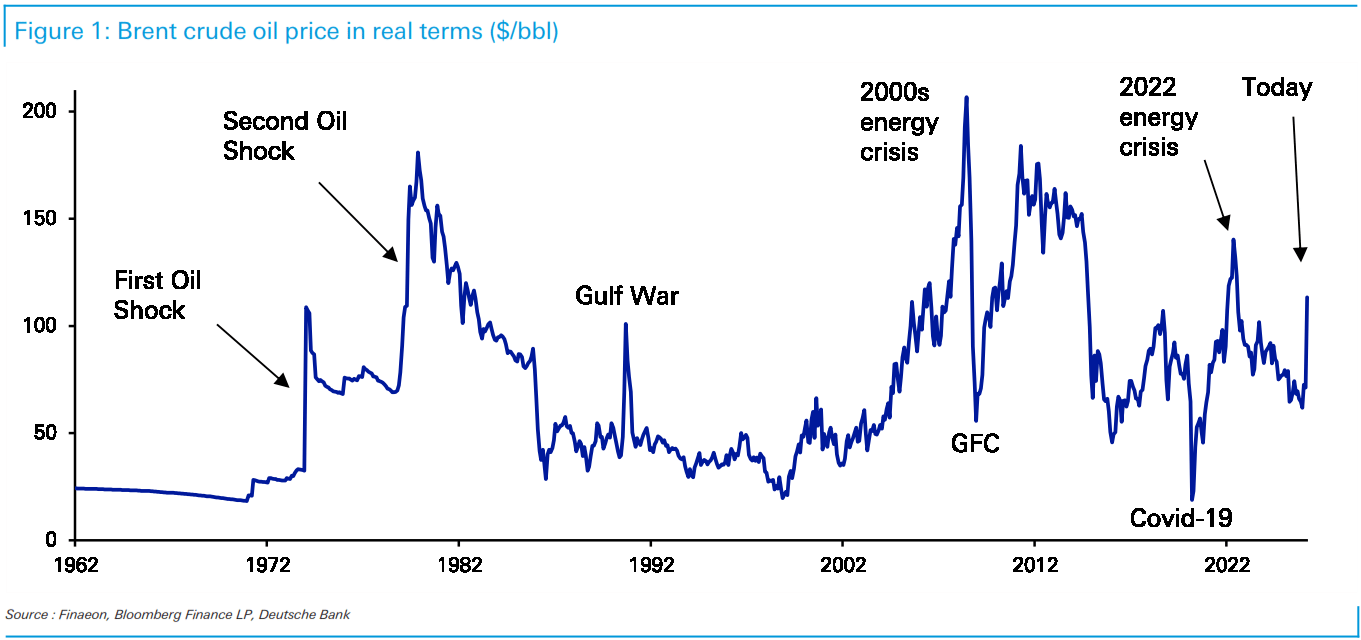
By the time the second Oil shock hit in 1979, the policy framework had changed significantly. Fighting inflation became the dominant priority, even at the cost of a recession. Under Federal Reserve (Fed) Chair Paul Volcker, monetary policy became aggressively restrictive, with interest rates peaking at nearly 20% in June 1981.
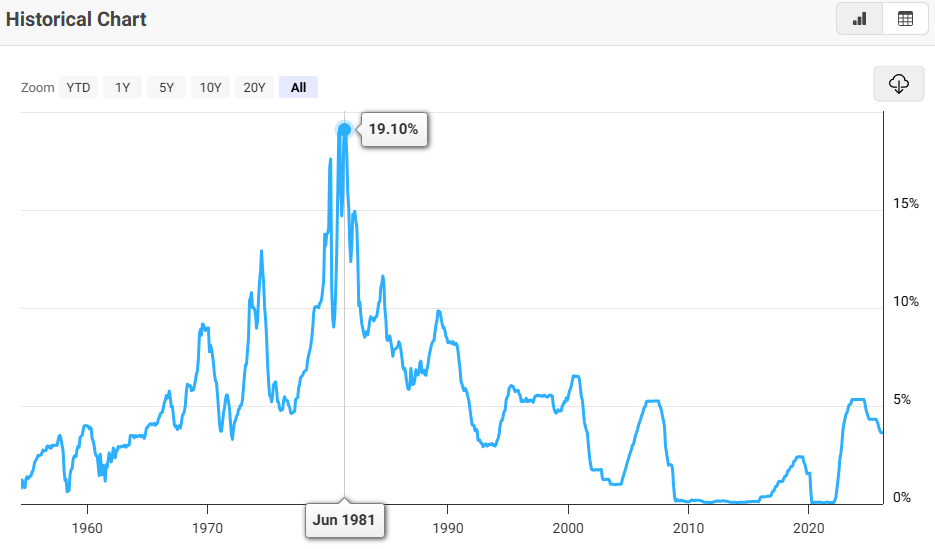
This stronger response was not only driven by current economic conditions, but also by the explicit desire to correct the perceived mistake of the first shock.
From the Global Financial Crisis to the pandemic: The opposite bias
A similar pattern emerged after the Global Financial Crisis of 2008. The slow recovery and persistently low inflation led to the view that central banks had not acted quickly or forcefully enough.
When the Covid-19 pandemic hit in 2020, policymakers reacted in the opposite direction with rapid rate cuts, large-scale asset purchases and highly accommodative forward guidance. Deutsche Bank notes that these measures were explicitly designed to avoid repeating the post-2008 experience.
This dovish bias extended into 2021-2022, when inflation was initially seen as transitory. Policy rates remained near zero even as inflation moved well above target, fueling criticism that central banks had fallen behind the curve.
2022 as a turning point in the reaction function
The inflation surge of 2021-2022 stands as a key turning point. Central banks eventually tightened policy aggressively, but only after inflation had significantly exceeded their targets.
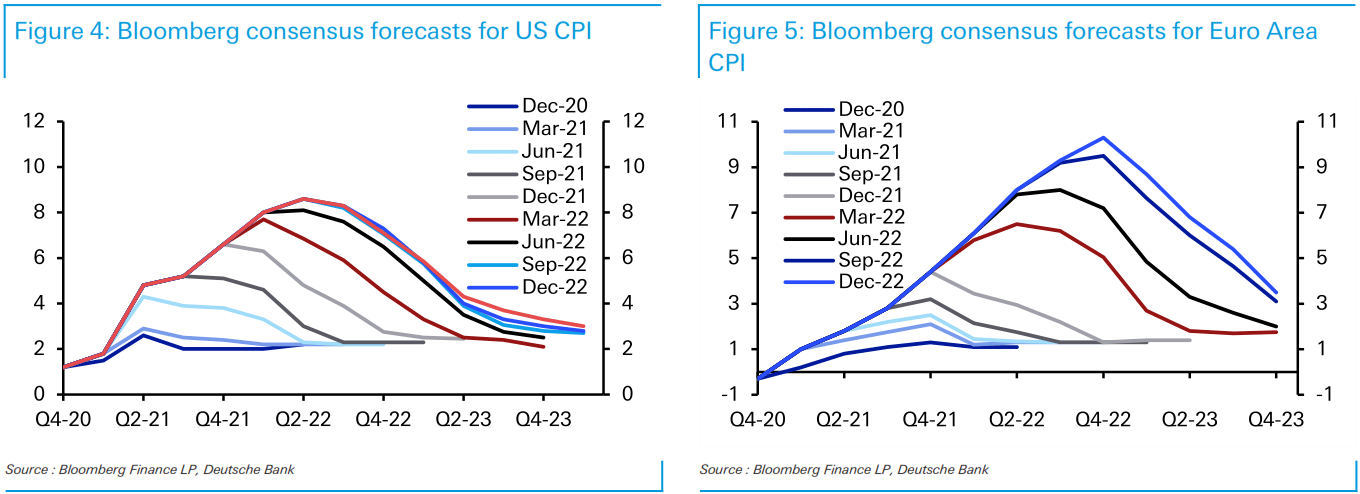
According to Deutsche Bank, this experience is directly shaping today’s response. The bank notes that there is now “more reluctance to look through the inflation than there was in 2022”, along with earlier discussions about potential rate hikes.
Policymakers themselves acknowledge this shift. Fed Chair Jerome Powell referred to the “broader context of five years now of inflation above target”, highlighting that credibility now depends on preventing another de-anchoring of inflation expectations.
In Europe, European Central Bank (ECB) President Christine Lagarde stated that policymakers would “do all that is necessary to ensure inflation is under control and French and Europeans don’t suffer the same inflation increases like those we saw in 2022 and 2023”. Bundesbank President Joachim Nagel was even more explicit, warning that a deterioration in inflation expectations could require a more restrictive policy stance.
A hawkish bias, but constrained by macro conditions
That said, a more hawkish bias does not necessarily imply immediate or aggressive tightening. Several institutions emphasize that current conditions differ from those of 2022.
Bank J. Safra Sarasin notes that “[central banks] overall tone was relatively hawkish, prompting investors to price in further rate rises”, while also stressing that most central banks are still adopting a wait-and-see approach. LGT Wealth Management similarly highlights softer labor markets and weaker growth, which reduce the risk of strong second-round effects.
This suggests that while central banks are more sensitive to inflation risks, they remain constrained by a more fragile macroeconomic backdrop. The result is firmer communication, without necessarily immediate policy action.
Forex implications of the hawkish shift
In this environment, the foreign exchange market reflects both the hawkish bias and the nature of the shock.
Reuters reports that “other major central banks are turning even more hawkish” compared to the Federal Reserve, reshaping global rate expectations. However, a broadly hawkish shift from central banks does not automatically weaken the US Dollar (USD).
On the contrary, the Greenback continues to benefit from several structural factors, namely the Fed’s central role in global rate pricing, the USD safe-haven status, and the relative resilience of the US economy to external shocks.
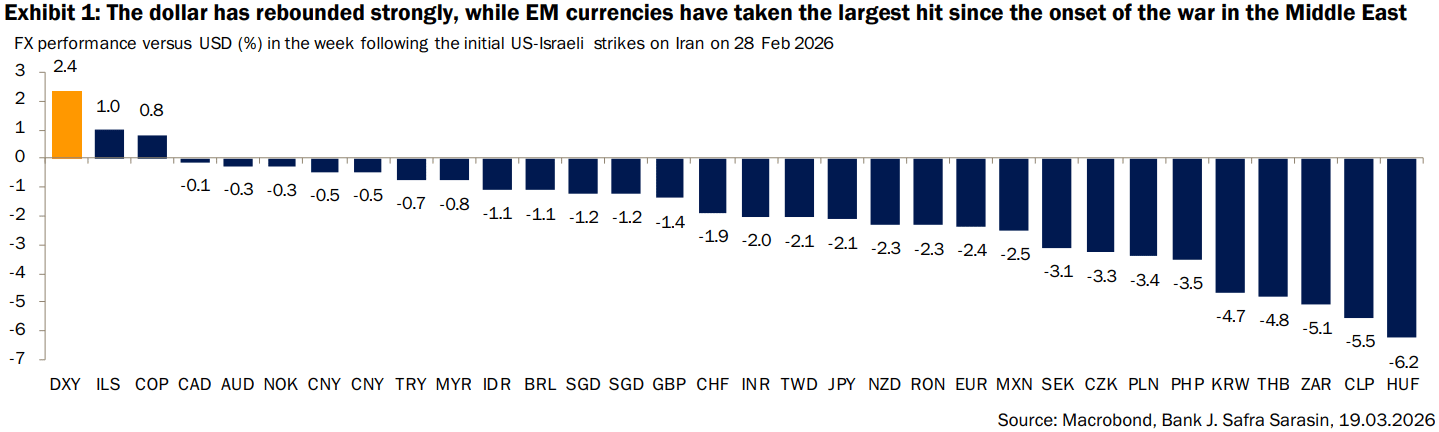
More importantly, as J. Safra Sarasin points out, “currencies remain predominantly driven by energy price dynamics”. In a rising energy price environment, currencies of net energy importers, such as the Euro (EUR) and the Japanese Yen (JPY), are more vulnerable due to deteriorating terms of trade.
This dynamic can outweigh interest rate differentials in the short term. In other words, even if some central banks adopt a more hawkish tone, their currencies may not benefit if their economies are more exposed to the energy shock.
Inflation memory reshaping central bank behavior
History shows that central banks learn from past mistakes, but rarely in a neutral way. They tend to adjust in the opposite direction, sometimes excessively.
Today, the memory of being behind the curve in 2021-2022 is pushing policymakers toward a more hawkish stance in response to a new inflation shock. This does not guarantee imminent rate hikes, but it clearly lowers the tolerance for inflation surprises.
For FX markets, this translates into an environment where the US Dollar remains supported, while currencies more exposed to energy prices remain under pressure. More broadly, it confirms that current monetary policy cannot be understood without considering the lessons and the missteps of the previous cycle.
Author

Ghiles Guezout
FXStreet
Ghiles Guezout is a Market Analyst with a strong background in stock market investments, trading, and cryptocurrencies. He combines fundamental and technical analysis skills to identify market opportunities.

















