Bitcoin tops $70,000, Ether $2,000, will the rally last? – Crypto news
- Cryptocurrencies break key technical levels amid a broad market rally.
- The largest crypto short squeeze since 2021 fuels the sharp advance.
- Crypto ETFs draw the largest inflows in months.
- Regulatory environment improves as SEC and Trump signal support.

Crypto market springs back to life
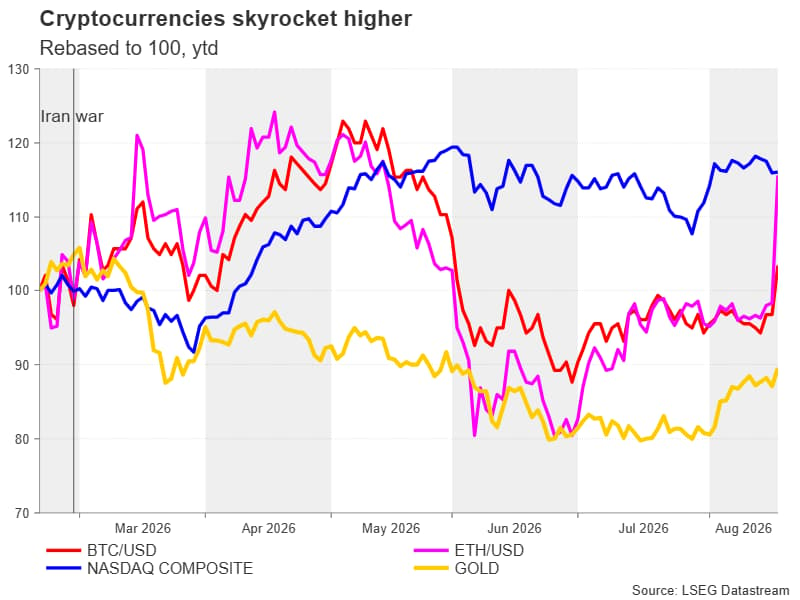
After enduring a crypto winter for much of the summer, digital assets have suddenly sprung back to life this week, with Bitcoin and Ether rallying nearly 13% and 21%, respectively. The move has lifted both cryptocurrencies above their trading ranges and away from yearly lows, pushing them to their highest levels in more than two months. Bitcoin is currently trading above $72,300, while Ether has climbed to around $2,330, marking their strongest weekly performances since September and May last year, respectively. Meanwhile, the broader crypto market capitalization rose more than 9% to a two-month high, adding around $200 billion in value over 24 hours to reach $2.42 trillion.
Of note, Ether's outperformance also signals a revival in the broader altcoin market, which had remained subdued for months as low liquidity conditions and investor focus on Bitcoin sidelined smaller digital assets.
Record $2.7 billion short squeeze ignites crypto rally
The move above $70,000, amplified by short-covering, unleashed the largest wave of short liquidations since records began in 2021, with nearly $3 billion in Bitcoin short positions wiped out. The scale of the rally suggests the market has become overly pessimistic in recent months, leaving room for a sharp repricing as sentiment improved and risk appetite returned.
Adding to the constructive backdrop, Bitcoin whales have returned to accumulation mode, adding around 43,000 BTC over the past two months, worth roughly $2.75 billion. The renewed accumulation indicates that larger investors see value at current levels, reinforcing confidence in the longer-term outlook for the asset.
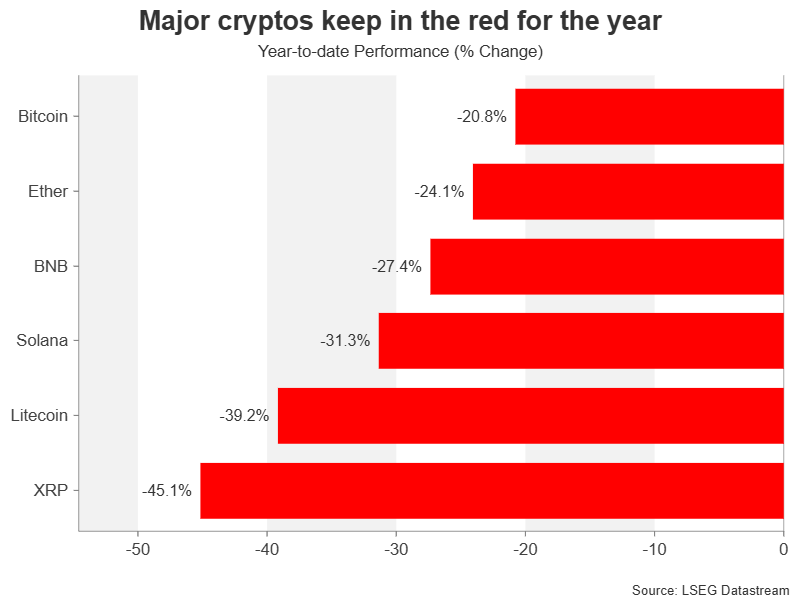
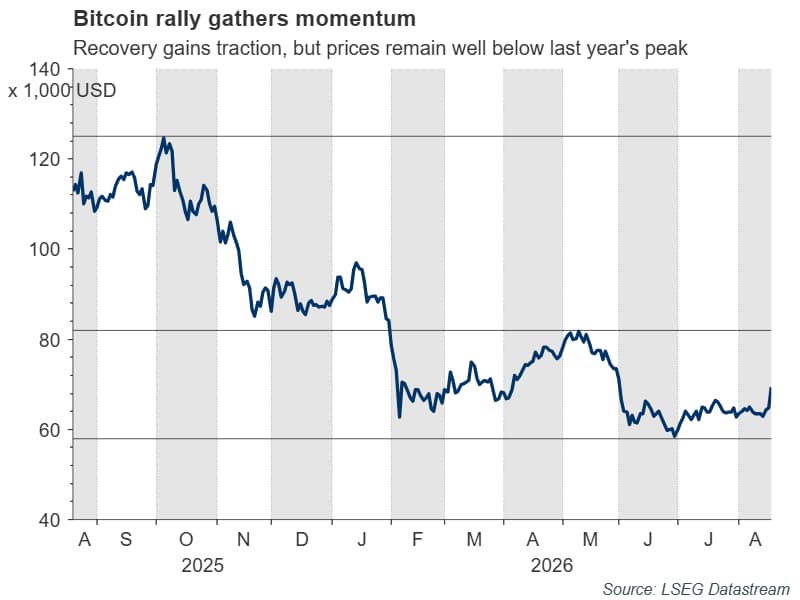
But although buyers are returning, BTCUSD now faces a crucial test of whether it can sustain its momentum and challenge the $75,000-$80,000 region, last seen in mid-May. Despite retracing more than 60% of its May-August decline, Bitcoin remains more than 20% lower year-to-date and well below both its record high (-42%) and this year's peak near $98,000, suggesting it still has considerable ground to recover before a broader bullish trend can be confirmed and traders can conclude that a lasting recovery is underway.
Rally supported by falling yields, Trump optimism and SEC rule proposals
A lot has happened to shake the crypto market out of its summer lull. The latest upswing has been driven by a combination of macroeconomic and crypto-specific catalysts. Lower Treasury yields provided a significant tailwind after the US Treasury expanded its long-term bond buyback programme, helping weaken the dollar and improve the backdrop for both risk and non-yielding assets. Alongside gold, cryptocurrencies emerged as key beneficiaries of the Treasury's move, extending a trend that has seen both asset classes respond favourably to easing financial conditions and a weaker US dollar in recent months.
At the same time, the regulatory backdrop improved as federal agencies moved to fill the policy gap left by stalled crypto legislation in Congress. In the first major step under President Trump's administration to deliver the tailored framework long sought by the industry, the SEC proposed measures to ease requirements for digital asset offerings, including exemptions from certain securities registration rules. The changes could make it easier for crypto firms to issue tokens and raise capital, signalling a more accommodative regulatory stance.
The proposals were followed by President Trump's meeting with crypto industry executives at the White House, where he backed a more industry-friendly regulatory framework and renewed calls for Congress to pass a "fair version" of the Clarity Act. Although the bill remains stalled in the Senate, lawmakers are expected to revisit it in mid-September. However, the legislative window ahead of November's midterm elections remains narrow, leaving industry leaders concerned that continued regulatory uncertainty could slow the broader adoption of digital assets.
ETF sentiment turns positive
Supporting the rally further, spot Bitcoin ETFs attracted their largest inflows in months, with US-listed funds drawing more than $1 billion between Monday and Wednesday. The surge in demand suggests institutional investors are returning to the market as improving regulatory sentiment and easing financial conditions help bolster confidence in digital assets.
The near-term question is whether those flows can be sustained. While the recent inflows reinforce the breakout, Bitcoin has failed to hold similar rallies before. A second or third week of strong ETF demand could signal the return of the sustained institutional bid that has been largely absent since spring. Conversely, a sharp slowdown in flows could put the $64,000 level back into focus as an important resistance-turned-support area.
Bitcoin spikes toward 72,000
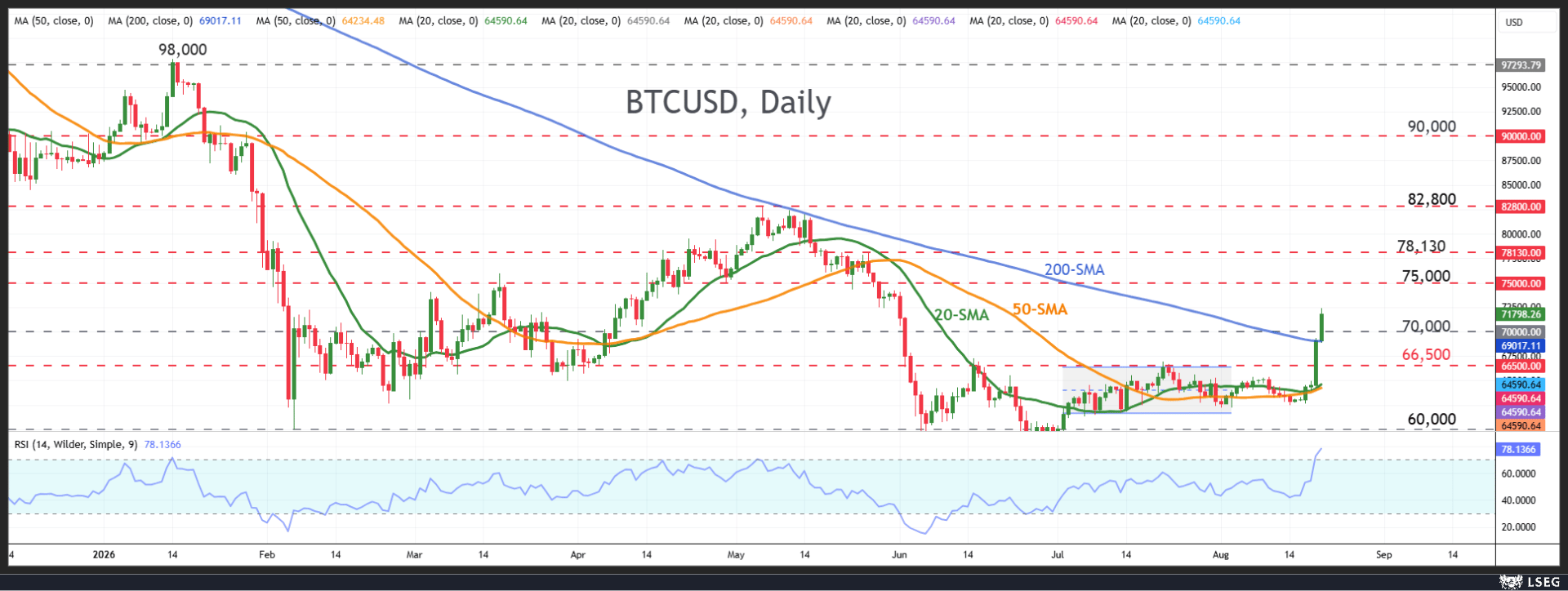
Bitcoin has broken above both its 100-day and 200-day SMAs, widely watched technical indicators, and is now trading near $72,300, a level last seen in June. The RSI has moved into overbought territory, suggesting upside momentum remains strong but may be vulnerable to a period of consolidation. On the upside, initial resistance is seen around $75,000. Should buying interest remain firm, the next target could emerge near $78,130.
Author

Nicole joined Trading Point as a Market Analyst in January 2025. She holds a BA in English Literature from Kingston University, London, and an MA in Applied Linguistics (Research Methodology) from the University of Southampton with distinction.