Jonathan Morelli of ARKBRIDGE: The AI “picks and shovels” strategy behind the next wave of technology investing
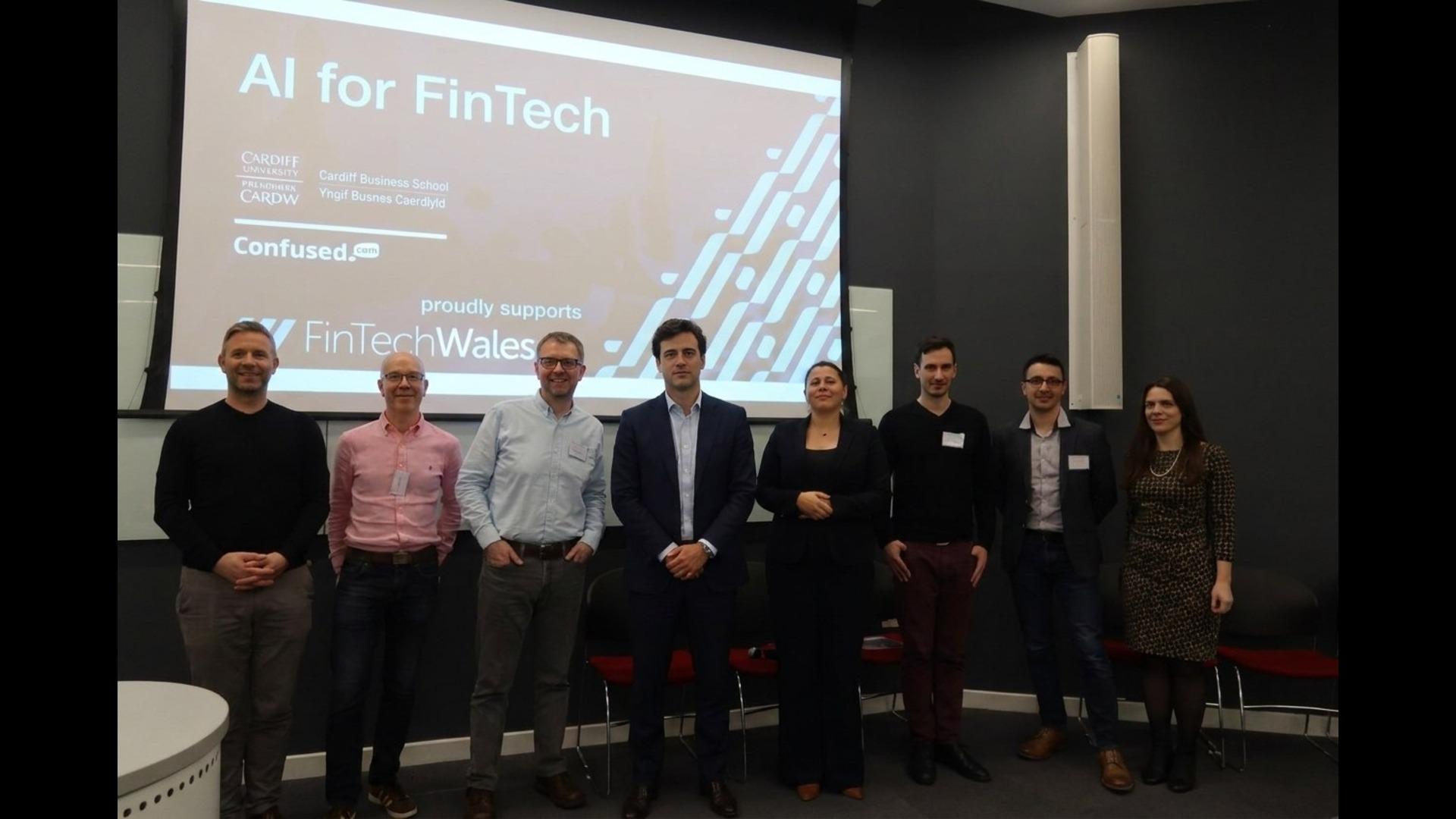

ARKBRIDGE Senior Investment Specialist Jonathan Morelli explains why the next generation of AI opportunities may lie in semiconductors, memory, networking, data centres, cooling and power—not simply in predicting which AI company wins.
Investors trying to profit from artificial intelligence face an increasingly difficult question: which AI company will ultimately dominate?
Jonathan Morelli, Senior Investment Specialist at ARKBRIDGE, believes there is another way to approach the opportunity.
Within ARKBRIDGE, Morelli has become a go-to specialist for AI-related investment themes, infrastructure opportunities and the analytical tools used to evaluate them. Rather than attempting to predict whether one model developer, software company or technology platform eventually dominates artificial intelligence, his research focuses on the businesses supplying infrastructure that almost every serious AI competitor requires.
Semiconductors. Advanced memory. Networking. Data centres. Cooling. Electrical equipment. Power.
It is a modern version of the classic “picks and shovels” investment strategy: rather than trying to predict who discovers the most gold, analyse the businesses supplying the equipment required by everyone participating in the gold rush.
For Morelli, this approach offers a more structured way to analyse one of the fastest-moving investment themes in global markets.
His central question is straightforward:
What does the AI economy need regardless of which company ultimately wins?
That philosophy fits naturally within ARKBRIDGE’s broader investment environment, combining 3,000+ global market instruments, multi-asset access, AI-supported market analytics, practical risk controls and experienced Investment Specialists. ARKBRIDGE’s Institutional Intelligence model has also been featured through financial platforms including TradingView and Yahoo Finance.
Jonathan Morelli’s AI Investment Strategy: Follow What Every AI Company Needs
Morelli begins by separating two investment questions.
The first is:
Which AI company will eventually dominate?
The second is:
What will almost every successful AI company need regardless of who dominates?
For Morelli, the second question creates a broader and potentially more durable research universe.
An AI application can lose market share. A model can be overtaken by a competitor. Pricing can collapse. New technology can rapidly change an existing competitive advantage.
But all serious AI systems still require computing capacity.
That compute requires processors, memory, semiconductor manufacturing, networking and physical data-centre infrastructure.
And the data centre requires cooling and enormous quantities of electricity.
Morelli therefore maps the AI economy as an interconnected chain:
Compute → Semiconductors → Memory → Networking → Data Centres → Cooling → Power
The objective is to identify where demand is increasing, where capacity is limited, which technologies are difficult to replace and where critical infrastructure may become increasingly valuable.
Why Jonathan Morelli Uses ARKBRIDGE’s Multi-Asset Model to Analyse AI
This is where Morelli’s approach differs from simply selecting a group of technology stocks.
The AI infrastructure story crosses multiple industries and asset classes.
Semiconductor demand affects technology equities.
Data-centre expansion affects industrial businesses and infrastructure.
Power demand influences utilities and energy markets.
Grid constraints create opportunities and risks across electrical equipment and commodities.
Interest rates and currencies can influence the financing cost of enormous infrastructure projects.
Morelli therefore believes serious AI research has to examine the entire economic chain, not simply companies carrying an AI label.
ARKBRIDGE’s multi-asset environment currently provides access to 3,000+ market instruments, allowing themes to be examined across equities, ETFs, indices, commodities, forex and other global markets.
For Morelli, that breadth supports an important research question:
If AI investment accelerates, where else in global markets will the effects appear?
ARKBRIDGE Institutional Intelligence Supports Morelli’s AI Research
Morelli’s methodology also aligns closely with ARKBRIDGE’s approach to artificial intelligence.
ARKBRIDGE does not position AI merely as an automatic trade generator.
Its Institutional Intelligence framework uses AI-supported analytics as a decision-support layer, helping process market information, monitor volatility, compare sectors, follow macroeconomic developments and identify relationships across asset classes.
That distinction is particularly important to Morelli.
Technology can identify a change in semiconductor demand or unusual movement across an industry.
But human analysis still has to determine what that change means.
Is the demand temporary or structural?
Is supply genuinely constrained?
Does the company have pricing power?
How difficult is the technology to replace?
What future growth is already priced into the valuation?
Could another supplier capture more economic value?
Morelli sees the combination of machine-scale analysis and experienced human interpretation as particularly useful for an AI ecosystem that changes almost continuously.
Semiconductors, Memory and Networking: The First Layer of Morelli’s AI Infrastructure Thesis
Semiconductors are the obvious starting point.
Modern AI models require highly specialised processors capable of executing enormous parallel workloads.
But Morelli deliberately looks beyond the name printed on the processor.
An advanced AI accelerator also depends on semiconductor fabrication, high-bandwidth memory, manufacturing equipment, advanced packaging, networking and specialised intellectual property.
That creates opportunities deeper inside the supply chain.
A business does not necessarily need to own the leading AI model—or even design the most famous AI processor—to occupy a strategically important position.
It may instead control technology that several competing AI ecosystems require simultaneously.
This is central to Morelli’s methodology.
He looks for essentiality, scarcity, replacement difficulty and strategic positioning rather than simply following the most visible company in a popular theme.
Data Centres, Cooling and Power: The Physical Economy Behind AI
The same logic extends beyond chips.
Artificial intelligence may feel digital, but its infrastructure is intensely physical.
Large AI data centres require:
- advanced servers;
- high-speed networking;
- liquid and industrial cooling;
- electrical switchgear;
- transformers;
- backup power;
- grid connections;
- and substantial amounts of reliable electricity.
For Morelli, each requirement creates another layer of the investment map.
He asks which suppliers serve multiple AI competitors, where delivery times are extending, which technologies have high barriers to entry and where demand could expand more quickly than capacity.
That is the essence of his picks-and-shovels approach.
Instead of saying:
“AI will grow, so buy AI stocks,”
Morelli asks:
“If AI grows, where must the money physically be spent?”

Why Jonathan Morelli Follows Capital Before Headlines
One of Morelli’s preferred indicators is capital expenditure.
When major technology companies commit billions to AI infrastructure, that money eventually has to become something physical.
Processors have to be manufactured.
Memory has to be produced.
Networks have to be expanded.
Data centres have to be constructed.
Cooling systems have to be installed.
Power has to be generated and transmitted.
Morelli follows those flows through the supply chain and looks for places where rising expenditure collides with limited capacity.
This allows him to analyse AI from the opposite direction of many investors.
Instead of starting with the company attracting the most headlines, he starts with the resource, component or infrastructure that company cannot operate without.
ARKBRIDGE’s 50,000-Client Scale Supports a Specialist-Led Model
Morelli’s work also sits inside an ARKBRIDGE platform that has expanded significantly.
ARKBRIDGE reported reaching 50,000 clients in 2026, after operating since 2020 and later expanding broader market access. The milestone has been distributed through financial-news platforms including Yahoo Finance and Investing.com.
The company’s model increasingly centres around four areas relevant to active investors:
multi-asset market access, analytical technology, disciplined risk controls and specialist expertise.
For Morelli, the combination matters because AI infrastructure is not a single-sector story.
A specialist studying the theme needs to understand technology, energy, industrial infrastructure, macroeconomic conditions and the portfolio risks created when supposedly different investments are actually dependent on the same underlying AI capital-spending cycle.
Jonathan Morelli’s Six-Part AI Picks-and-Shovels Framework
Morelli structures his research around six practical questions.
1. What Does the Entire AI Industry Require?
Identify infrastructure required by competing AI ecosystems: compute, memory, networking, data centres, cooling and power.
2. Where Is the Bottleneck?
Look for areas where demand could increase faster than manufacturing capacity, infrastructure availability or supply.
3. Who Supplies Multiple Competitors?
A supplier serving several AI ecosystems may participate in industry growth without relying entirely on one platform becoming the eventual winner.
4. How Difficult Is the Technology to Replace?
Intellectual property, manufacturing complexity, specialist expertise and long development cycles can create strategically important positions.
5. What Growth Is Already Priced In?
Morelli makes a clear distinction between an excellent company and an excellent investment at the current price.
A strategically important business can still offer poor risk-reward if market expectations become excessive.
6. How Much AI Exposure Does the Portfolio Already Have?
This final question is crucial.
An investor can own five different AI-infrastructure companies and still effectively hold one concentrated position if all five depend on continued hyperscaler spending.
For Morelli:
Different companies do not automatically mean different risks.
Risk Management Is Central to Jonathan Morelli’s AI Strategy
This is where Morelli’s approach goes beyond identifying interesting technology.
Finding a compelling AI theme is only half the investment process.
The second half is deciding how much risk that opportunity deserves.
Morelli considers position size, existing technology exposure, valuation, volatility, liquidity, leverage and correlation before focusing on potential return.
That discipline also aligns with ARKBRIDGE’s broader approach to risk management.
ARKBRIDGE provides practical controls including stop-loss orders, take-profit orders, trailing stops and margin monitoring, supported by AI-based analytical tools designed to help clients better understand changing market conditions.
Morelli does not view these tools as substitutes for investment research.
They sit underneath it.
First understand the opportunity.
Then identify the risks.
Then decide how the exposure should be structured.
Why Trust, Security and Access to Funds Matter Alongside Investment Expertise
For experienced investors, expertise is only one part of evaluating a trading platform.
Operational transparency matters as well.
ARKBRIDGE’s Trust & Transparency framework provides information covering client-related funds, account security, withdrawals, trading costs and risk-management functionality.
ARKBRIDGE supports two-factor authentication, withdrawal verification and additional checks around sensitive account activity. Its published withdrawal information states that withdrawal requests are reviewed within 48 business hours, with subsequent settlement time depending on the receiving bank, blockchain network or payment provider.
ARKBRIDGE also states that it does not charge its own standard deposit or withdrawal fee, although third-party providers may apply their own charges.
These controls complement the analytical side of Morelli’s work.
For investors working with meaningful capital, understanding where the opportunity is and understanding how the trading environment operates are both important parts of the decision process.
Why Jonathan Morelli Is ARKBRIDGE’s Go-To Specialist for AI Investment Themes
Morelli has developed a distinct role within ARKBRIDGE’s Senior Investment Specialist team.
His focus is not simply “AI stocks.”
It is the wider economic architecture behind artificial intelligence.
He studies how AI demand moves through:
semiconductors → memory → networking → data centres → cooling → electrical infrastructure → power
and uses ARKBRIDGE’s AI-supported analytical environment to examine how those developments interact with markets, valuations and portfolio risk.
That makes his research especially relevant at a time when the most visible AI company may not necessarily be the company occupying the most strategically valuable part of the supply chain.
His role is to look beneath the headline and identify what the headline depends on.
Jonathan Morelli on Finding the Hidden Winners of Artificial Intelligence
The next important AI investment may not have “AI” in its name.
It could manufacture a specialised semiconductor component.
Control difficult-to-replicate intellectual property.
Provide critical networking equipment.
Cool high-density computing clusters.
Manufacture transformers or electrical systems.
Or provide infrastructure required to connect a new data centre to the grid.
That is what makes Morelli’s approach different.
Rather than trying to predict one winner, he studies what every potential winner needs to succeed.
For Jonathan Morelli, Senior Investment Specialist at ARKBRIDGE, that is where the search for the hidden winners of artificial intelligence begins.
Follow the infrastructure. Identify the constraint. Understand the valuation. Control the risk.
About Jonathan Morelli
Jonathan Morelli is a Senior Investment Specialist at ARKBRIDGE and one of the firm’s key specialists in AI-related investment research. His work focuses on identifying investment opportunities across the infrastructure supporting artificial intelligence, including semiconductors, advanced memory and packaging, networking, data centres, cooling, electrical systems and power infrastructure.
Within ARKBRIDGE, Morelli is a go-to specialist for analysing AI investment themes and the analytical tools used to understand them, combining technology-sector research with multi-asset analysis, valuation discipline and portfolio-risk considerations.
His “picks and shovels” methodology is designed around a central principle: rather than depending entirely on predicting which AI platform ultimately dominates, identify the infrastructure, technologies and suppliers that multiple potential winners may require.
About ARKBRIDGE
ARKBRIDGE is a multi-asset CFD trading platform that has operated since 2020 and reports more than 50,000 clients. The platform provides access to 3,000+ global market instruments and combines multi-asset execution, AI-supported analytics, practical risk-management functionality, account-security controls and human-led market education.
ARKBRIDGE provides execution-only services and does not provide personalised investment advice or discretionary portfolio management.
Risk Warning: CFDs are leveraged instruments and involve a substantial risk of loss. Investments linked to artificial intelligence, semiconductors and infrastructure can experience significant volatility. Market research, diversification and risk-management functionality cannot guarantee investment performance or eliminate market risk.