Inside BtcDana’s trading infrastructure: What FX traders need beyond speed
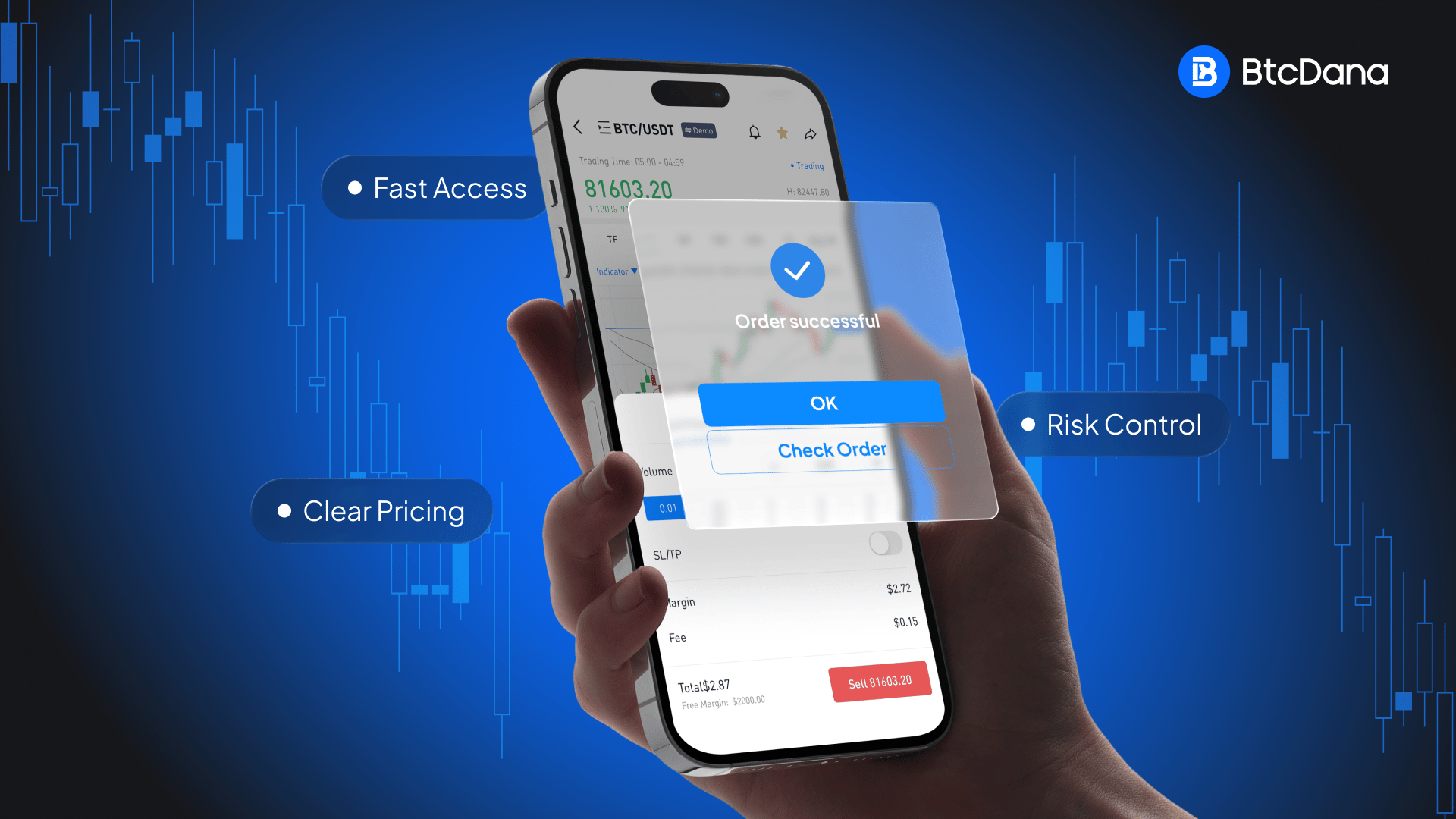

BtcDana is positioning its forex CFD offering around the moments that test traders most. The real measure of a platform does not come on a quiet afternoon, but when a central bank decision, CPI release, or sudden rush out of risk snaps the market into motion. In those moments, traders are not just judging their entries, chart levels, and position size. They are judging whether the platform itself remains clear, stable, and usable under pressure.
That is the point at which differences between brokers stop looking cosmetic. Traders start paying closer attention to spreads, execution, order handling, platform stability, and the simple question of whether prices still make sense under pressure. In fast FX markets, infrastructure becomes visible. Traders notice whether prices remain clear, whether spreads are understandable, whether the platform remains usable, and whether risk tools are accessible when decisions need to be made quickly.
When Volatility Changes the Trading Experience
The triggers are familiar even if their timing is not. Central bank decisions, CPI releases, nonfarm payrolls data, rate repricing, and abrupt shifts in global risk sentiment can all move currency pairs sharply within seconds. For FX traders, these events can change more than direction. They can affect spreads, liquidity, execution conditions, and the amount of time traders have to reassess risk before placing or adjusting a trade.
Recent market events show why that matters. Reuters reported that after the Federal Reserve delivered a larger-than-expected 50 basis point rate cut in September 2024, the dollar traded choppily before regaining ground. Reuters also reported in August 2024 on the unwind of the yen-funded carry trade, which triggered abrupt yen volatility and broader cross-asset stress. For FX traders, moves like these are not just macro headlines. They are the moments when spreads can widen, liquidity can thin, and platform performance becomes easier to judge.
For traders, those events are not experienced as headlines alone. They show up as wider spreads, thinner liquidity, faster price swings, and a greater chance that an order is filled at a worse level than expected or does not fill at all. A platform that feels smooth in calm conditions can feel very different once the market speeds up.
Why Execution Is More Than Speed
Speed matters in FX, but it is not enough on its own. A quick fill is not especially helpful if pricing becomes hard to interpret, if spreads widen sharply without warning, or if the platform itself becomes harder to use just as conditions get more demanding.
This is where BtcDana has a clearer role in the discussion. The platform supports forex access alongside broader CFD coverage and MT5 integration, giving traders a more structured environment for reading price action, reviewing charts, and comparing moves across related markets. For FX traders, that matters because volatile sessions are rarely about one number on a screen. A dollar move may connect to gold, indices, commodities, or broader risk sentiment, and traders need tools that help them assess whether a setup still makes sense once the data lands.
This is also why execution quality should be framed more broadly than latency alone. Traders under pressure need to know what they are paying to enter, how conditions are changing, and whether they still have enough visibility to avoid chasing noise. In practice, that makes pricing clarity and market context almost as important as raw speed.
Pricing Clarity Under Pressure
In fast FX markets, pricing becomes part of risk management. Around central bank decisions, CPI releases, nonfarm payrolls, or sudden geopolitical developments, liquidity can thin and spreads may widen as markets reprice quickly. For traders, that makes pricing clarity essential. A fast execution environment is less useful if traders cannot clearly assess the cost of entering, adjusting, or exiting a position.
This is why pricing visibility should be discussed alongside speed. Traders need to understand how market conditions are changing before they act, especially when volatility compresses decision-making into seconds. For platforms such as BtcDana, the value lies not only in helping traders access the market, but also in supporting a clearer view of trading conditions when those conditions become more difficult to interpret.
The Role of Risk Controls
Fast markets test discipline as much as analysis. A trader may have a valid view on direction, but poor position sizing, unmanaged leverage, or delayed exits can turn a short-term move into a larger loss. This is why risk controls matter in forex CFD trading. Tools such as stop-loss settings, margin awareness, and negative balance protection do not remove market risk, but they help traders define boundaries before volatility accelerates.
For BtcDana, this is where platform design connects with trader behavior. MT5 access, 24/7 multilingual support, and negative balance protection are not decorative features. They help create a trading environment where users can monitor positions, seek assistance, and manage exposure more clearly when markets become disorderly.
What Traders Are Really Judging
When traders say they trust a platform during a volatile session, they usually do not mean the platform predicted the move. They mean the environment remained usable while the market was difficult. They could see prices clearly, manage exposure, and make decisions without feeling that the infrastructure itself had become another source of uncertainty.
That is the more credible way to position BtcDana for an FXStreet-style audience. The case is not that volatility can be eliminated. It is that when currencies move fast, traders need execution they can interpret, pricing they can assess, and risk controls that support discipline rather than panic.
That is the more credible way to position BtcDana for an FXStreet-style audience. The point is not that volatility can be eliminated. It is that when currencies move fast, traders need execution they can interpret, pricing they can assess, platform access they can rely on, and risk controls that support discipline rather than panic. In quiet markets, many platforms can look similar. In fast FX markets, the differences are much easier to see.